













































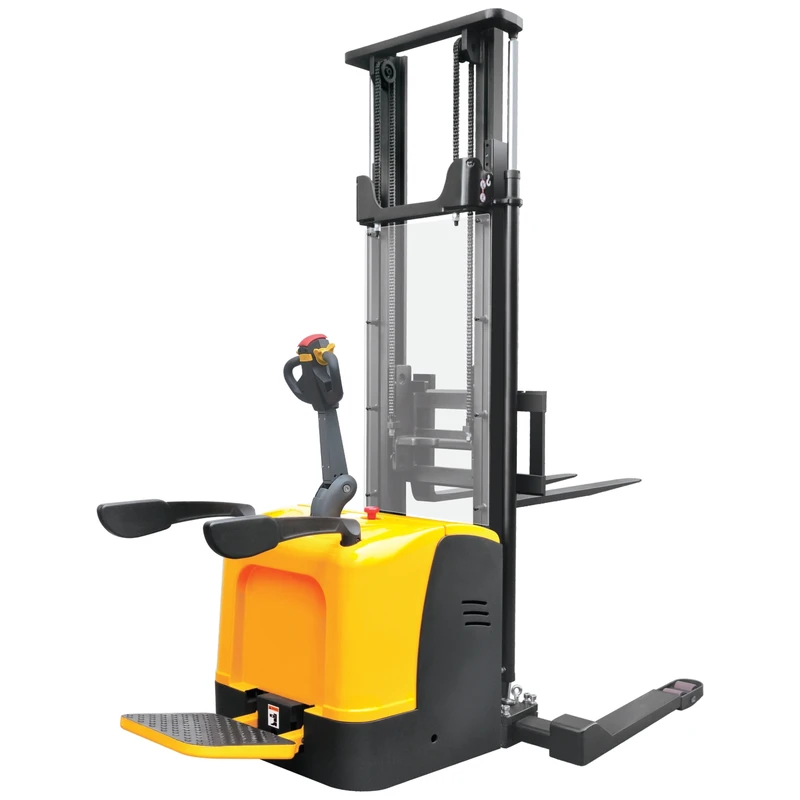
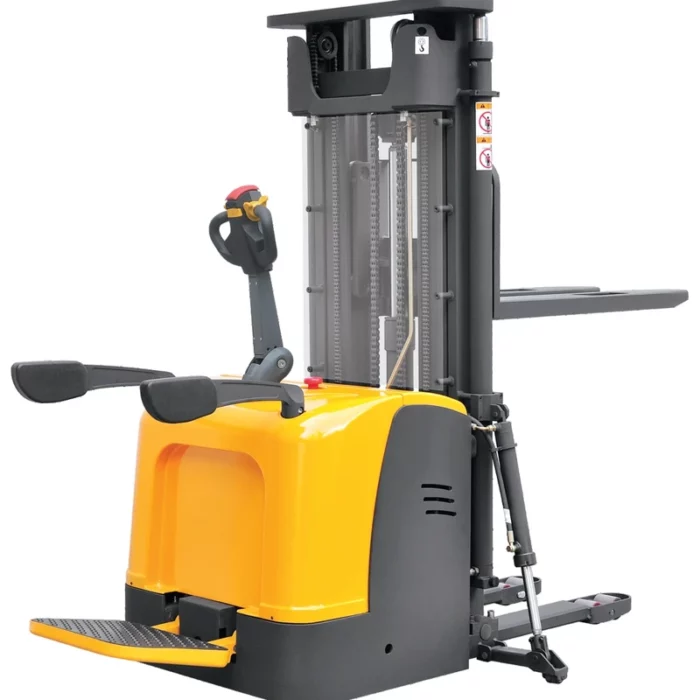


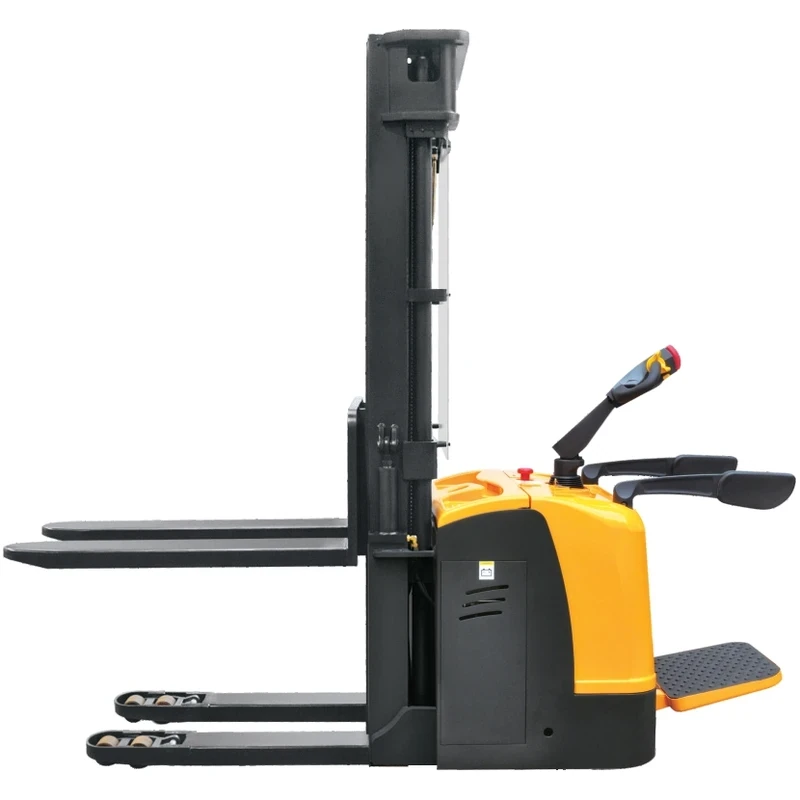
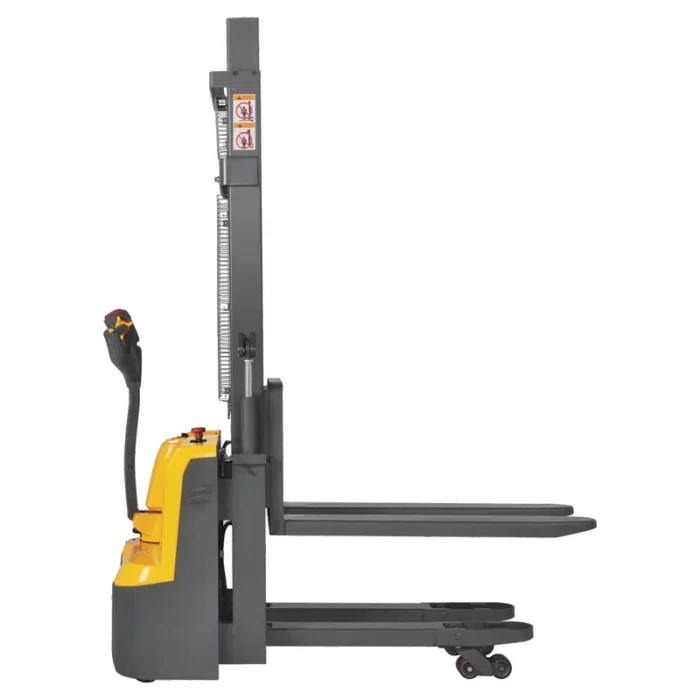





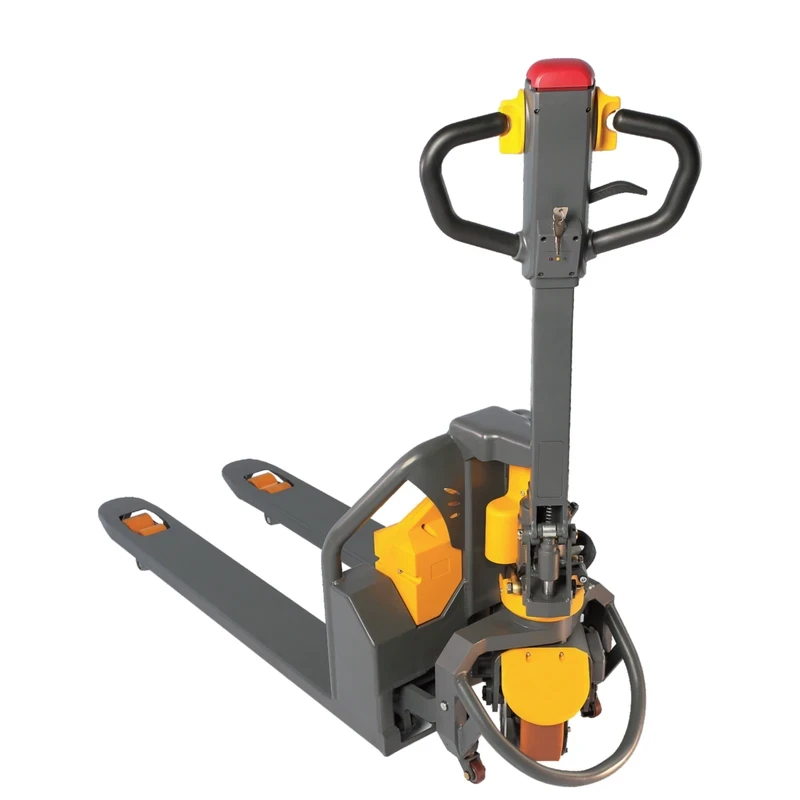

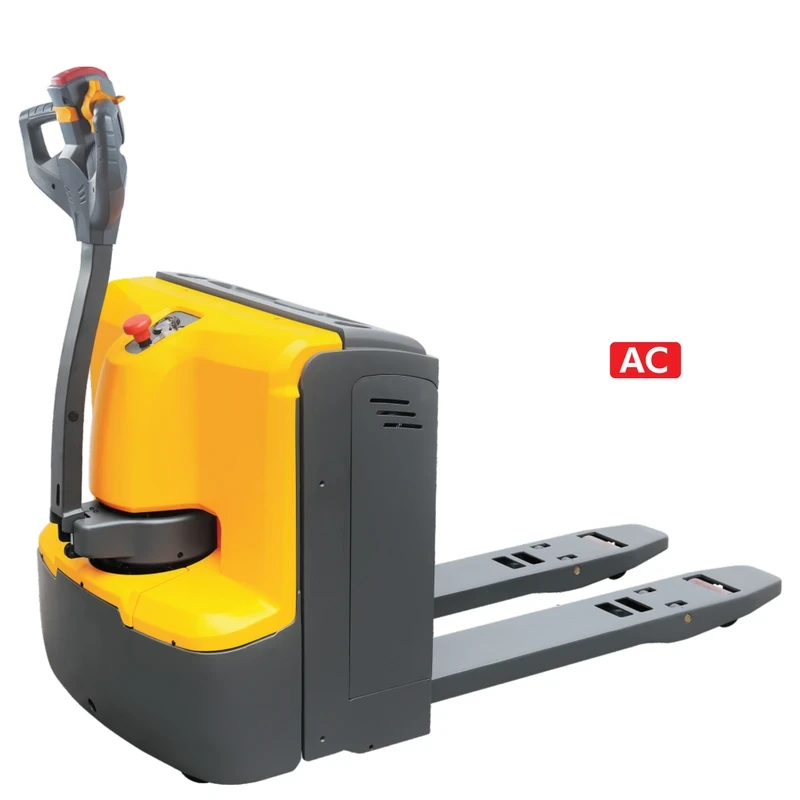


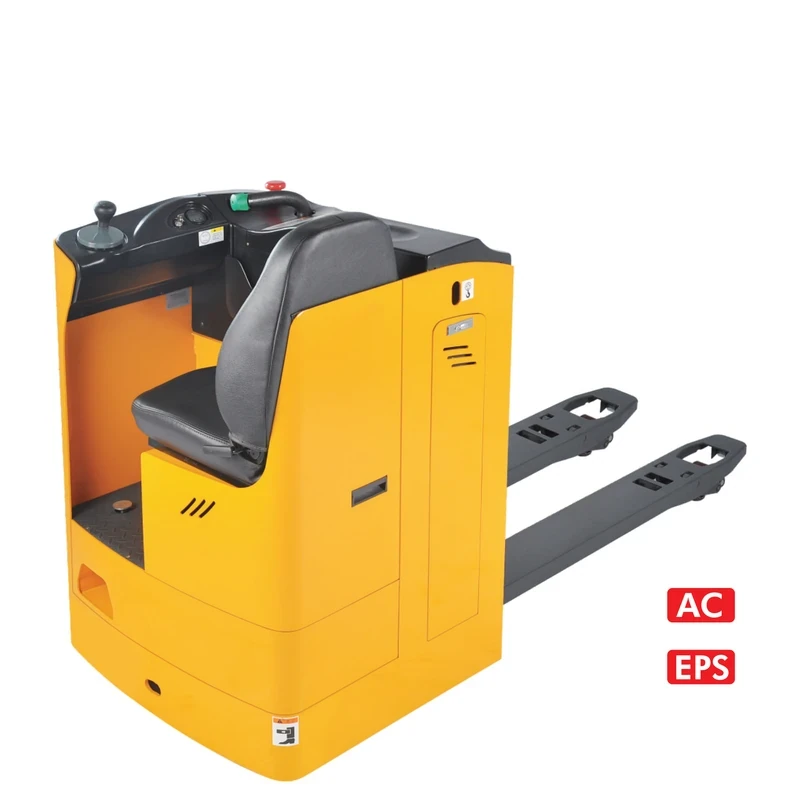

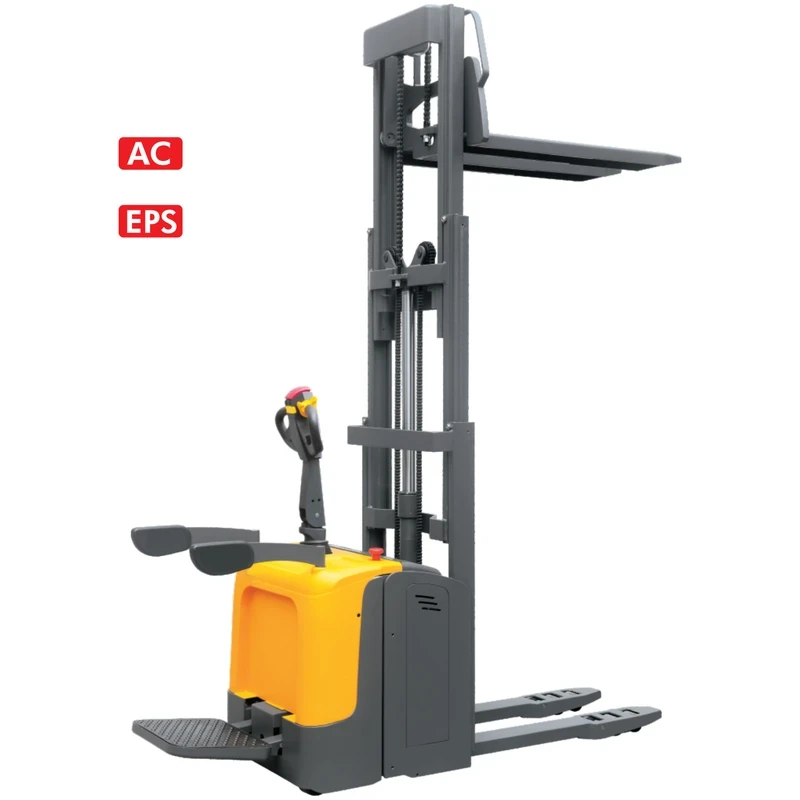














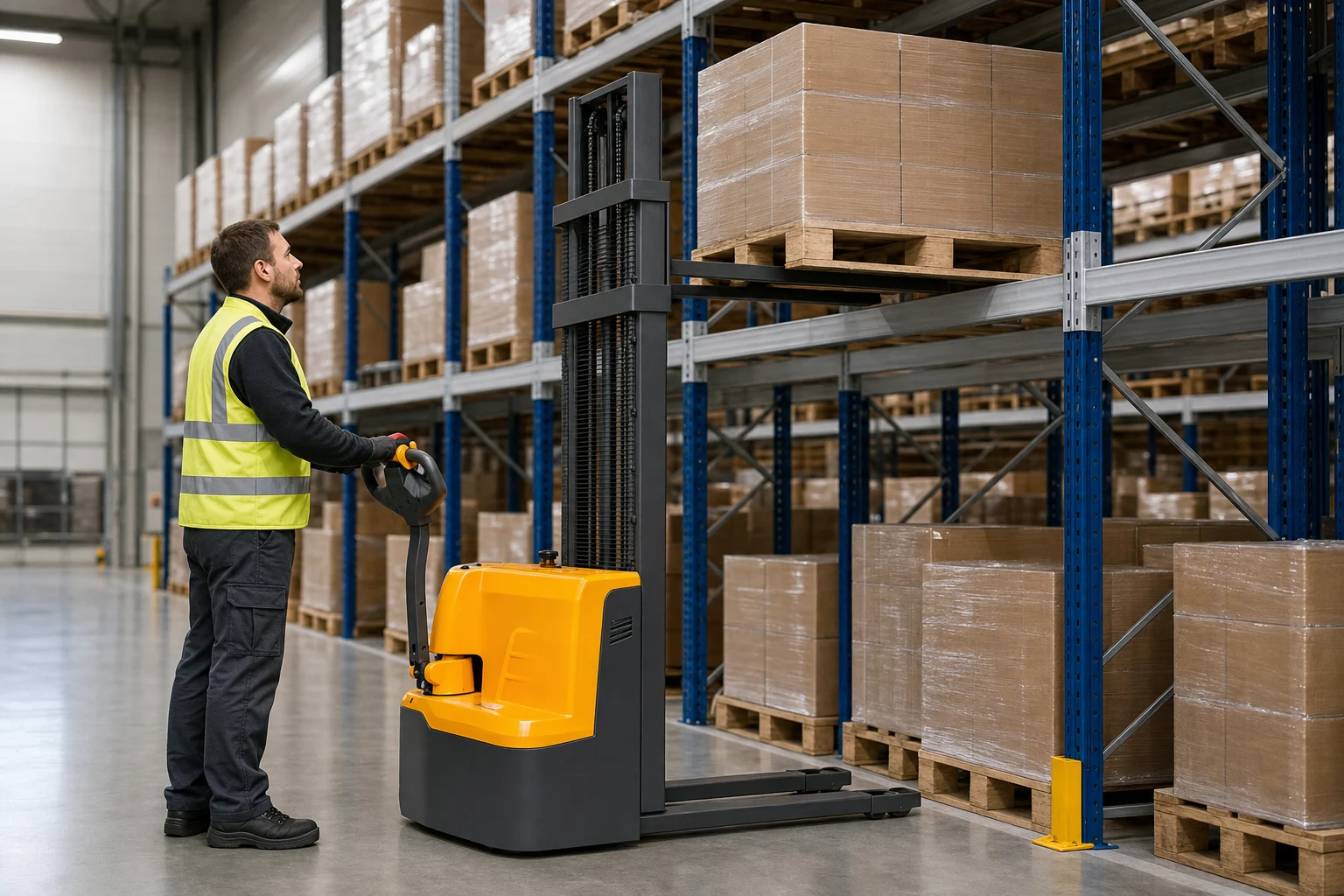
What a pallet stacker is (and when a pallet truck stops being enough)
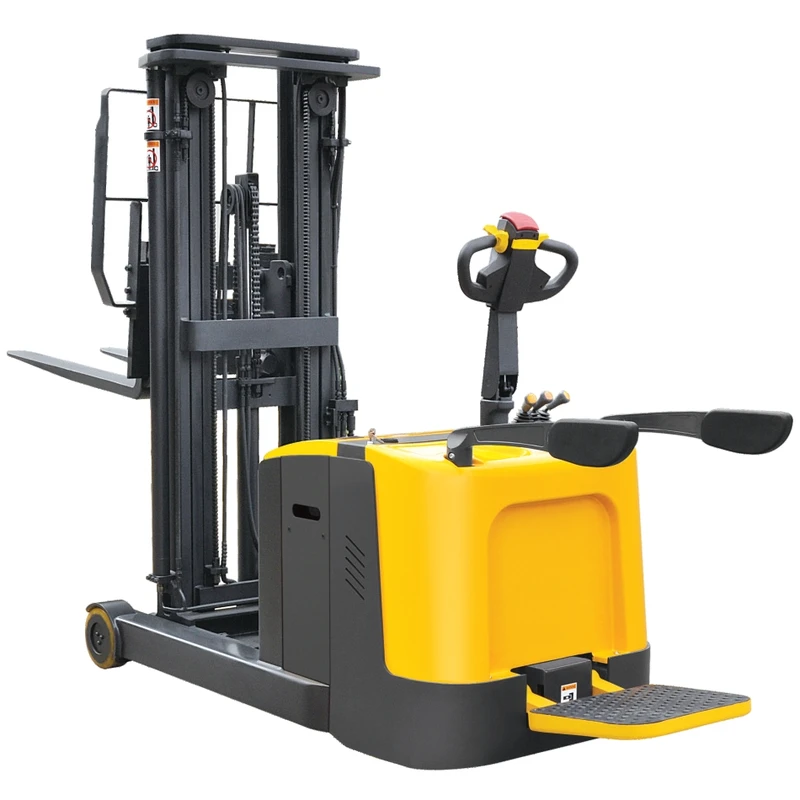
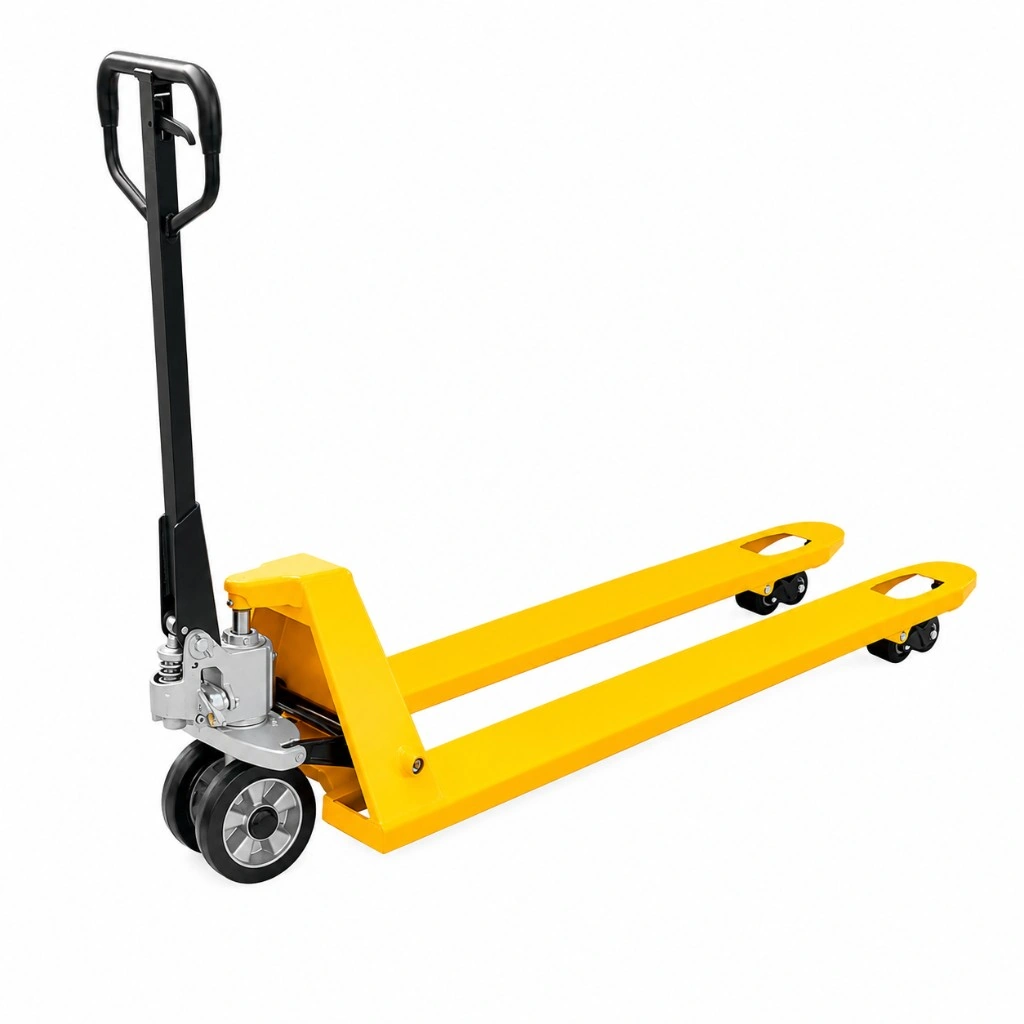
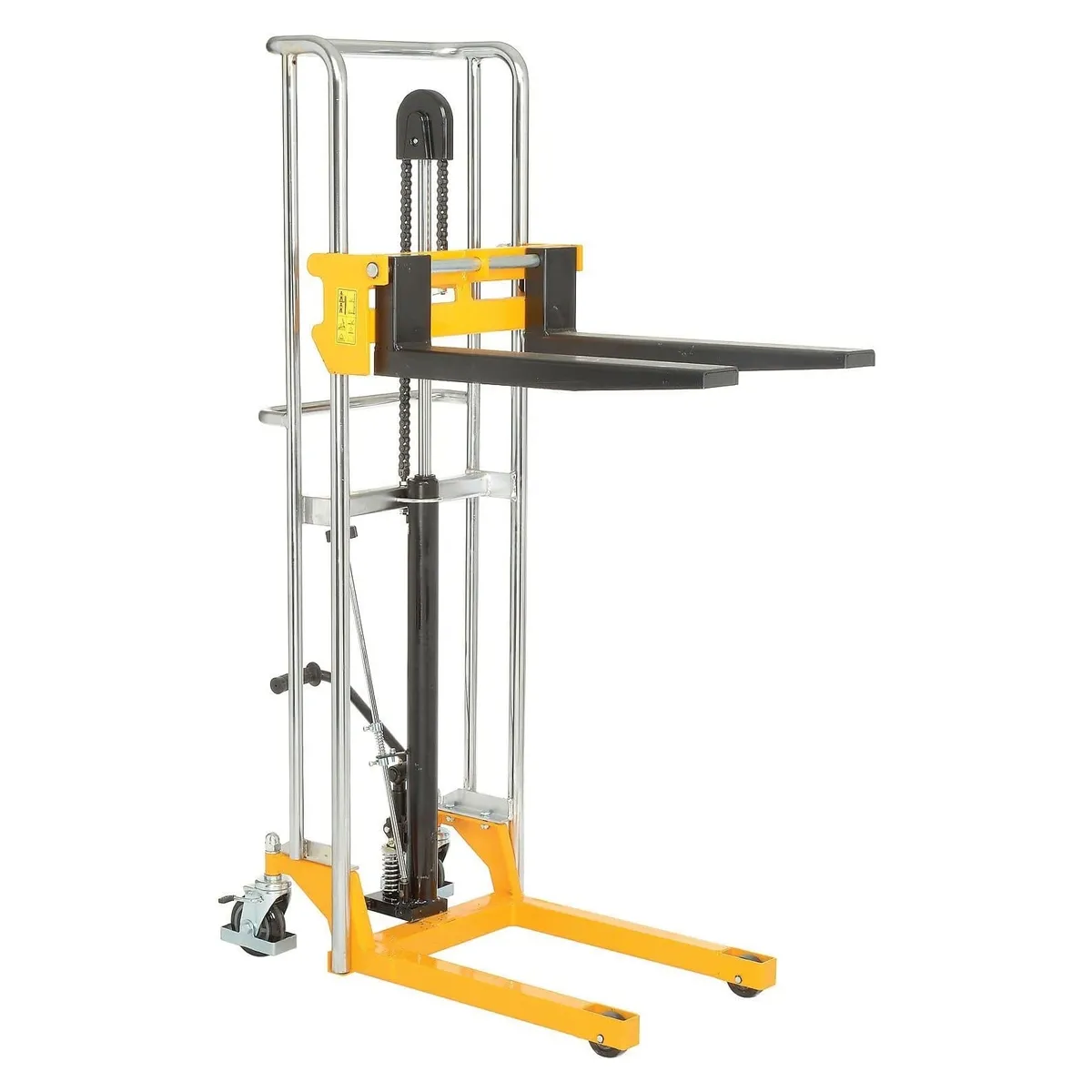
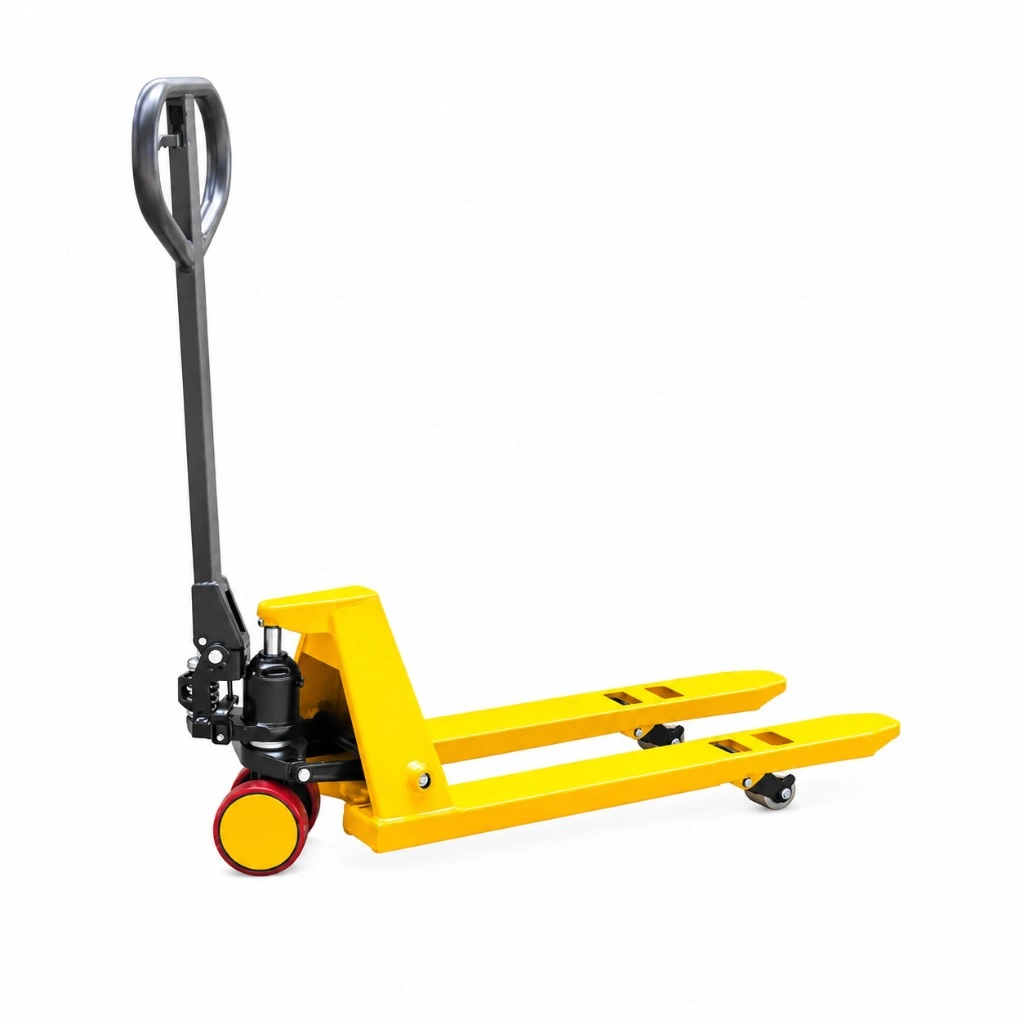
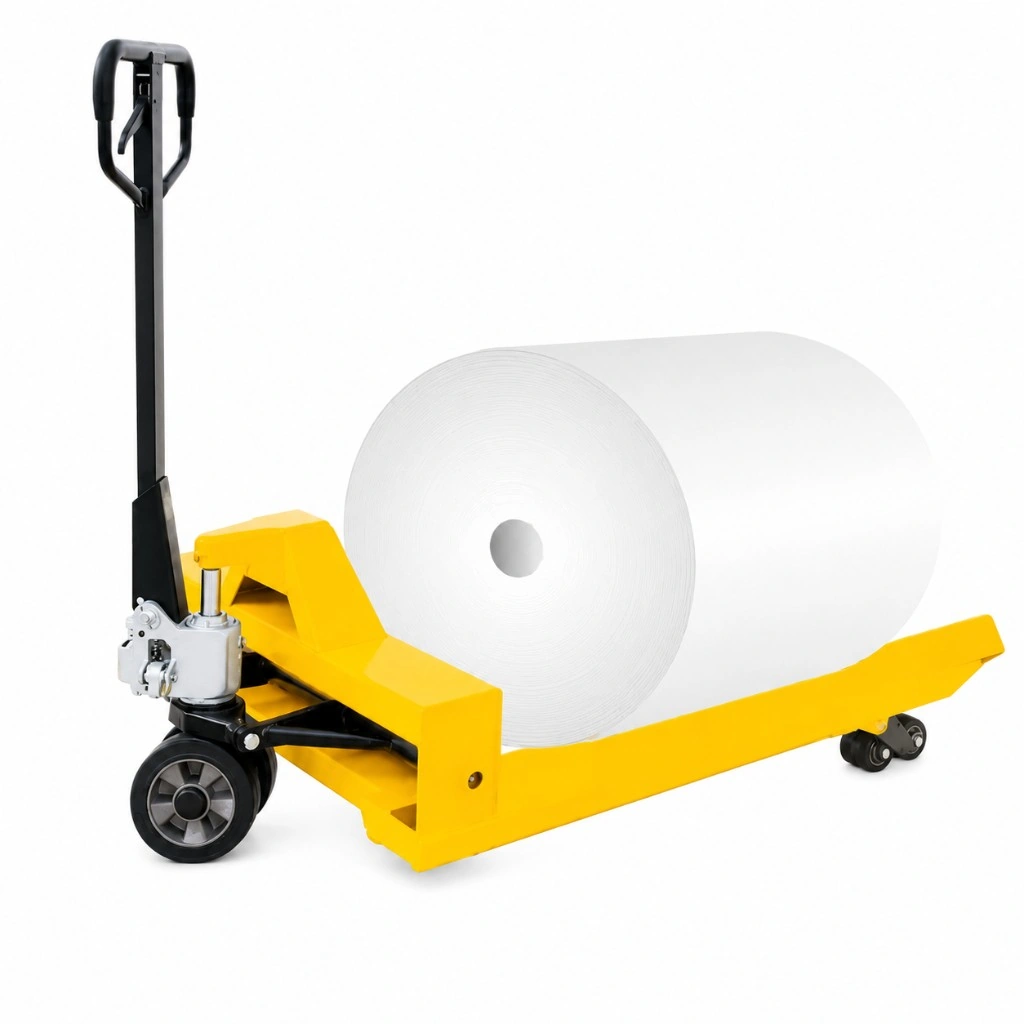
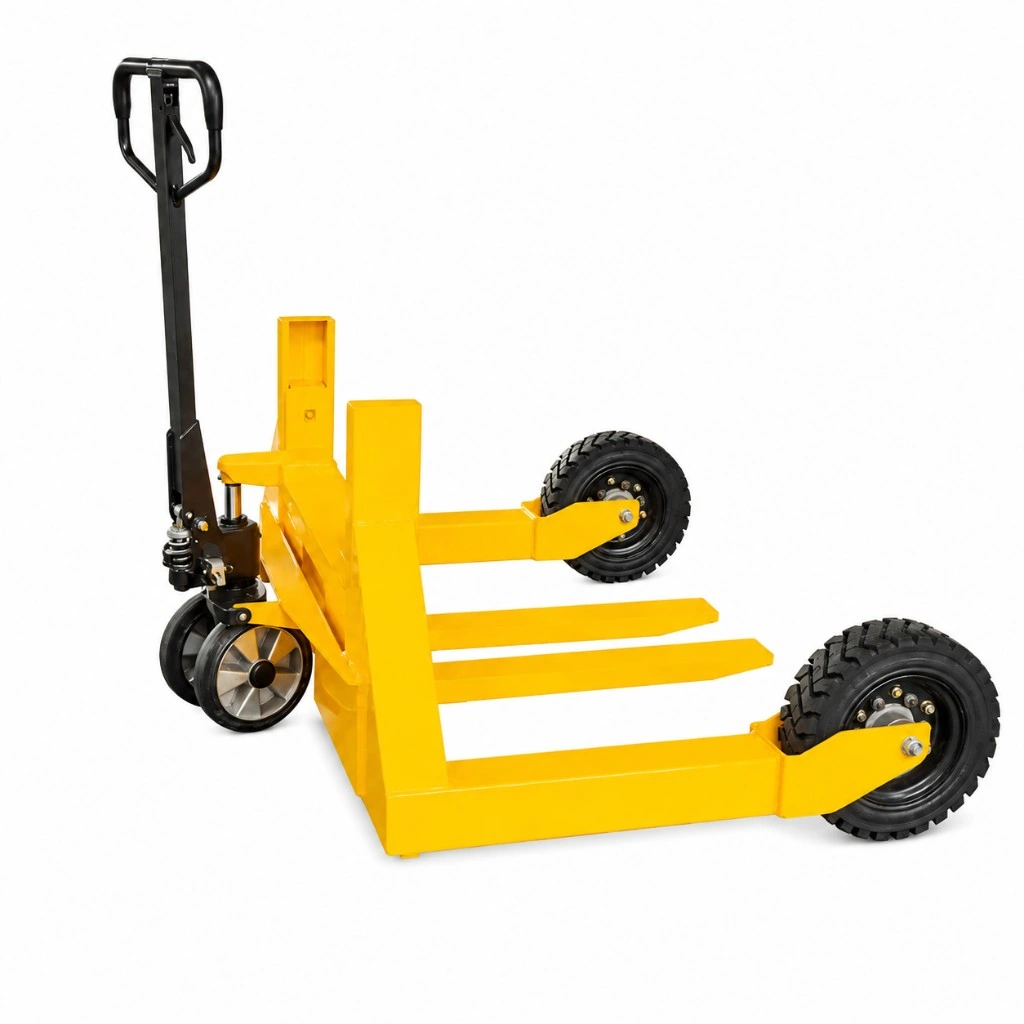
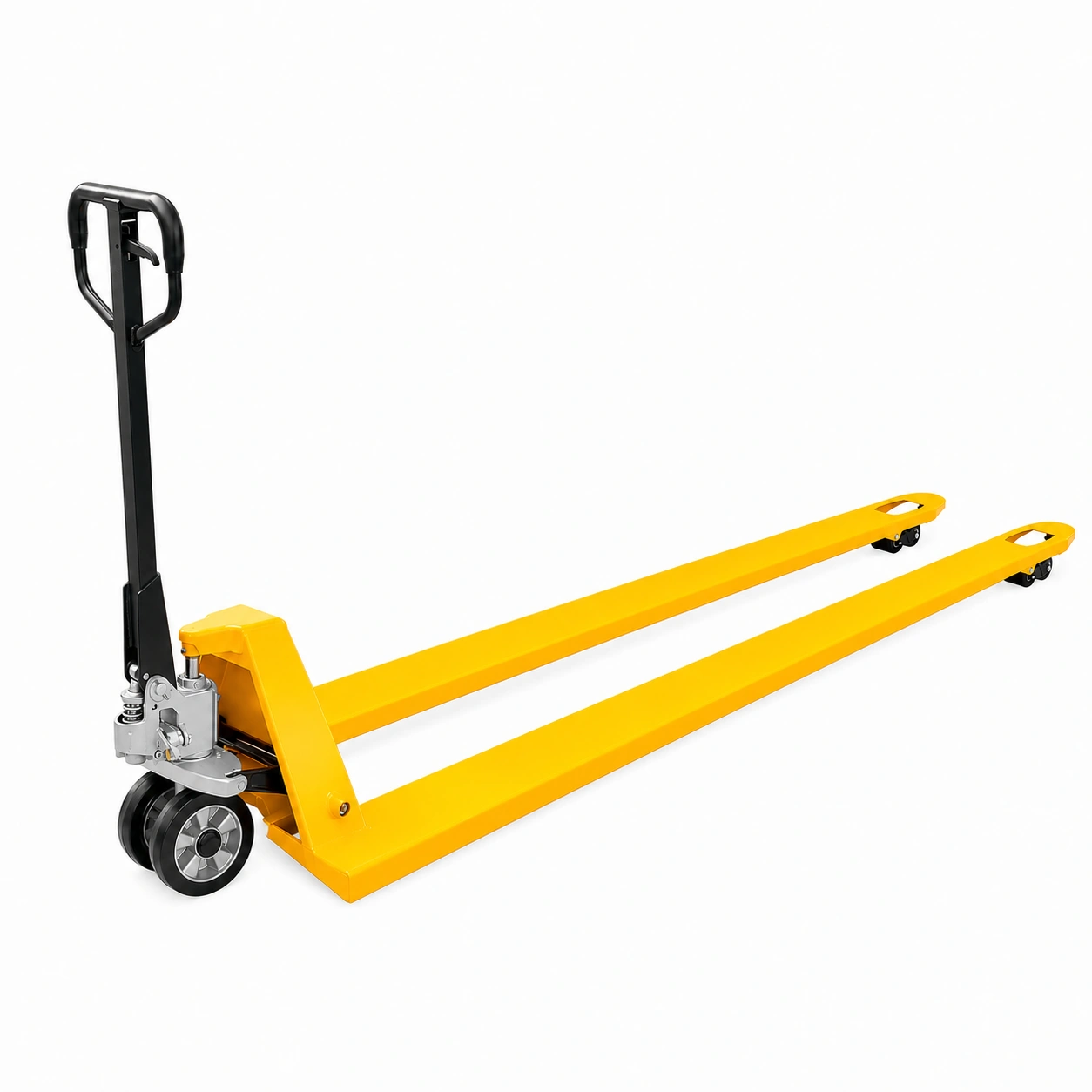
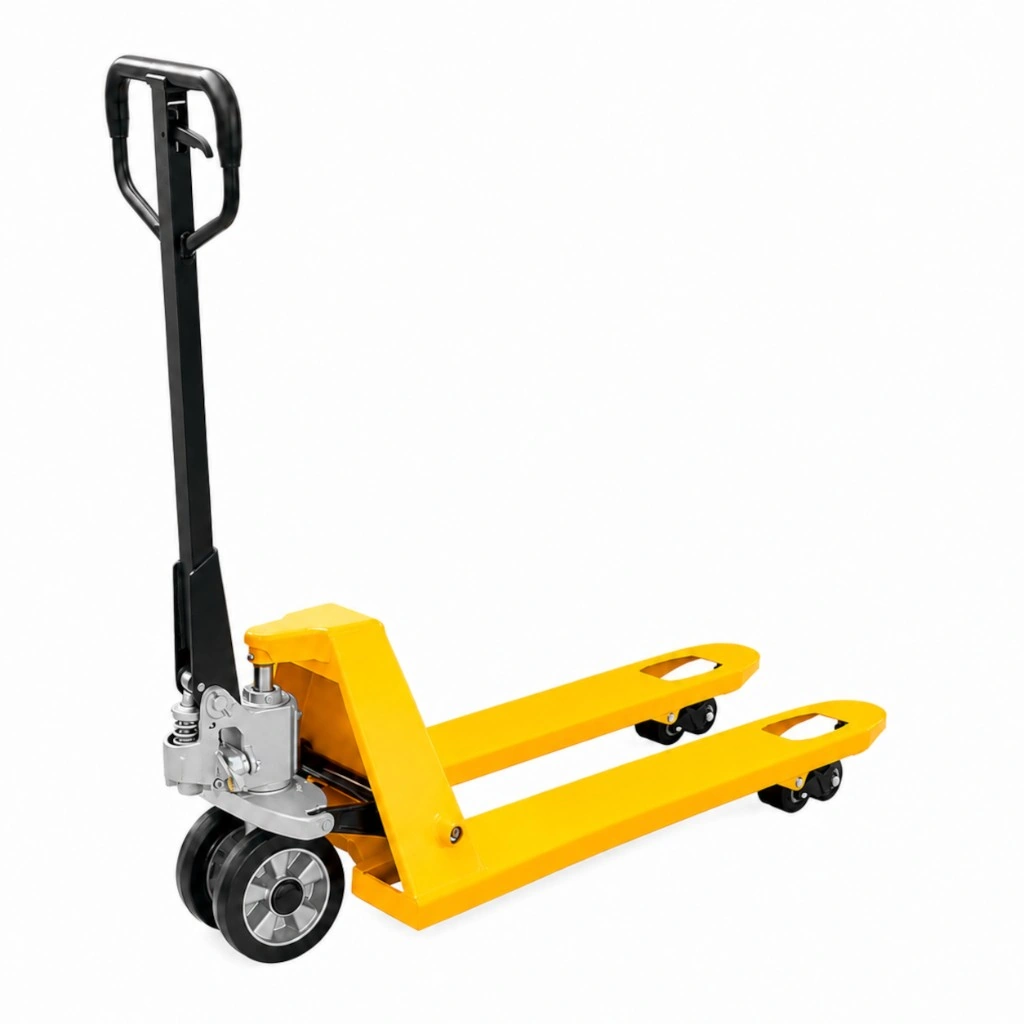
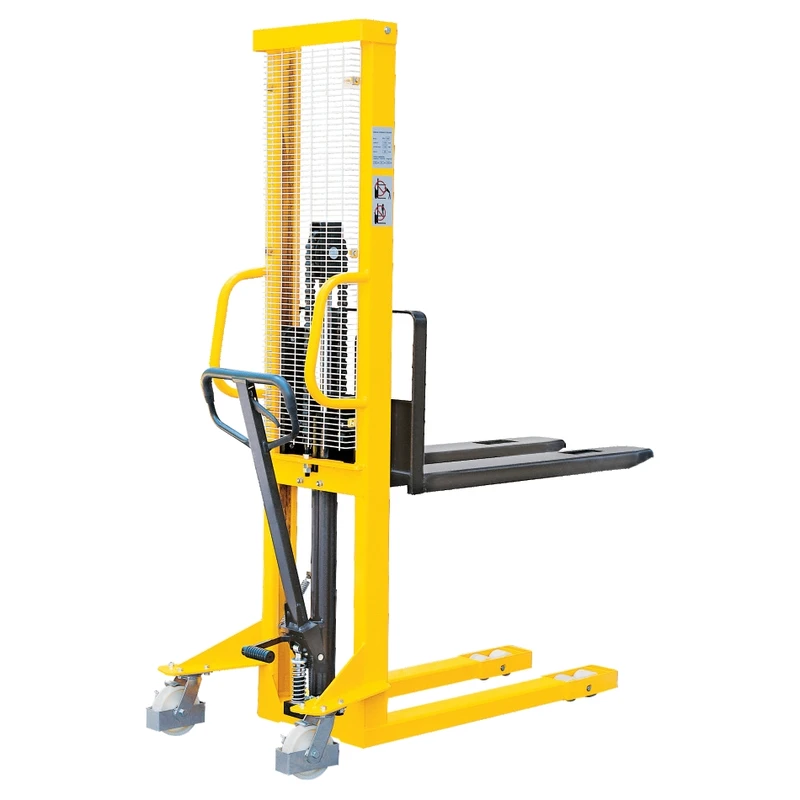
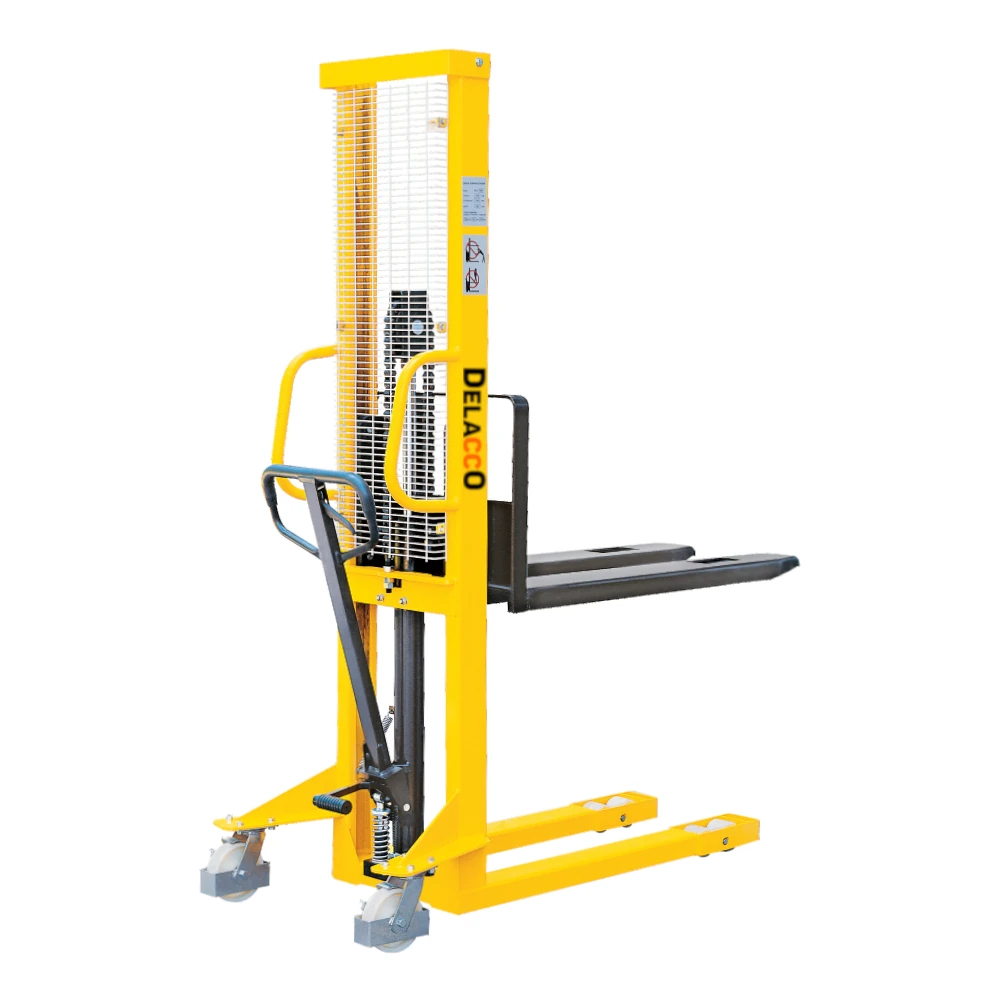
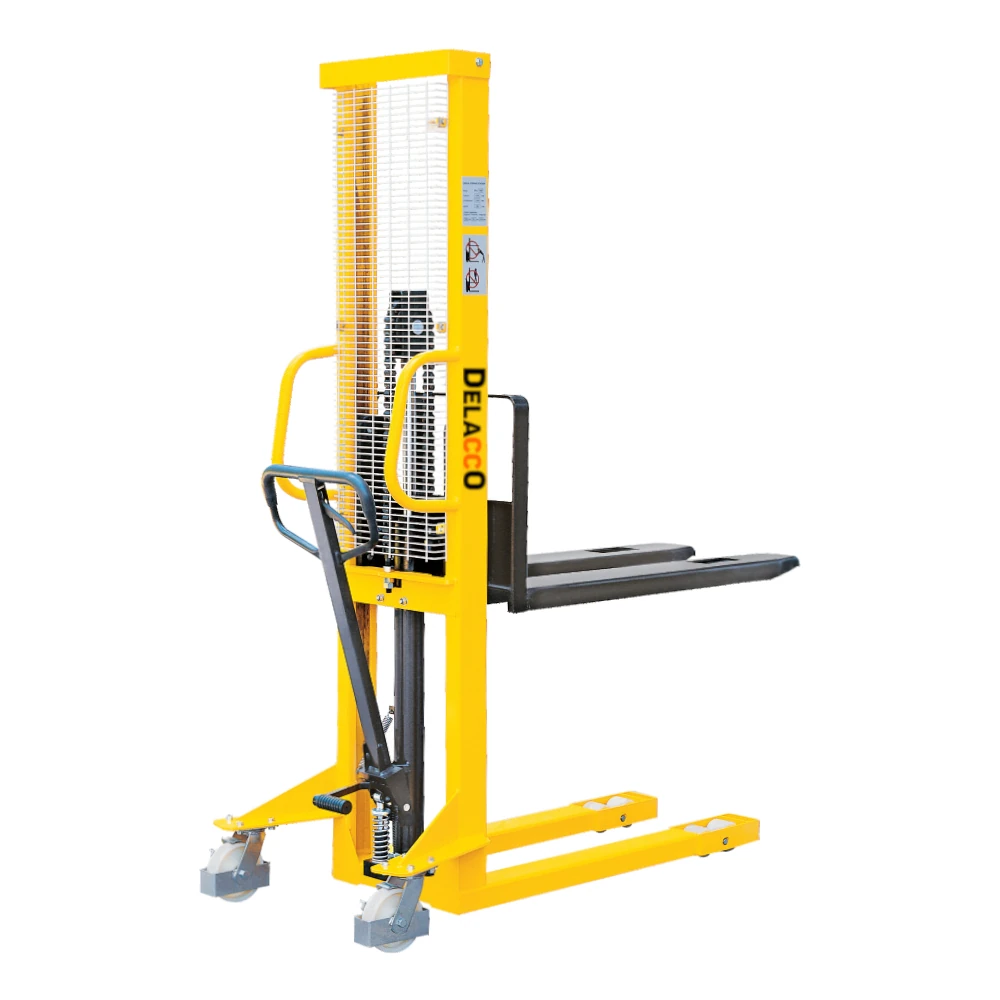
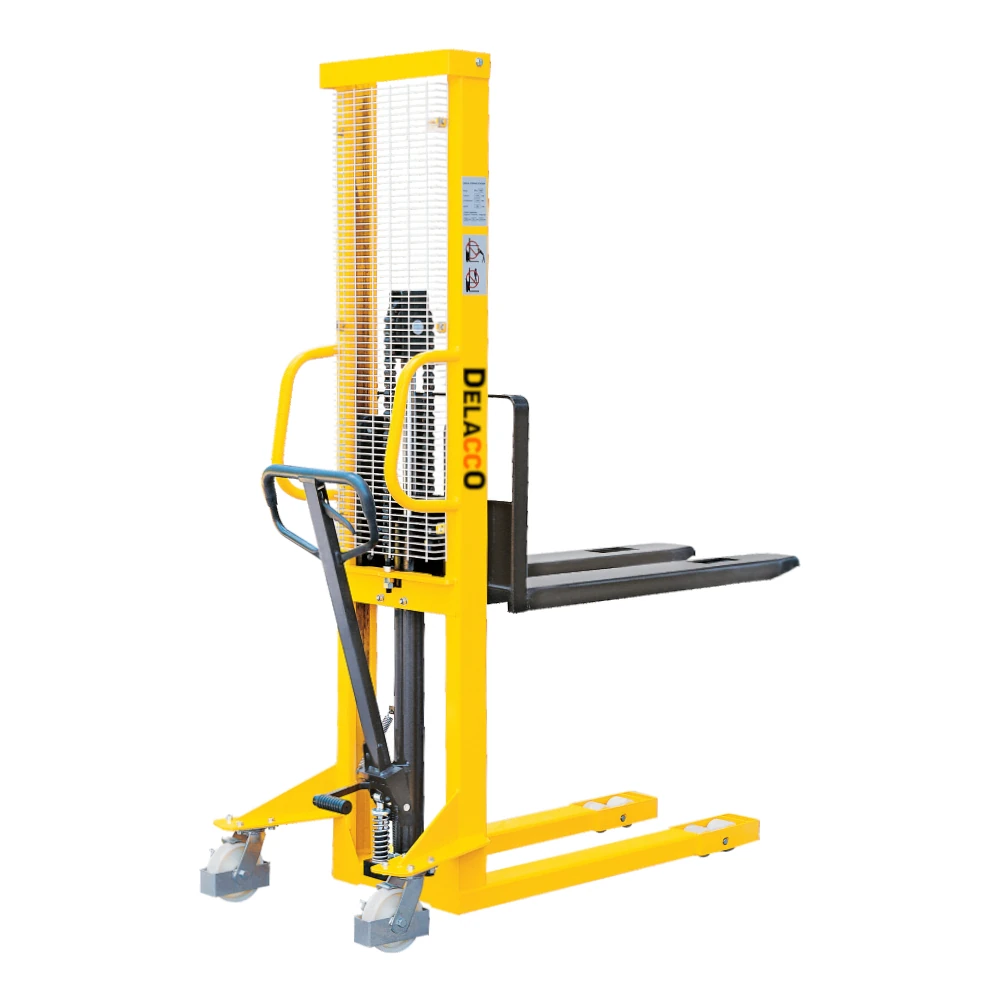
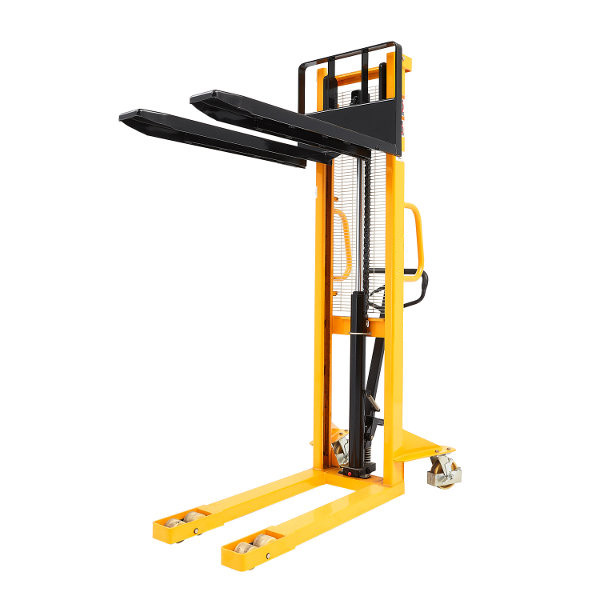
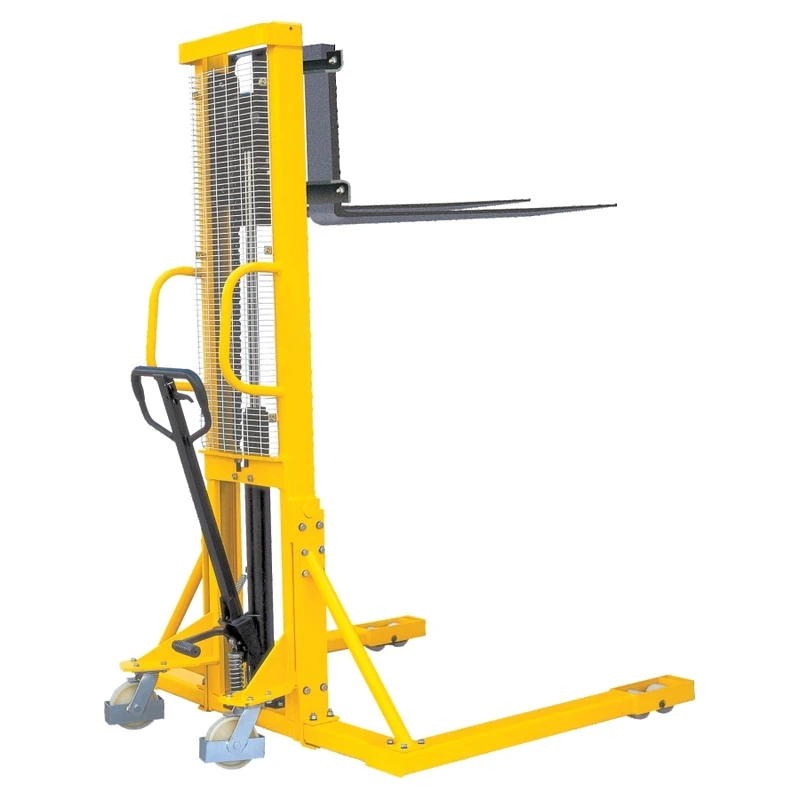
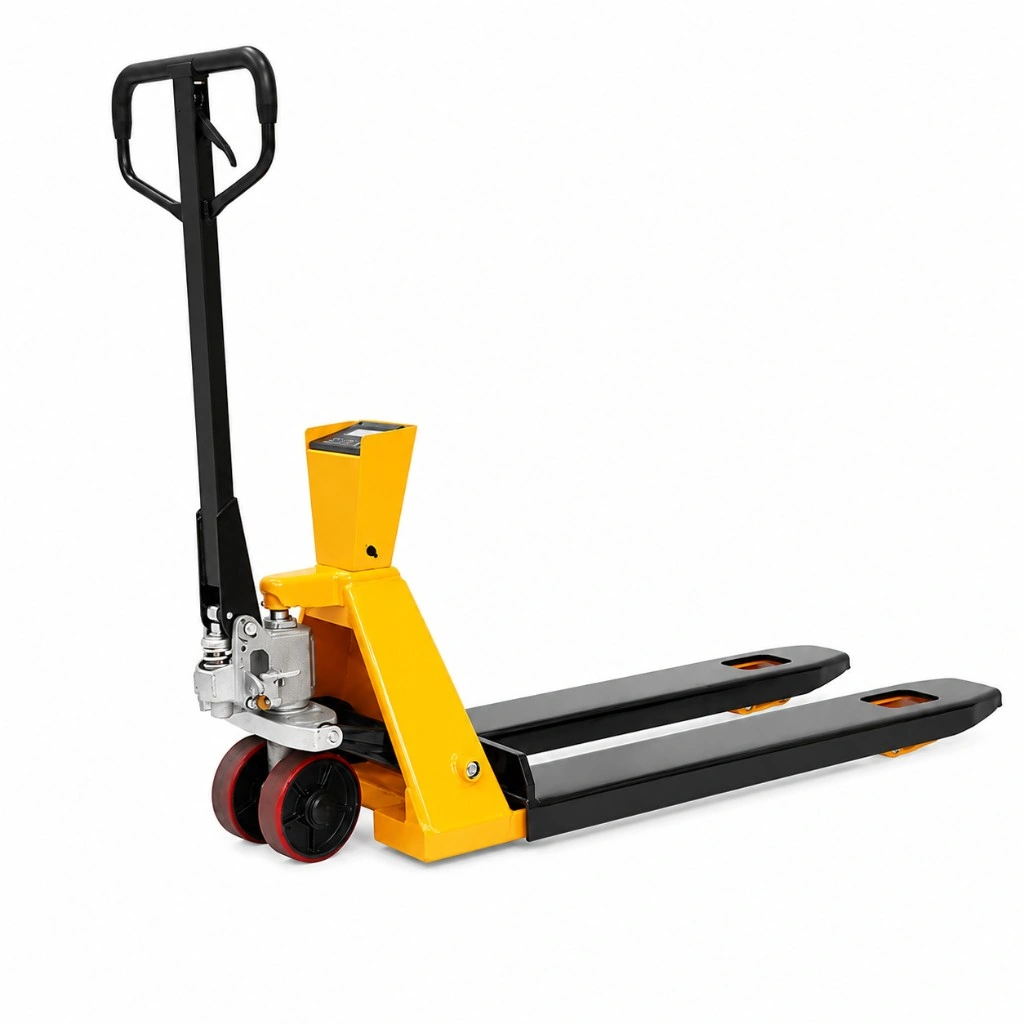
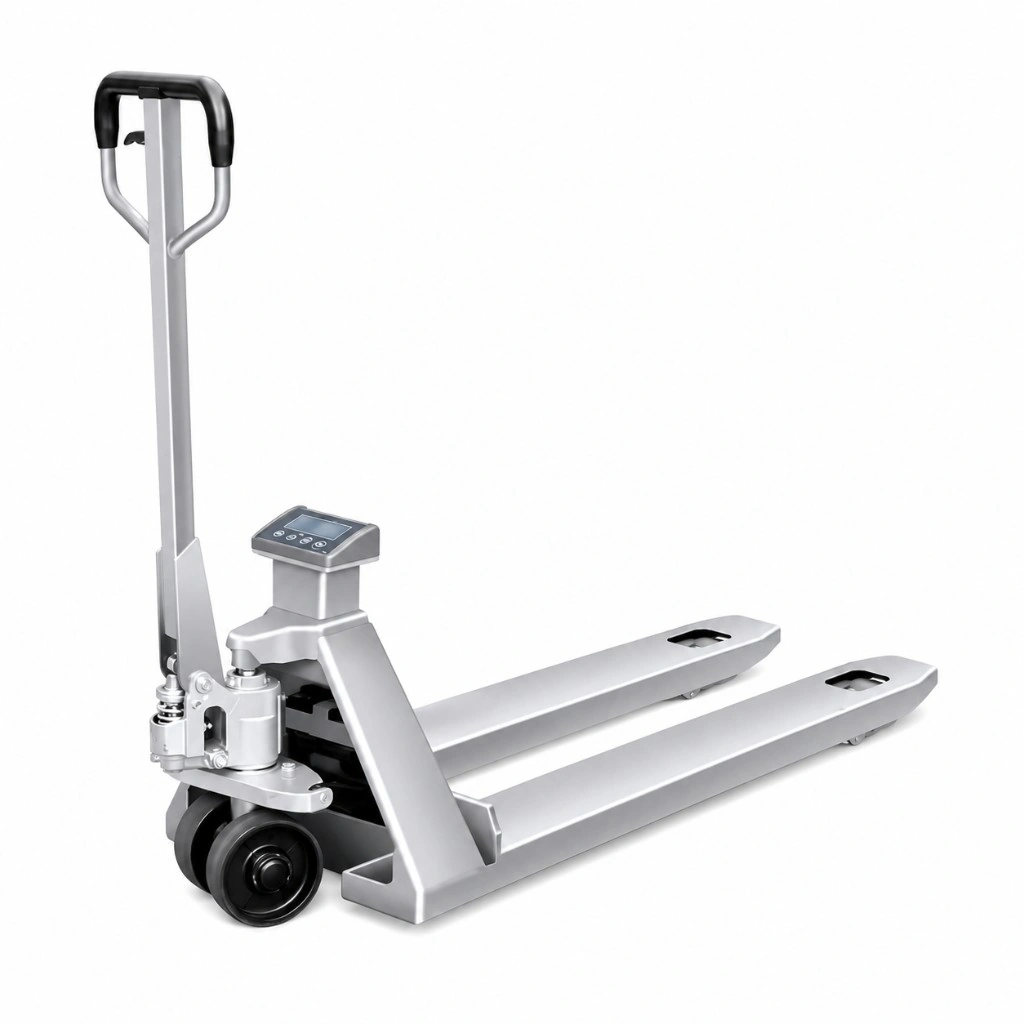
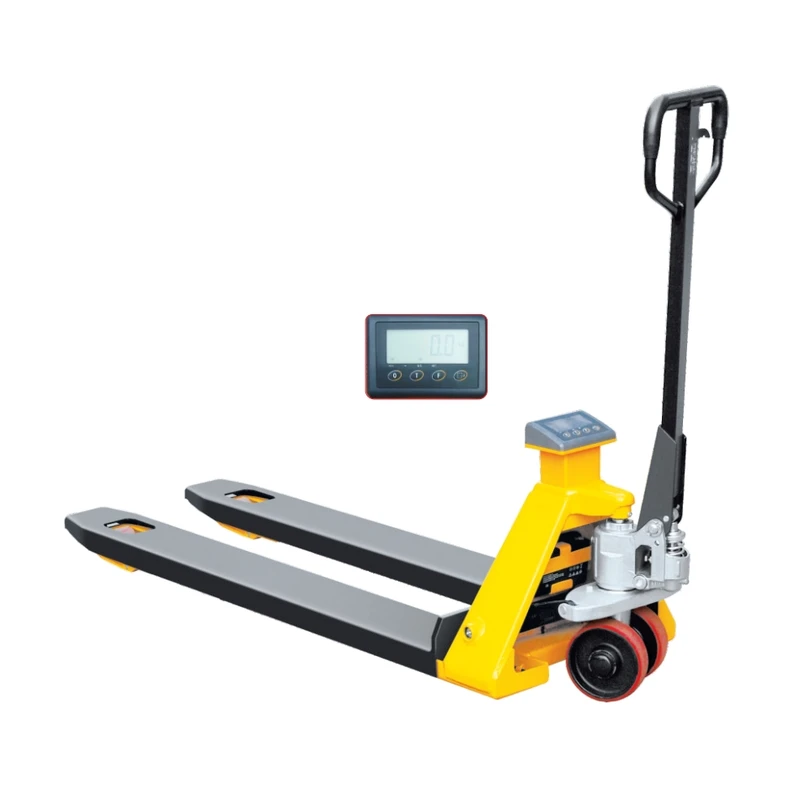
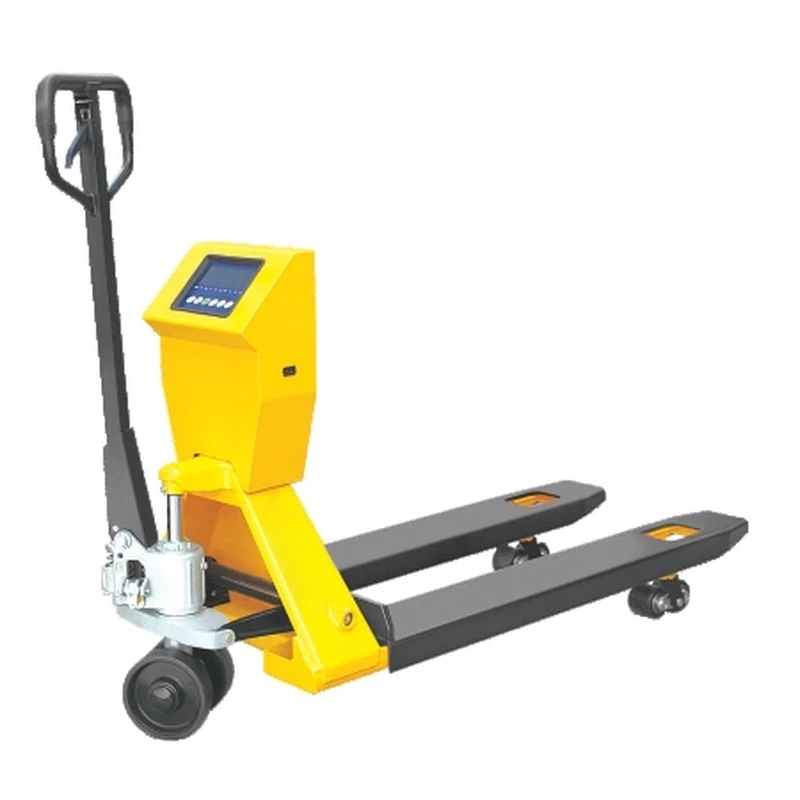
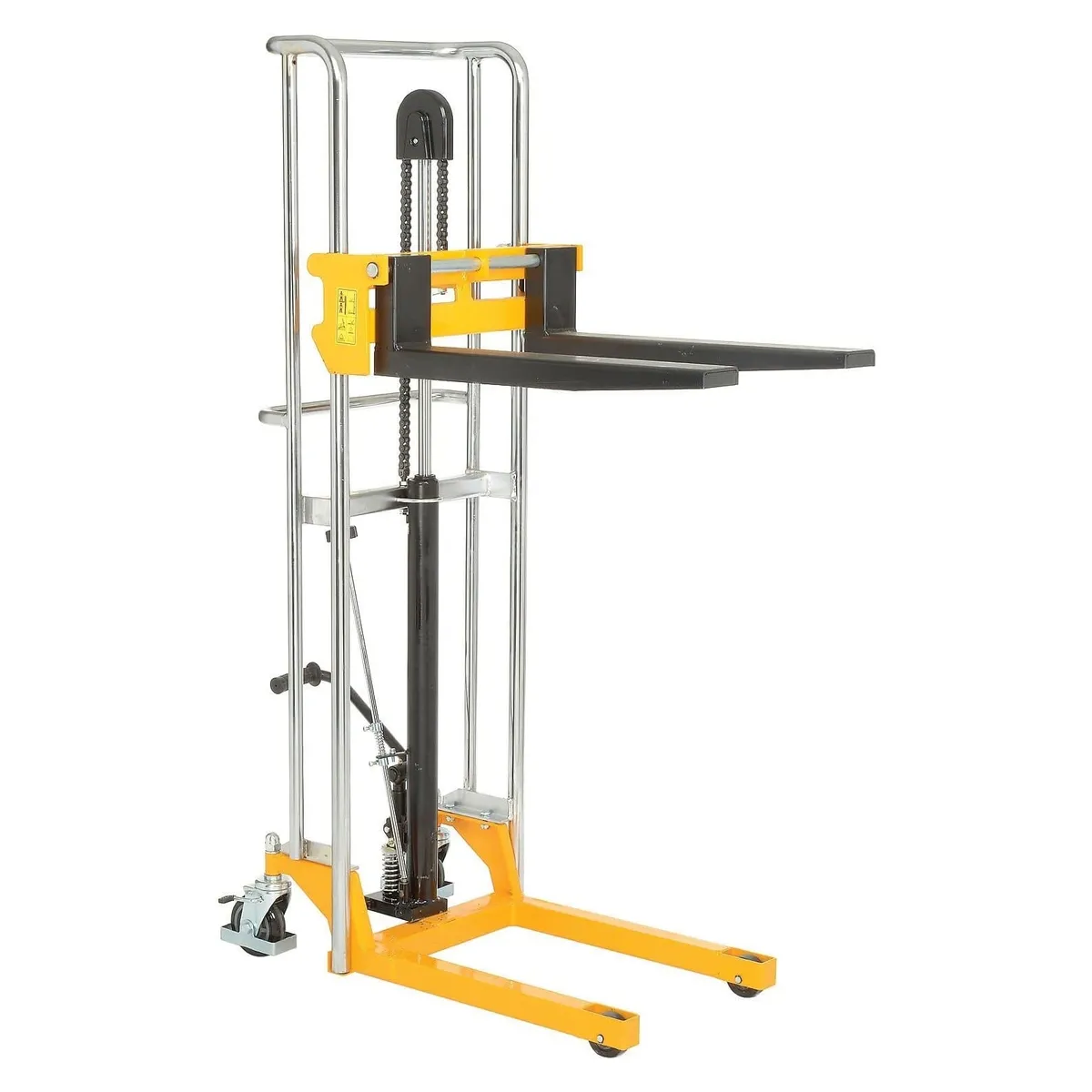
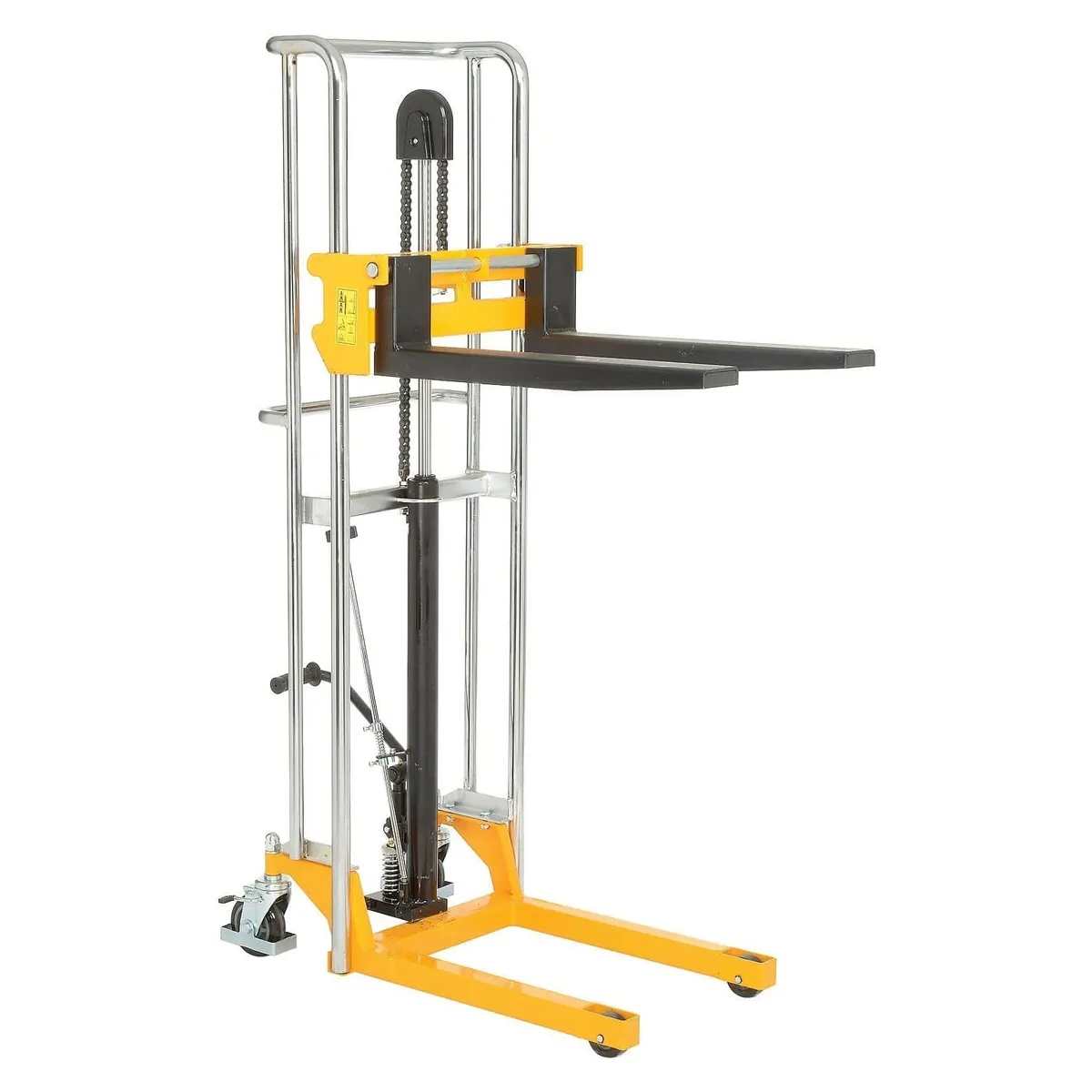
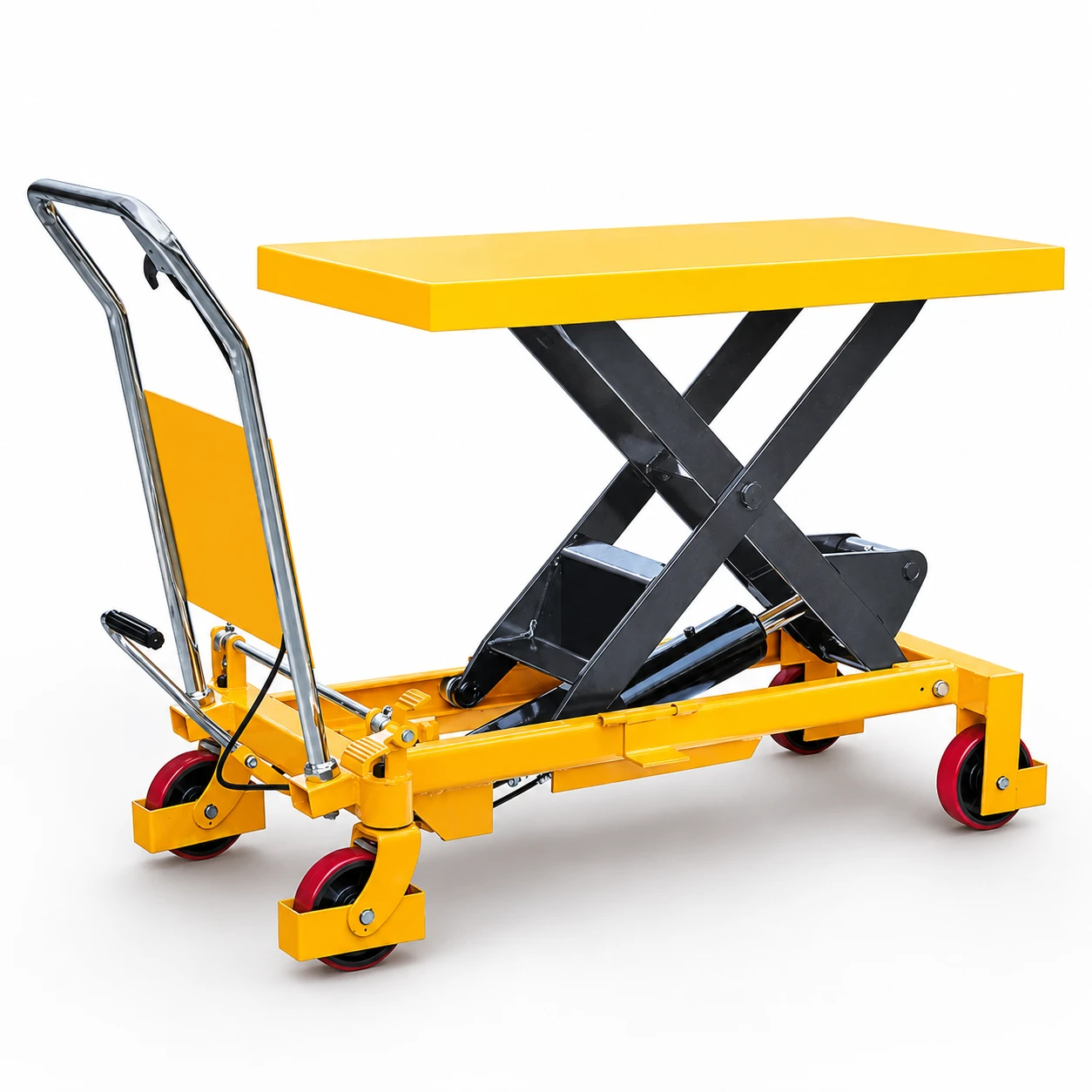
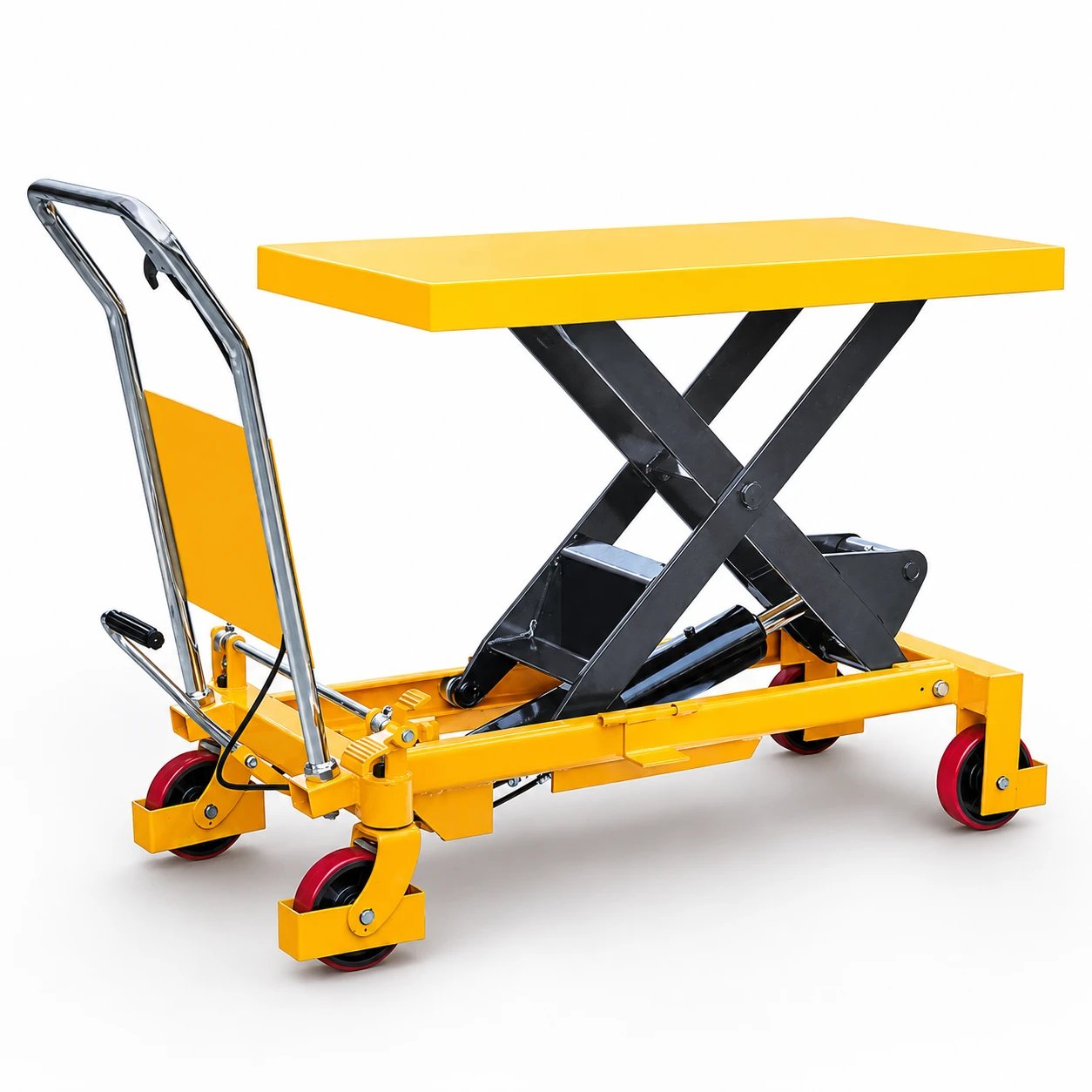
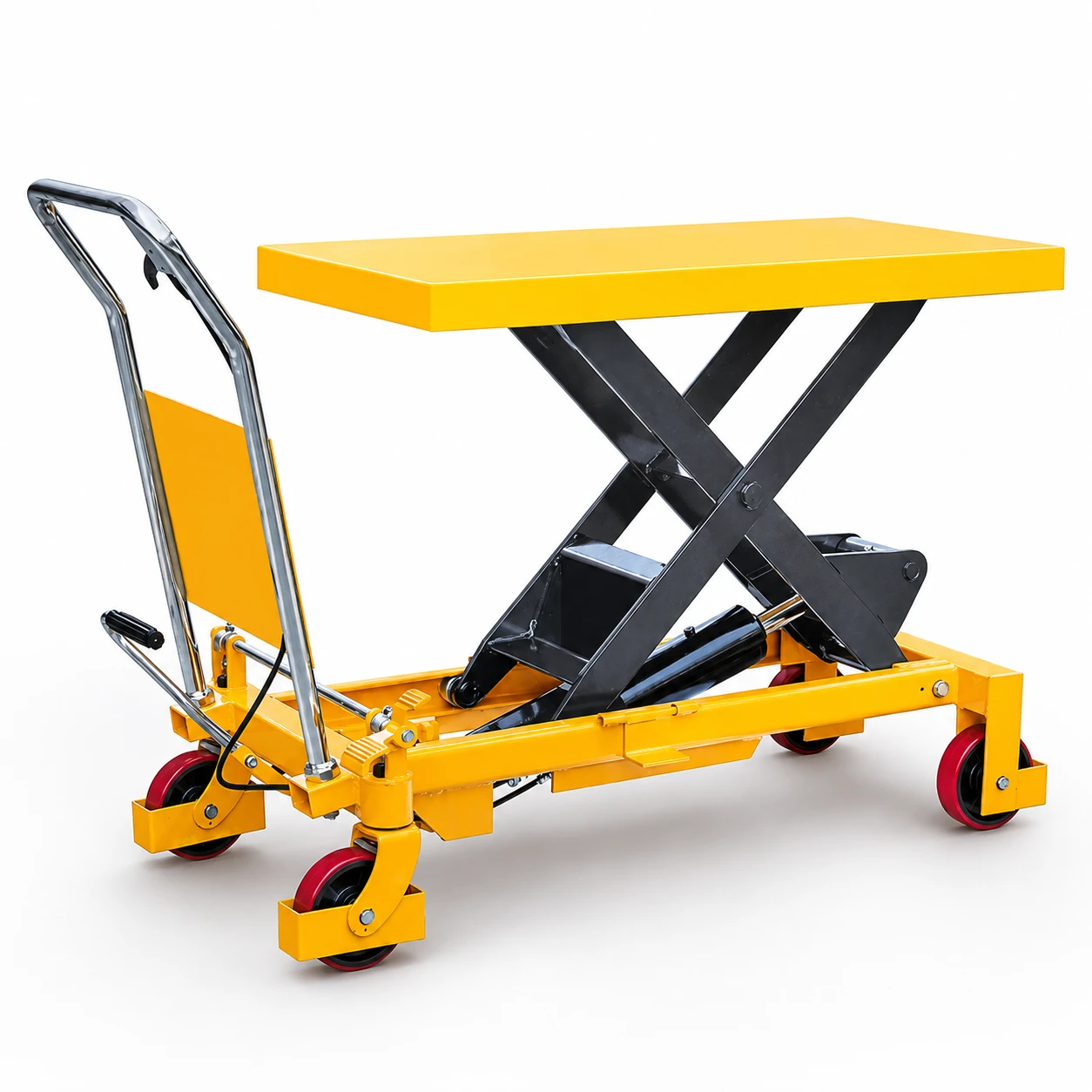
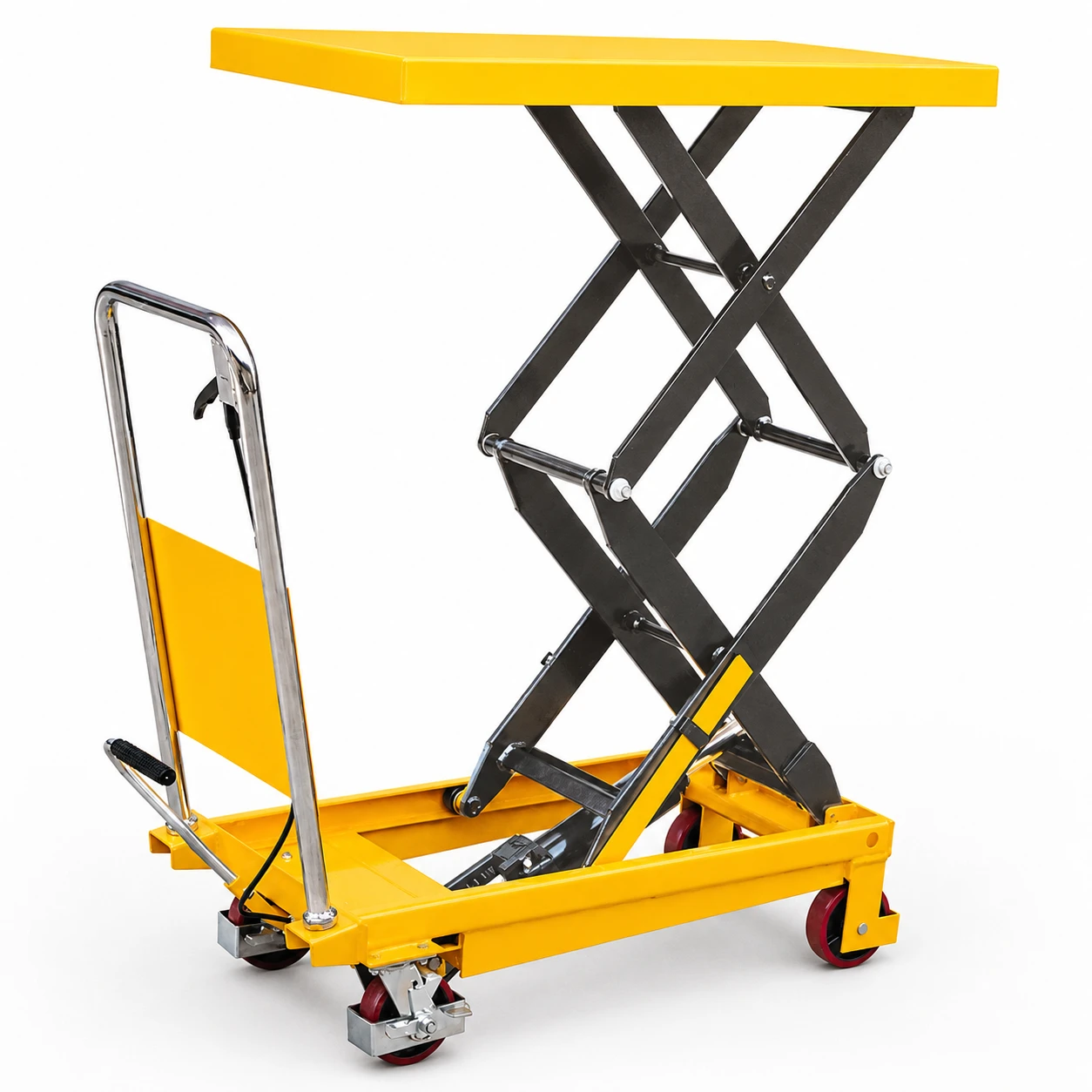
A hand pallet truck lifts a pallet a few centimetres to move it. A pallet stacker (high-lift stacker) lifts the same pallet metres: onto racking, onto a vehicle, onto a machine table, on top of another pallet. For indoor work at moderate heights it does the core job of a forklift at a fraction of the price, with no driver seat, no gas bottle and a footprint that turns inside a normal aisle.
This guide follows the one decision that shapes everything else — manual, semi-electric or full electric — and then the special builds: straddle and counterbalanced stackers for closed pallets, initial-lift and rider models for intensive warehouses, and reach stackers for narrow aisles. Everything below is configurable online with prices shown.
1. The drive decision: who pumps, who pushes
| Manual | Semi-electric | Full electric | |
|---|---|---|---|
| Lifting | Hand hydraulic pump | Battery-powered, push-button | Battery-powered, push-button |
| Travel | Pushed by the operator | Pushed by the operator | Electric AC drive, stepless speed |
| Range | RVV series: 500–2,000 kg, lifts to 3,000 mm, from €695 | PEVV series: 1,000–1,500 kg, 1,600–3,500 mm, from €2,176 | EVV series: 1,000–2,000 kg, masts to 6,500 mm, from €2,976 |
The honest crossovers: pumping a tonne to 1.6 m is fine occasionally — pumping it to 3 m many times a day is a workout nobody signed up for. Electric lifting (semi-electric) is the first upgrade that matters. Electric travel pays for itself when distances grow or when a loaded stacker is pushed up ramps and across long halls all shift.
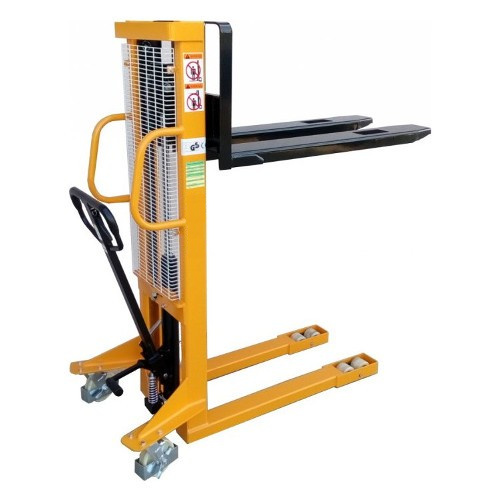
2. Manual stackers: quiet, emission-free, no charging point
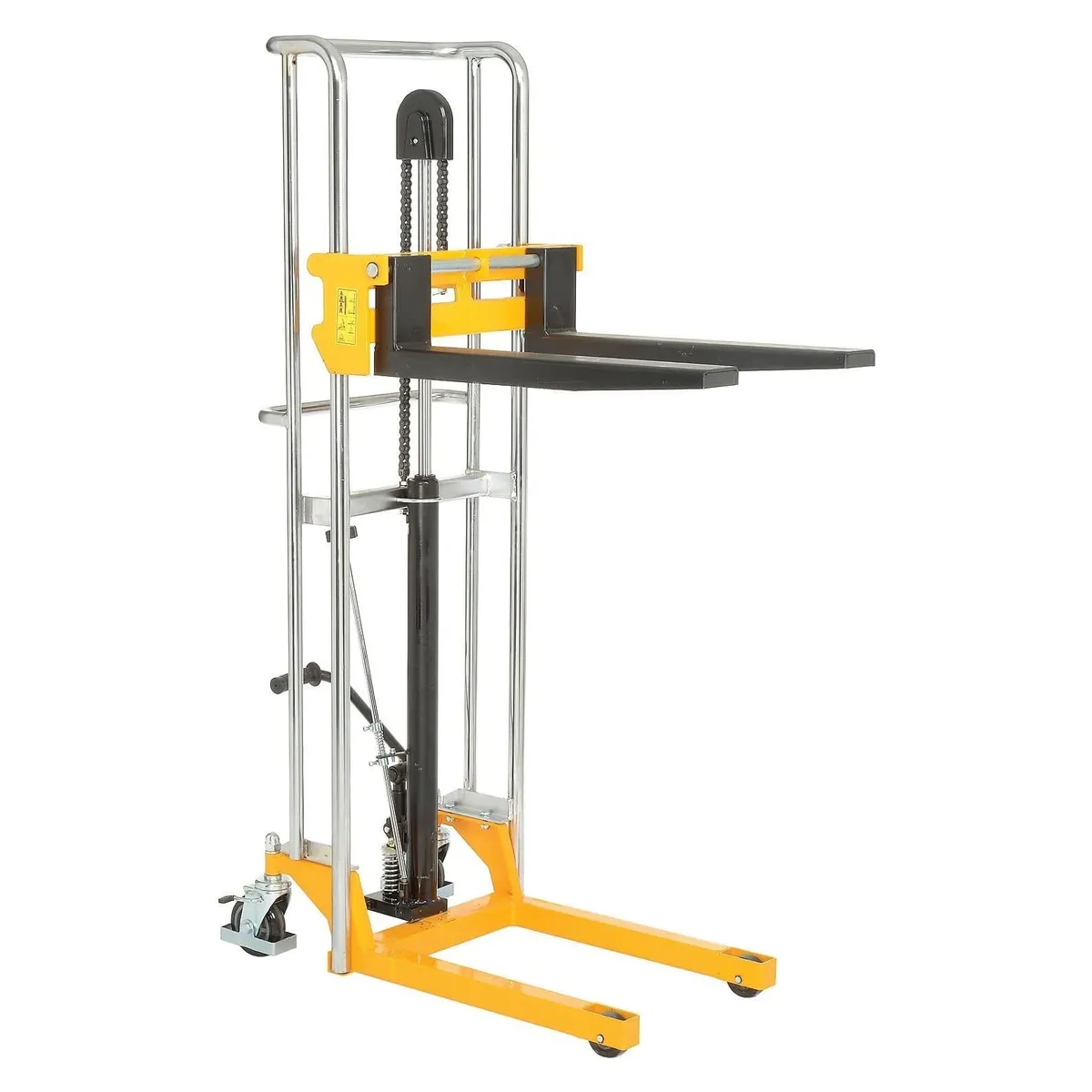
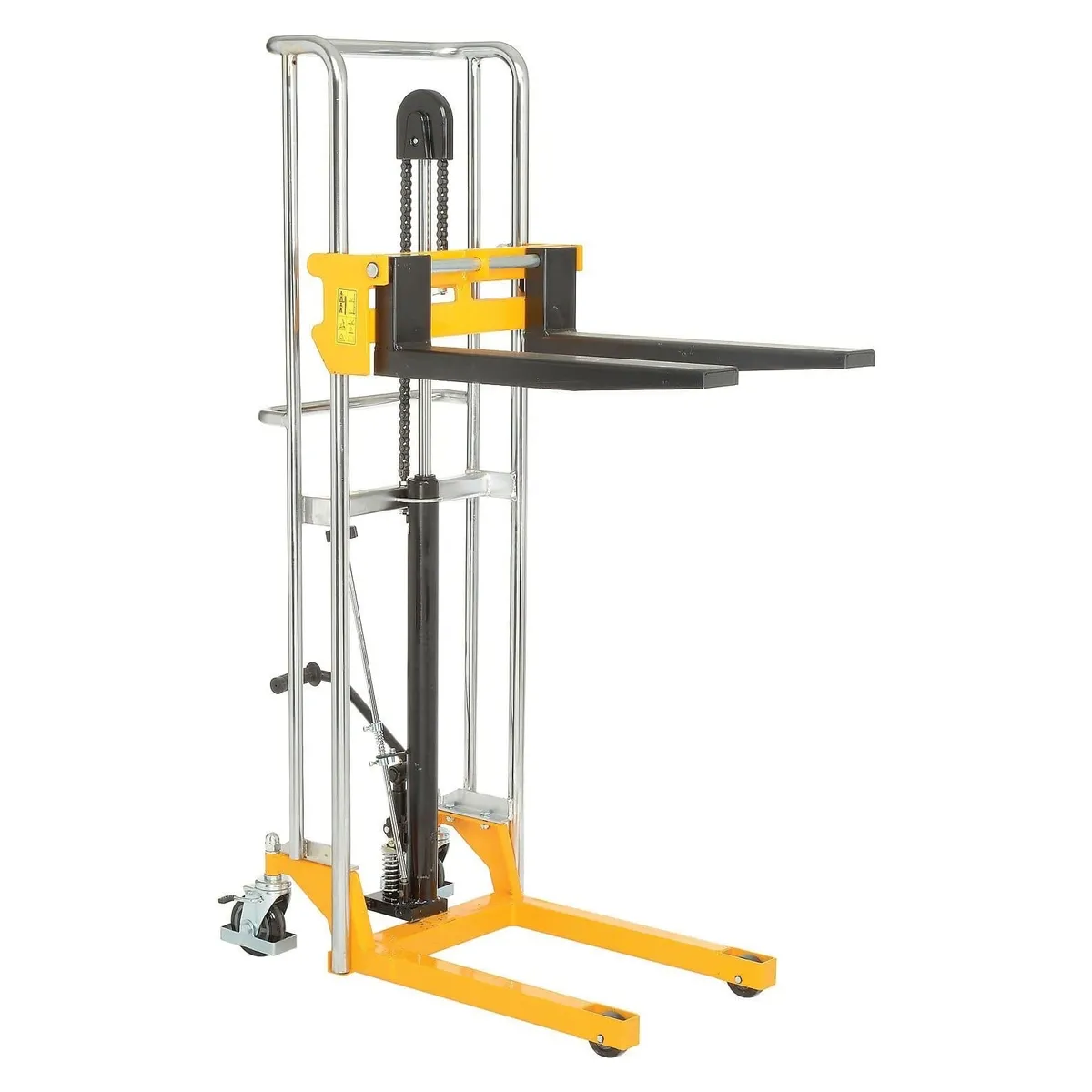
The RVV1000 (1,000 kg, lift heights 1,000–3,000 mm) and heavy-duty RVV1500 cover most workshop stacking; versions with adjustable forged forks go to 2,000 kg. Two specials solve specific problems:
- Closed pallets: the straddle version (RVV-DSV) puts its support legs around the pallet instead of under it — for closed, bottom-boarded and non-standard pallets.
- Small pallets and deliveries: the compact RDV400 delivery stacker (400 kg, from €476) is purpose-built for 800×600 mm half pallets in vans, shops and back rooms.
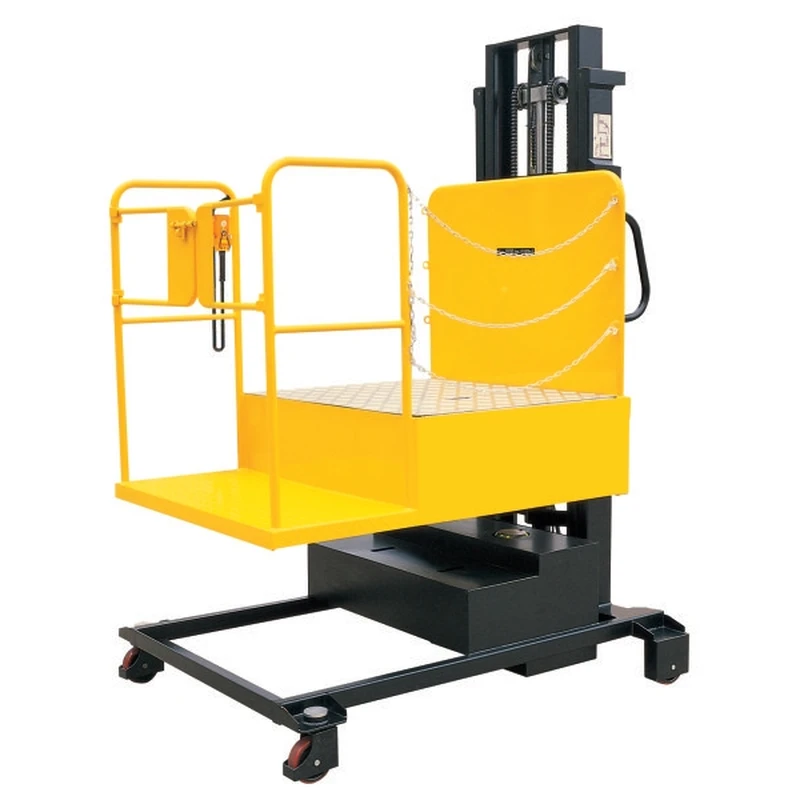
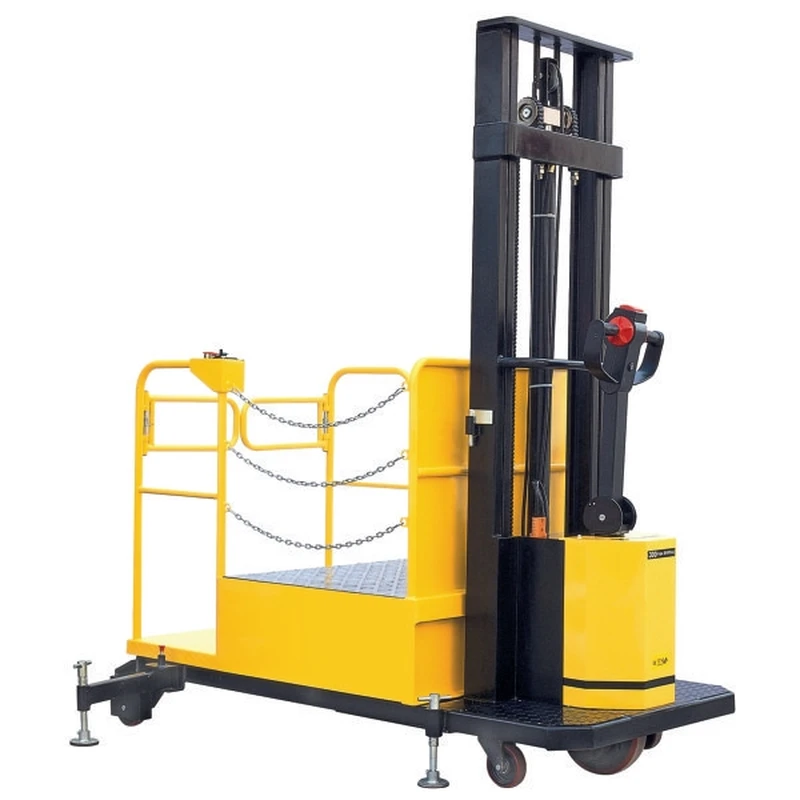
- Installation work: the VVR material lifter raises 200–350 kg to heights of 3,000–7,400 mm for mounting ducts, windows and cable trays (EN ISO 3691-5:2009).
3. Semi-electric: push-button lifting, manual travel
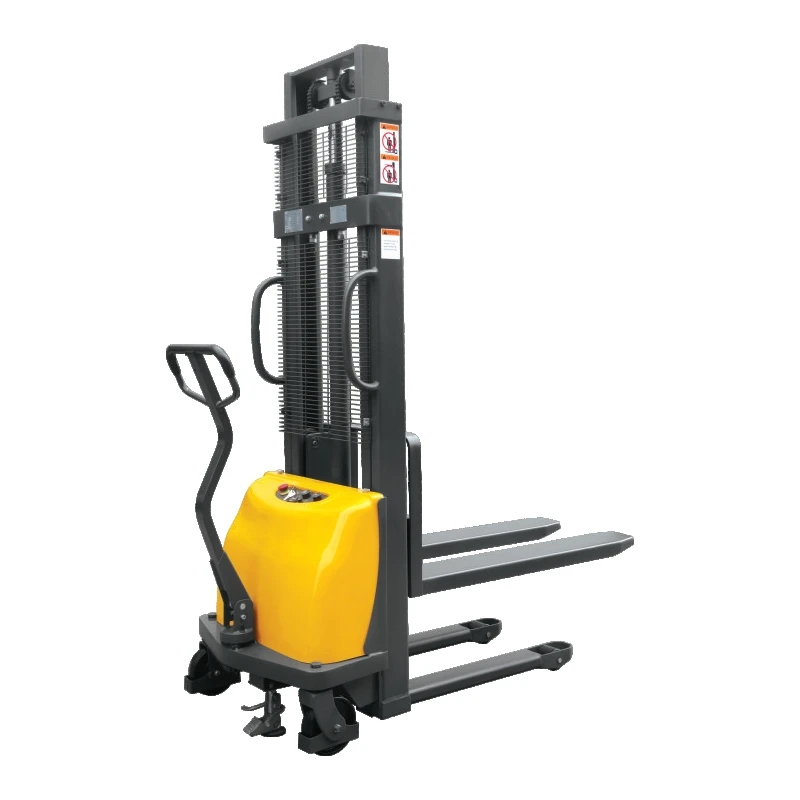
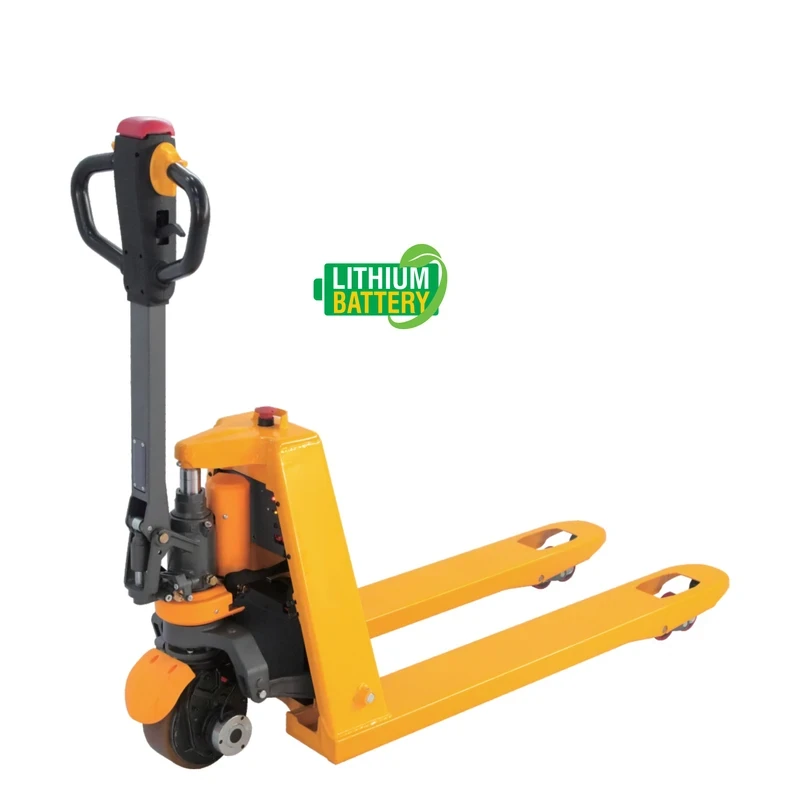
The PEVV warehouse stacker (1,000–1,500 kg, 1,600–3,500 mm, from €2,176) removes the pumping and keeps the price sane: battery lifting with an explosion-proof cylinder valve, over-discharge battery protection and a labour-saving foot brake. A straddle version with adjustable legs handles closed and non-standard pallets. Choose semi-electric when lifts are frequent but travel distances are short.
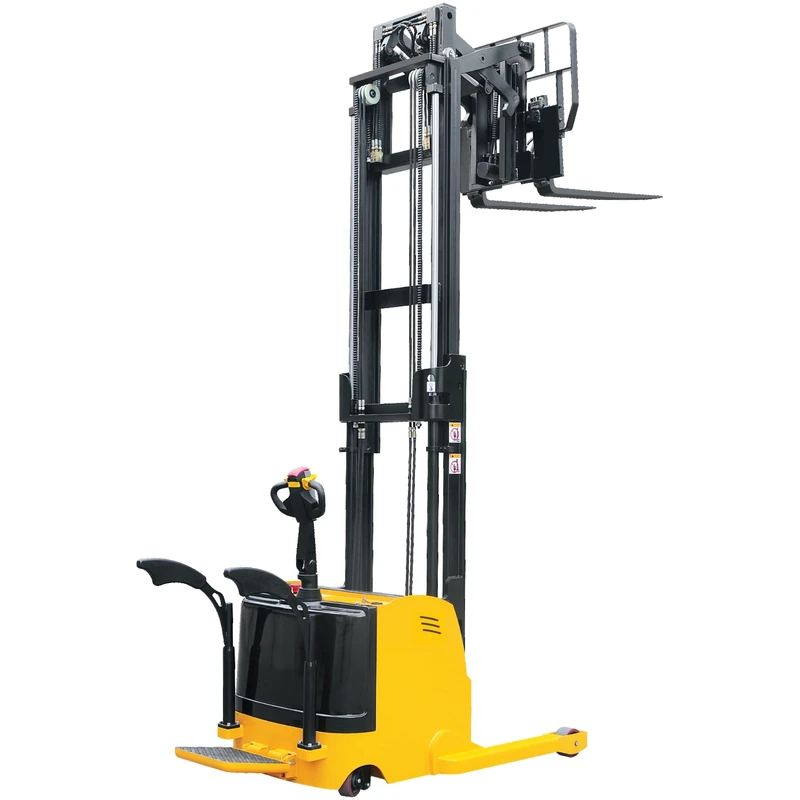
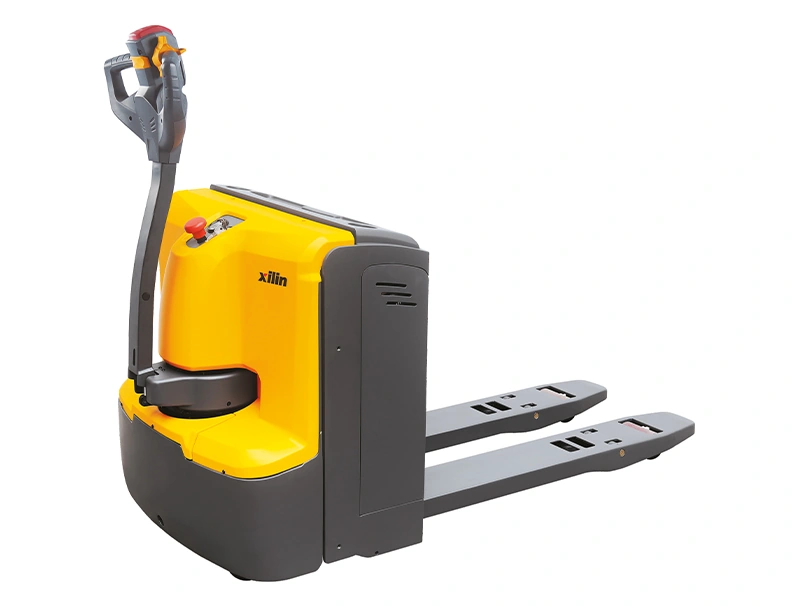
4. Full electric: from light walkie to rider
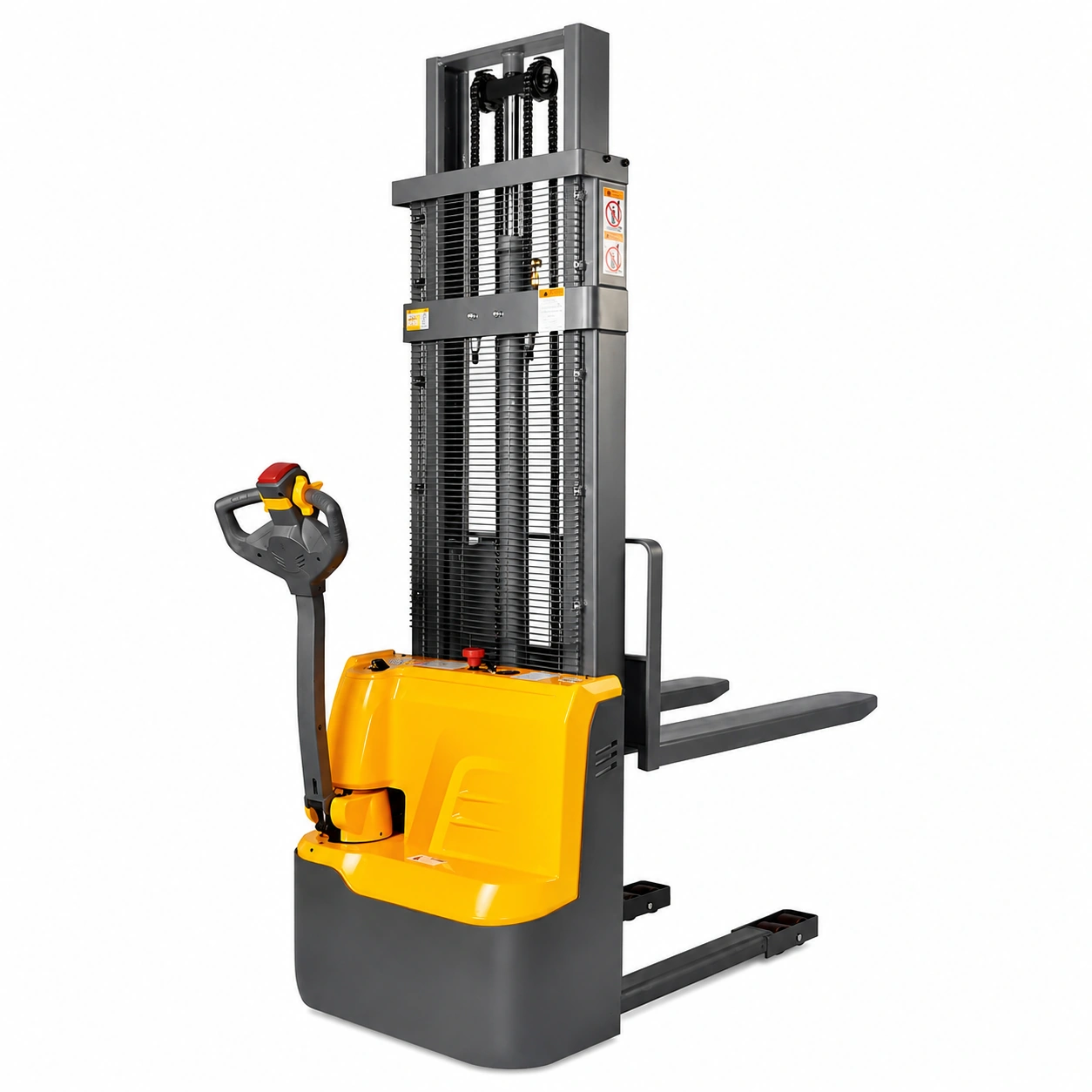
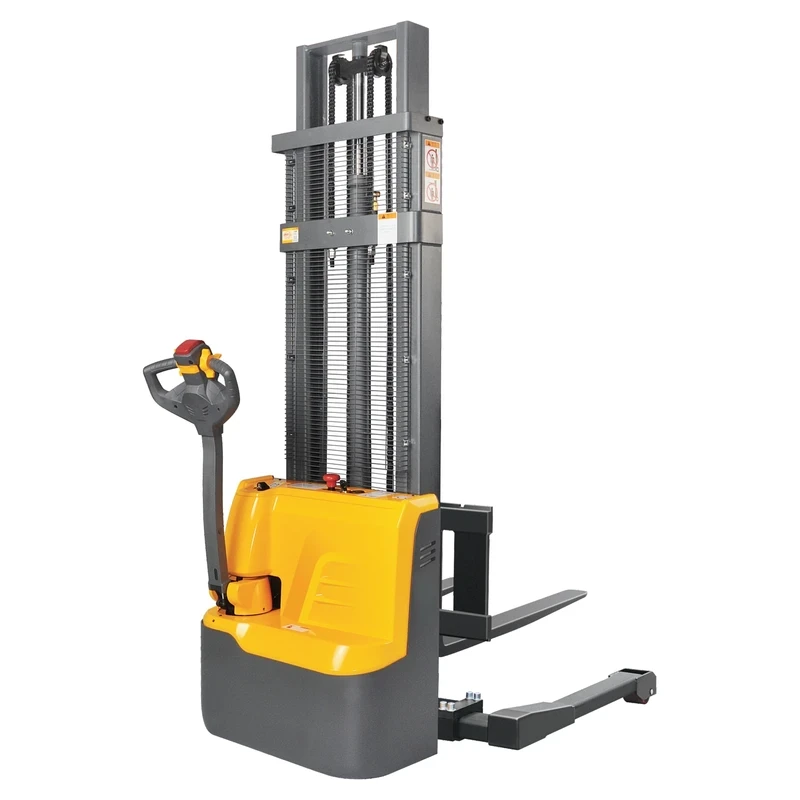
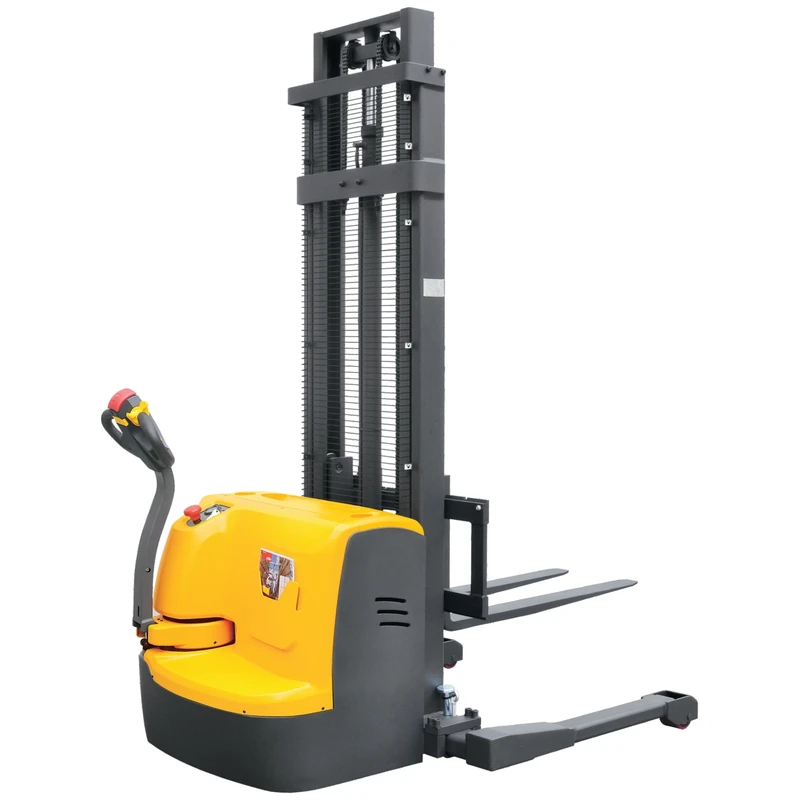
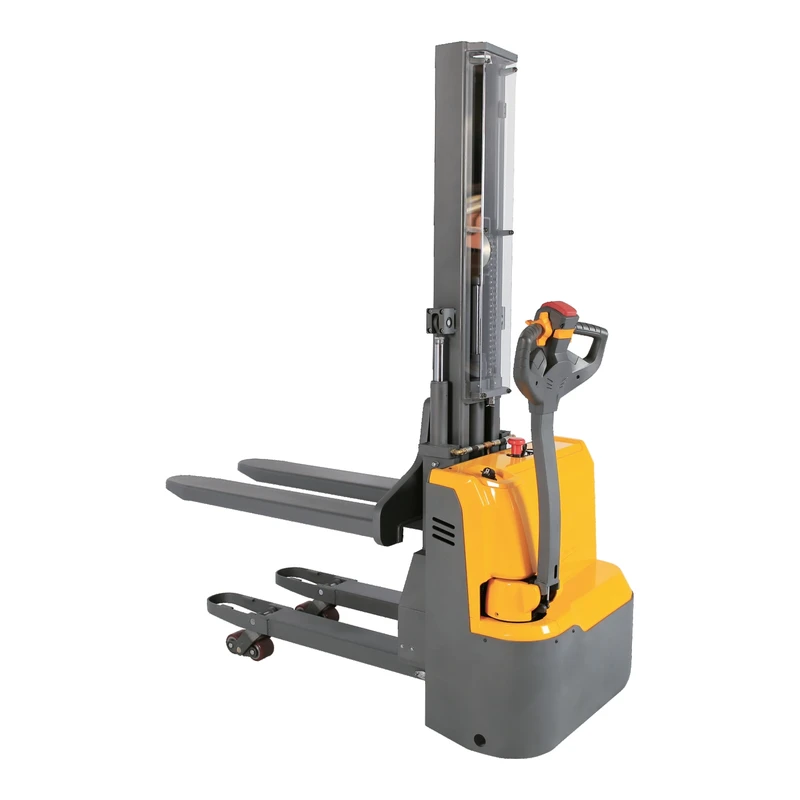
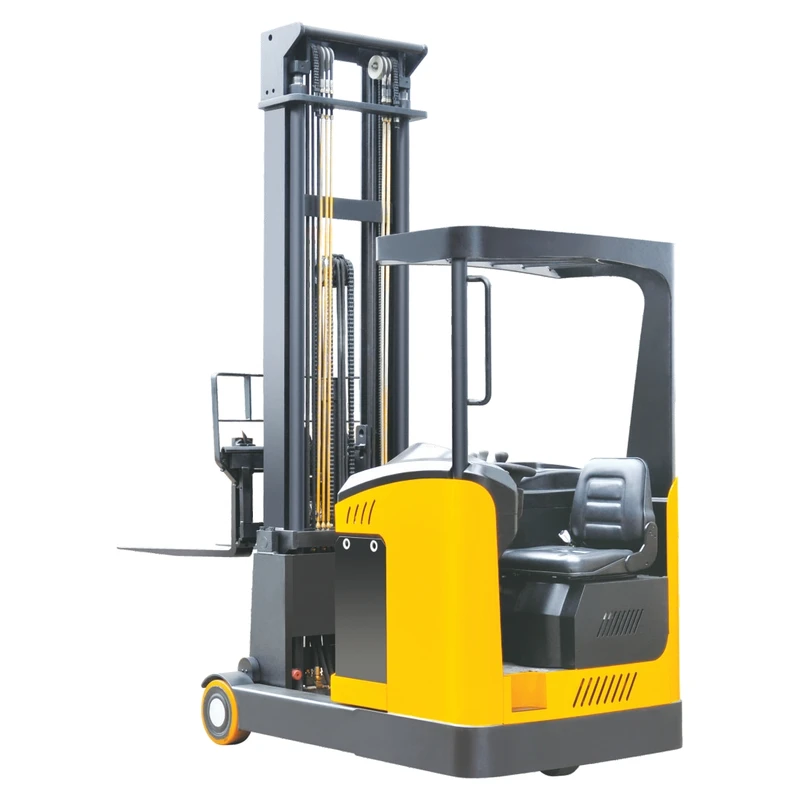
- Entry point: the super-light EVV-B walkie (1,000–1,500 kg, masts 1,600–3,500 mm, from €2,976) has a footprint and turning radius close to a manual stacker, with a maintenance-free GEL battery or LiFePO4 in the -Li version.
- The full walkie: the EVV series adds AC drive with regenerative braking, stepless speed control and masts to 5,600 mm.
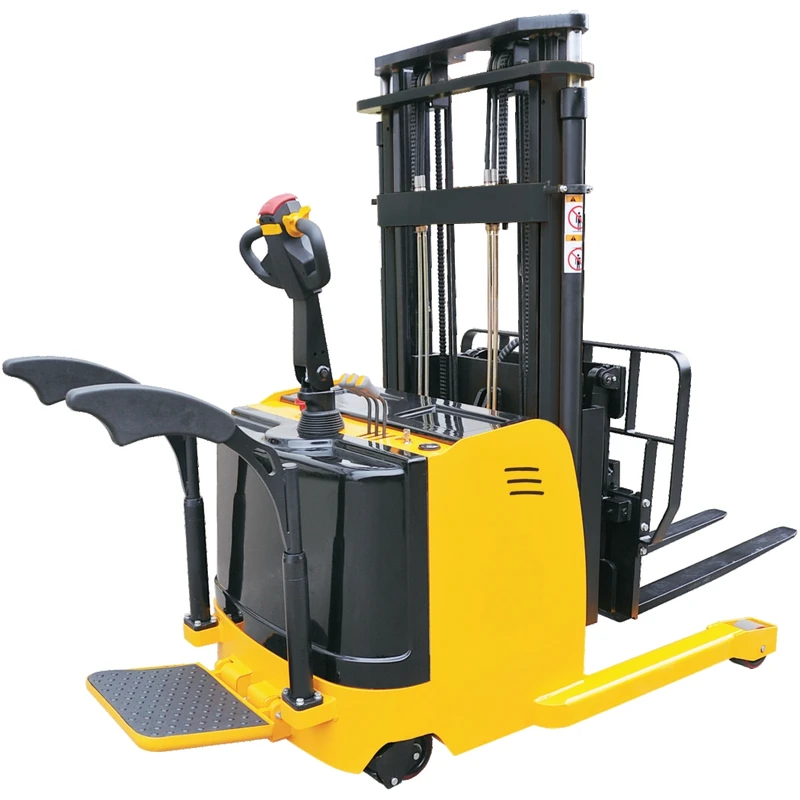
- Two pallets at once: the EVV15-I with initial lift raises its support legs to carry a second pallet below the forks — 1,500 kg rated, 2,000 kg in double-pallet transport (from €11,040).
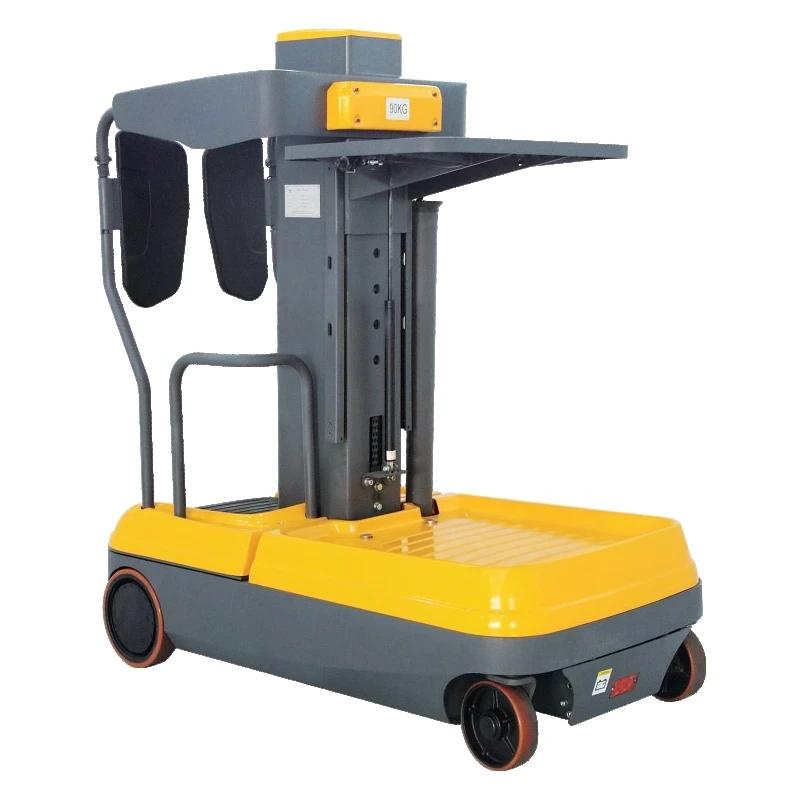
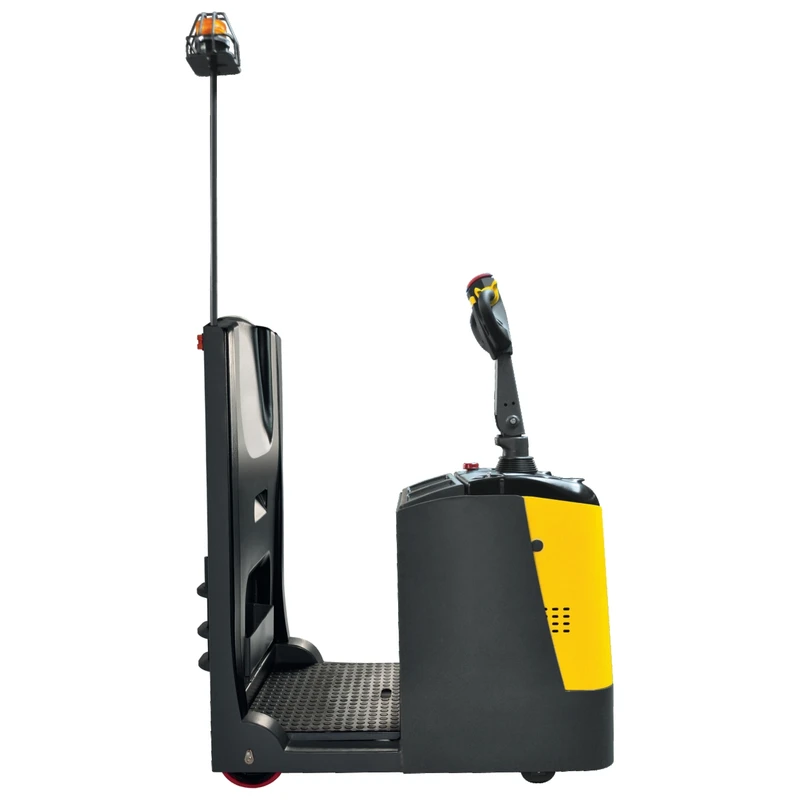
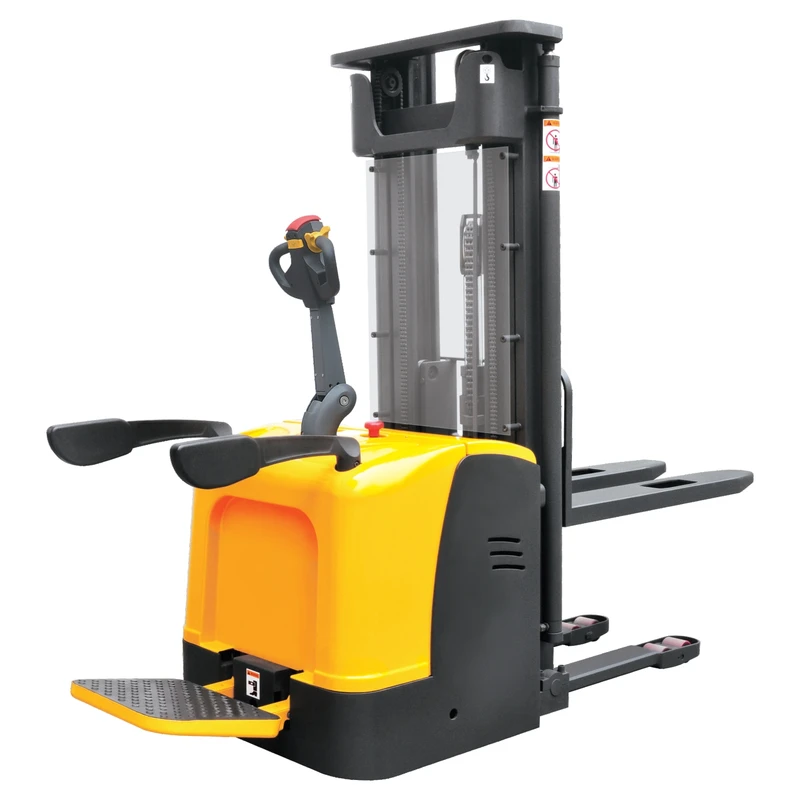
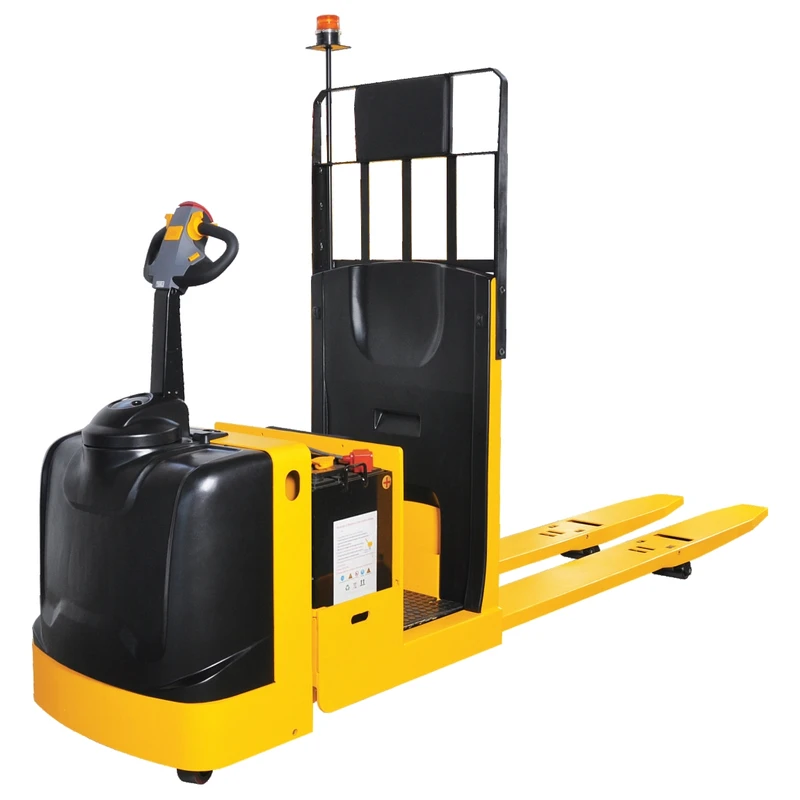
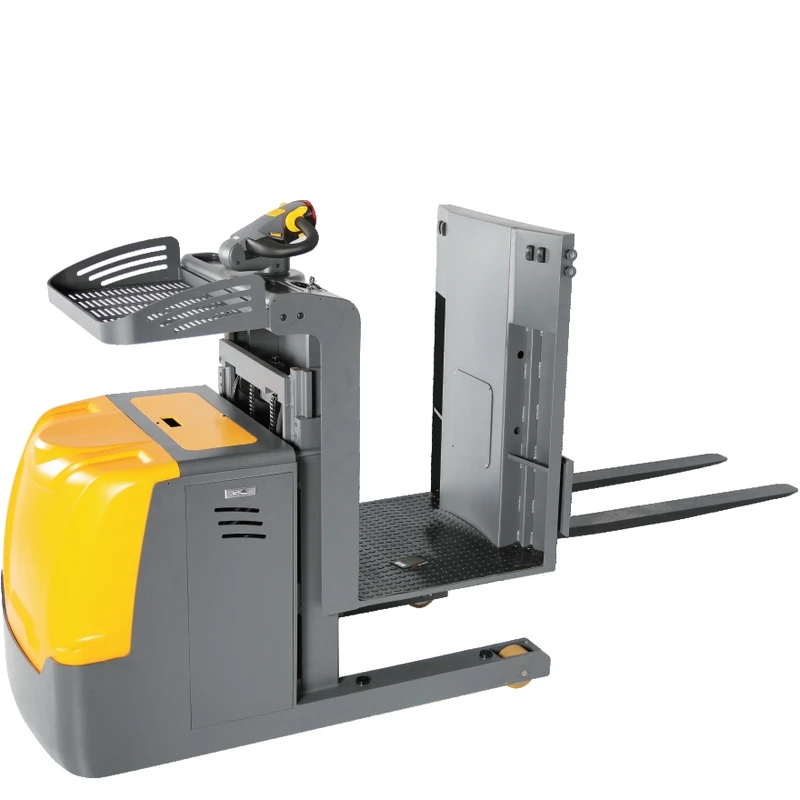
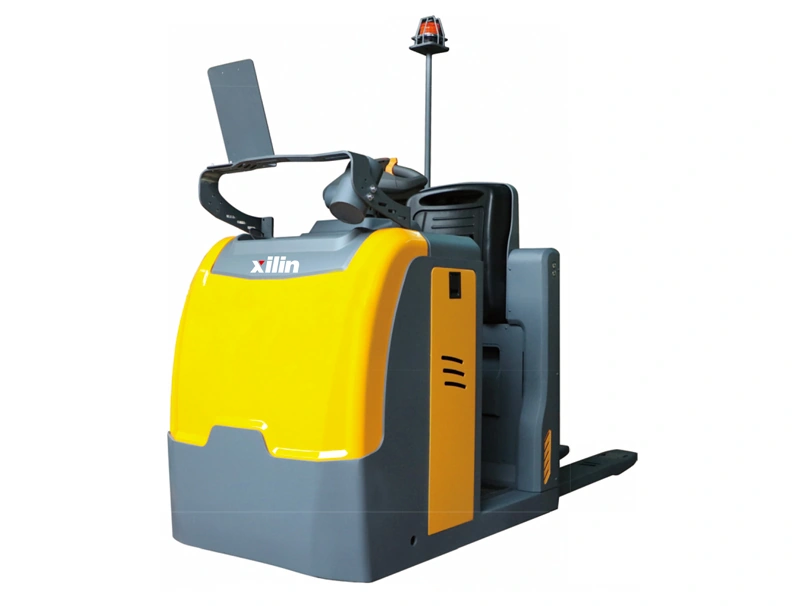
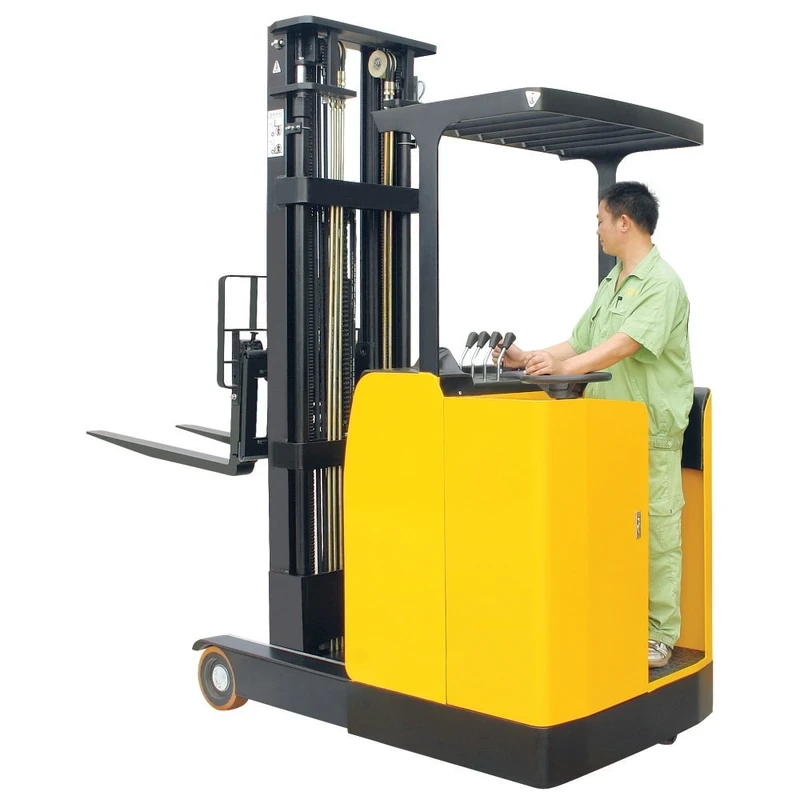
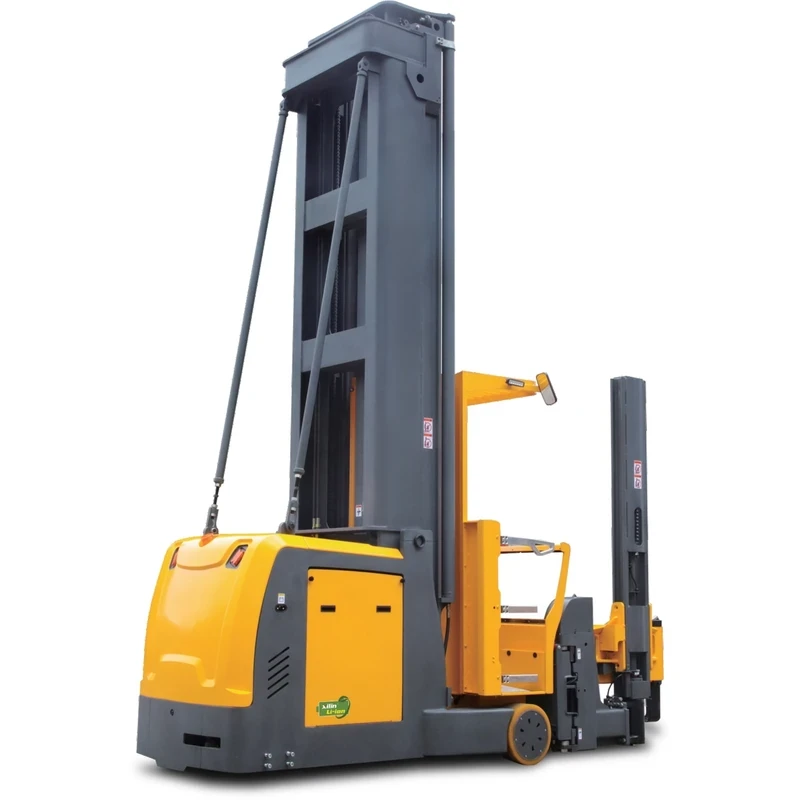
- Long runs: rider-platform models like the EVV20-P (2,000 kg, masts to 6,500 mm, from €10,490) let the operator ride instead of walk.
- Compact self-lifter: the EVV05SU (500 kg, 800–1,300 mm) is the smallest battery stacker for workshops and back-of-store areas.
5. Closed pallets: straddle, counterbalanced or reach?
Standard stackers roll their support legs under the pallet — which only works with open-bottom EUR pallets. For closed pallets, containers and machinery you have three options, in rising order of capability and price:
- Straddle legs (manual RVV-DSV, semi-electric PEVV-DPV, electric EVV-PV): legs pass around the load — simple and effective, but the legs need clearance either side.
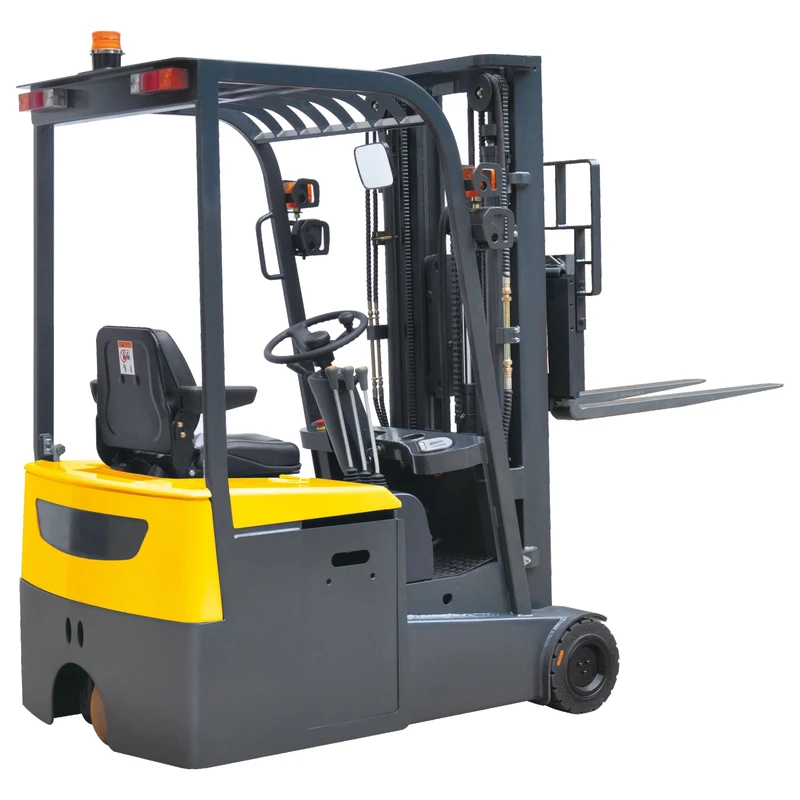
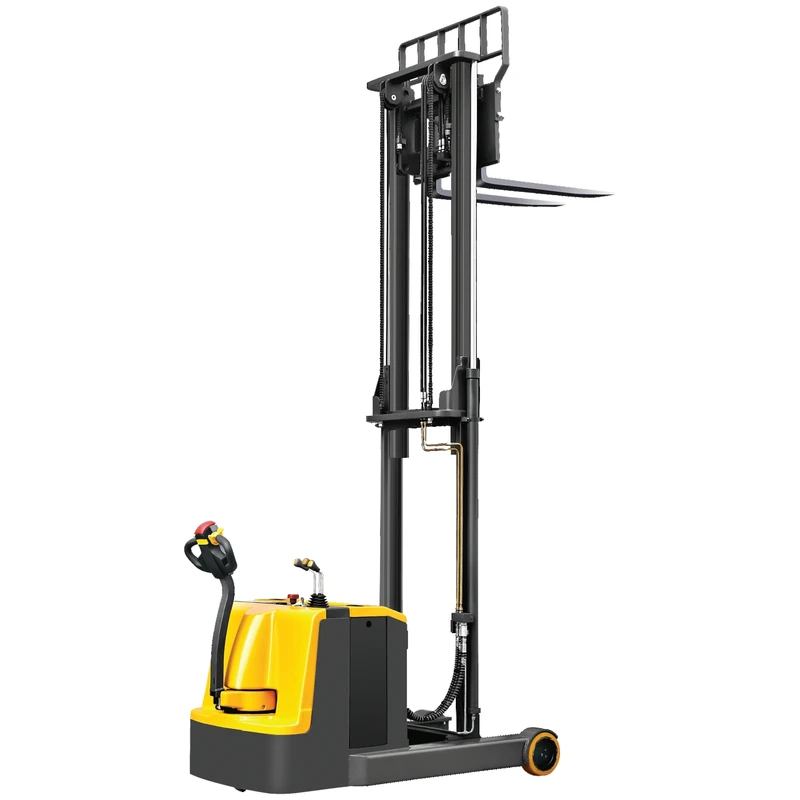
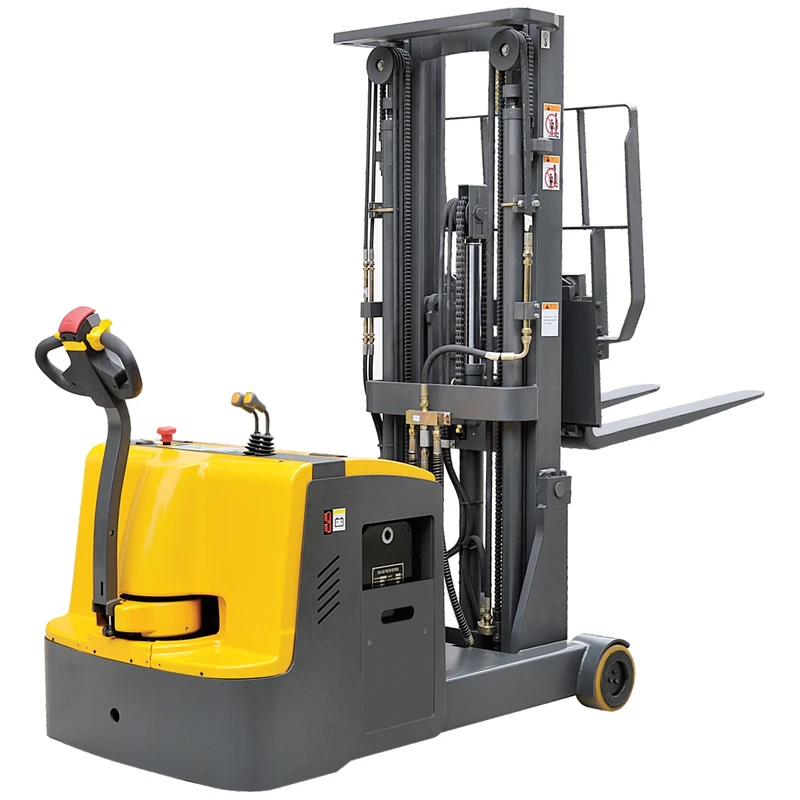
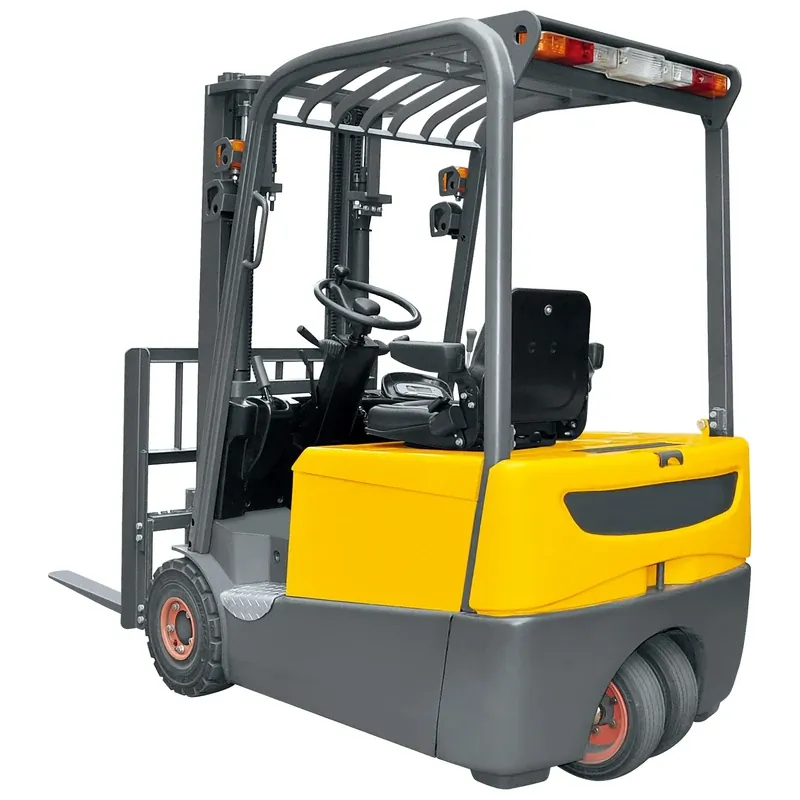
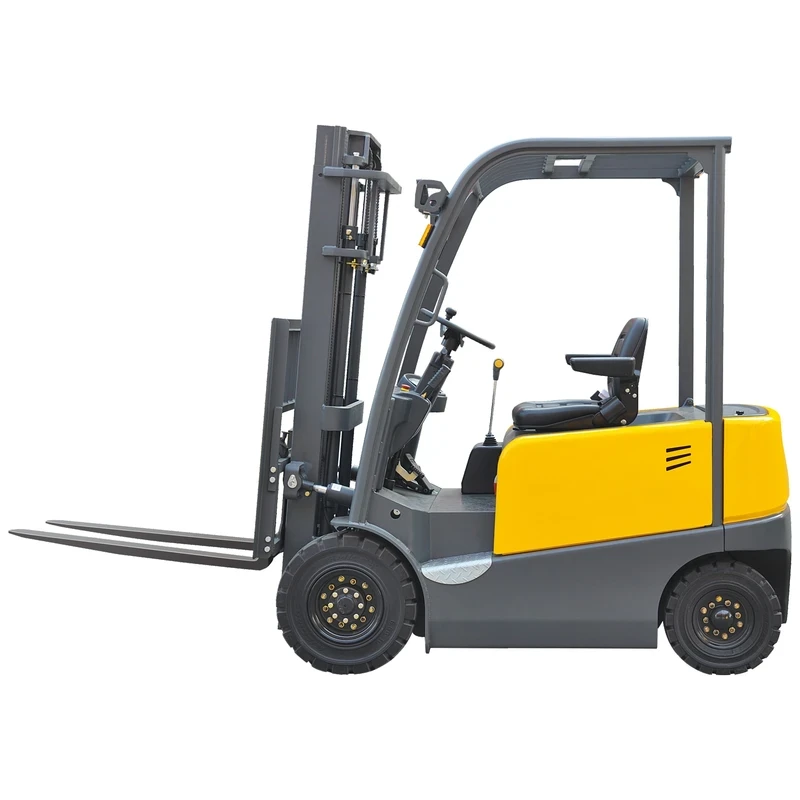
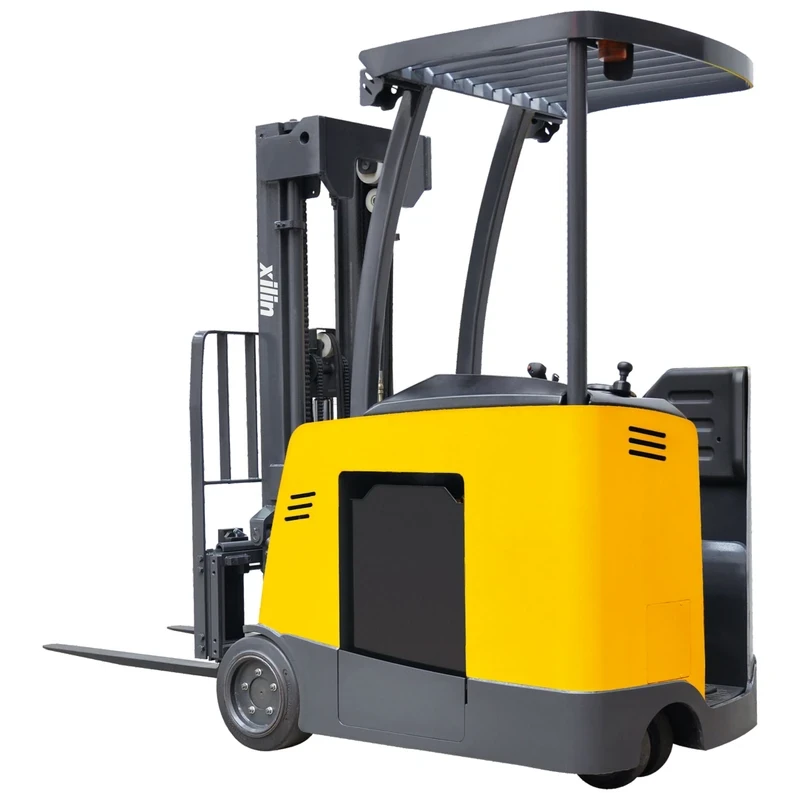
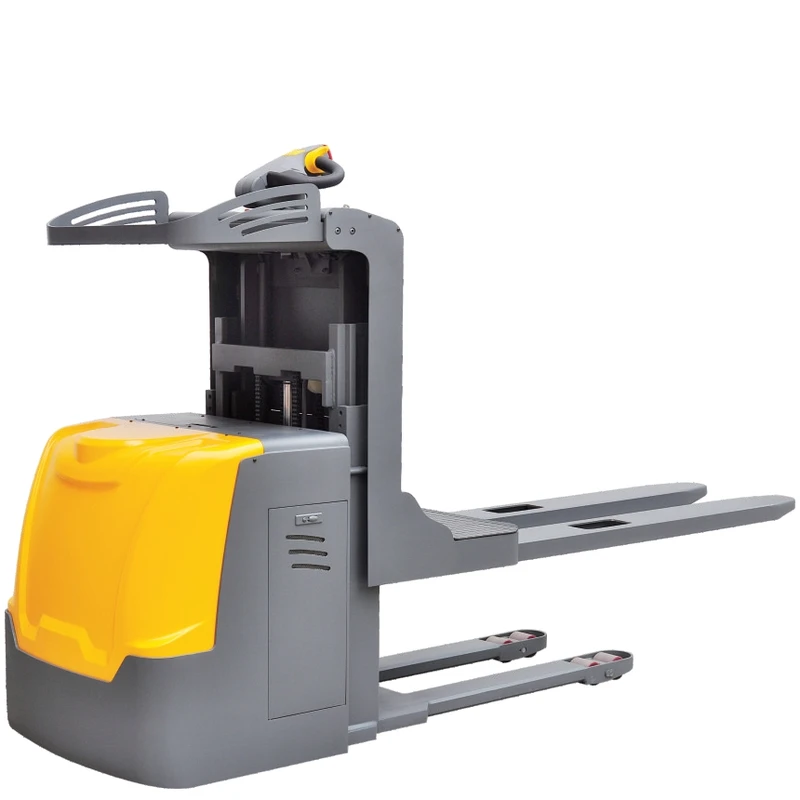
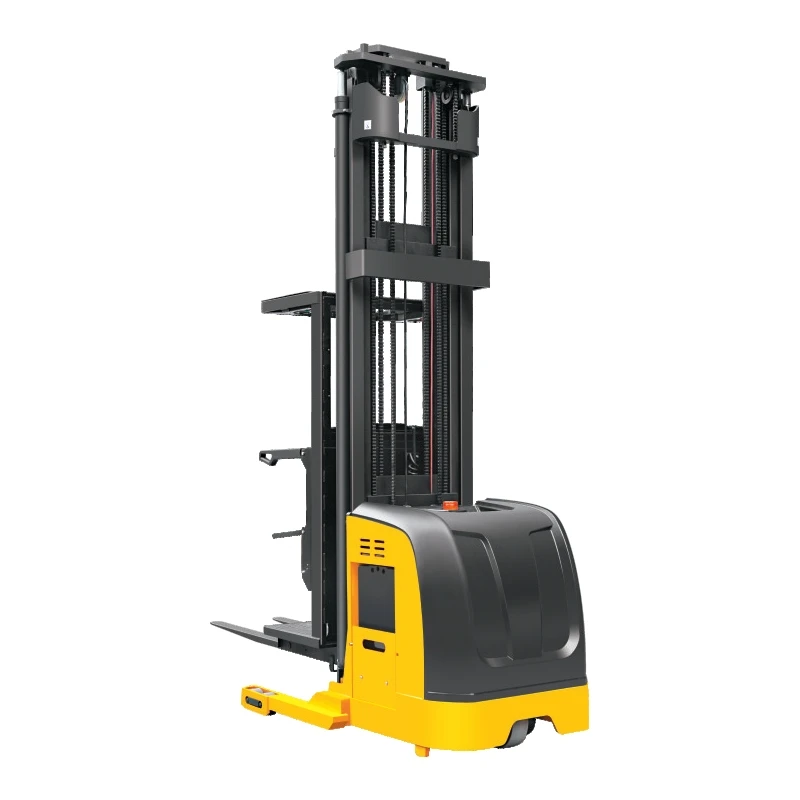
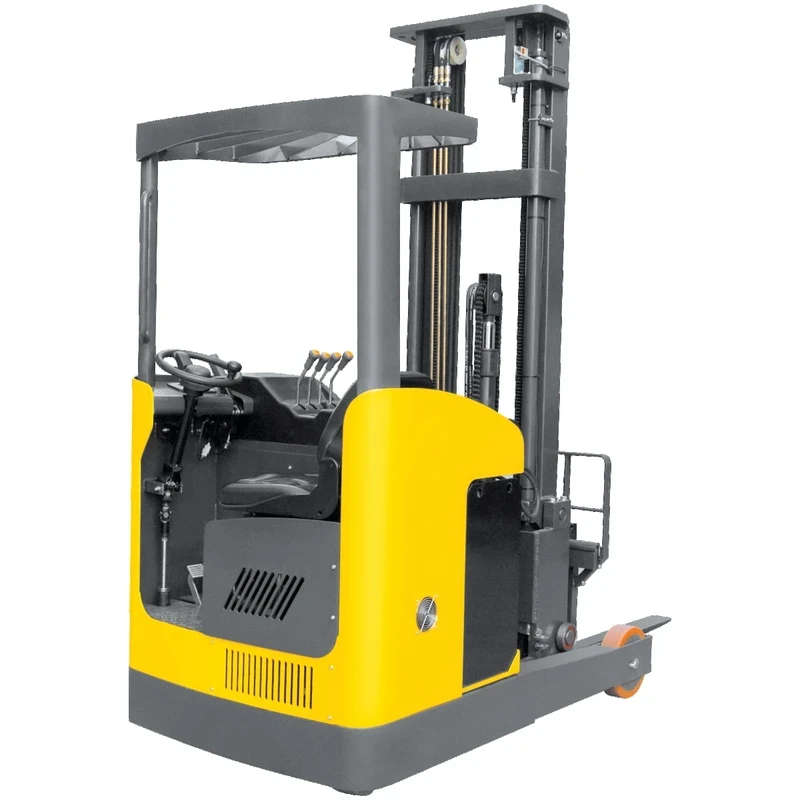
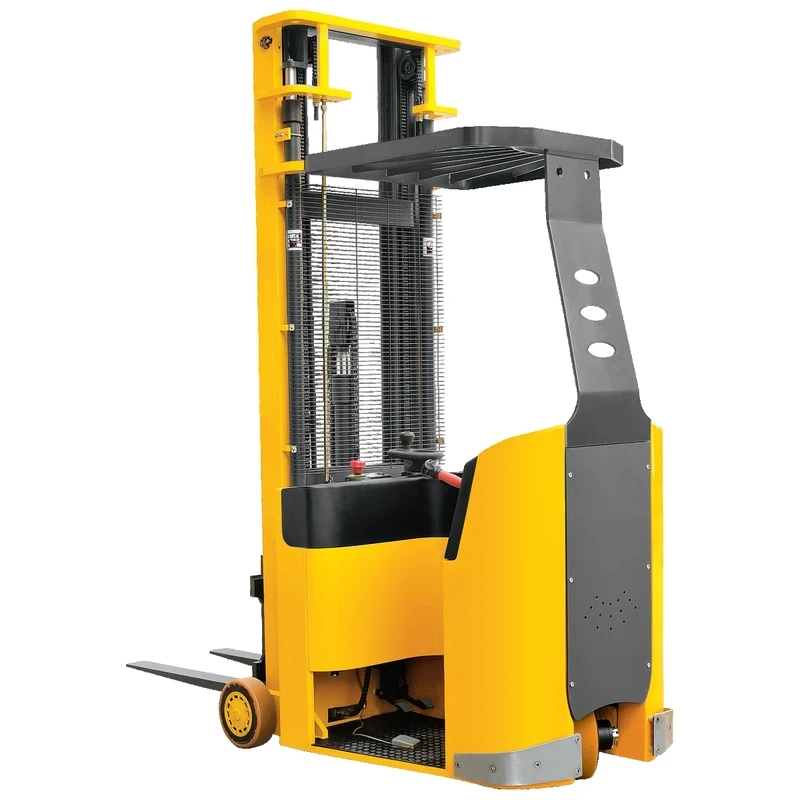
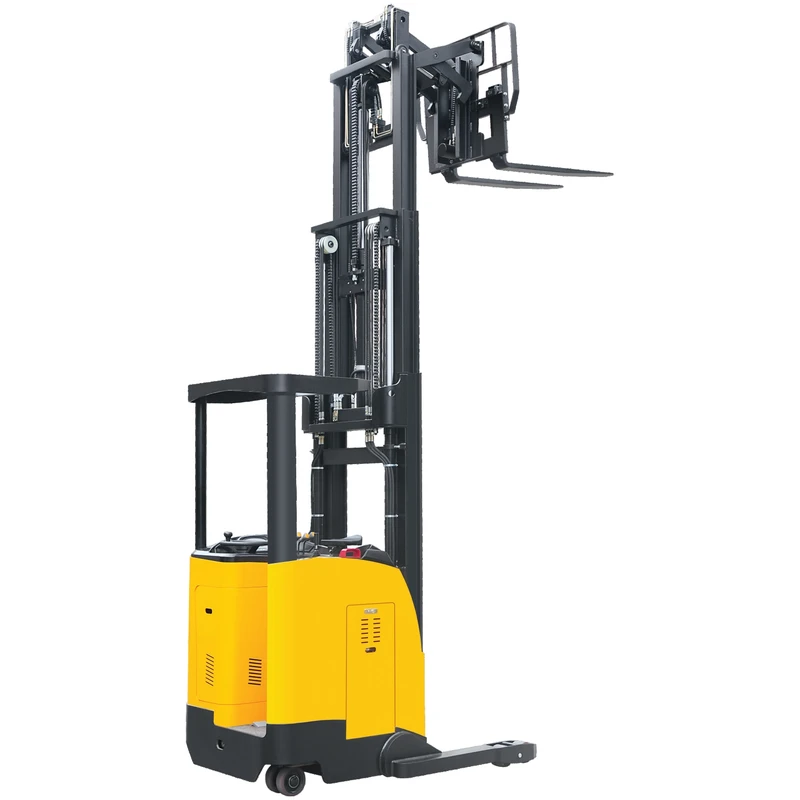
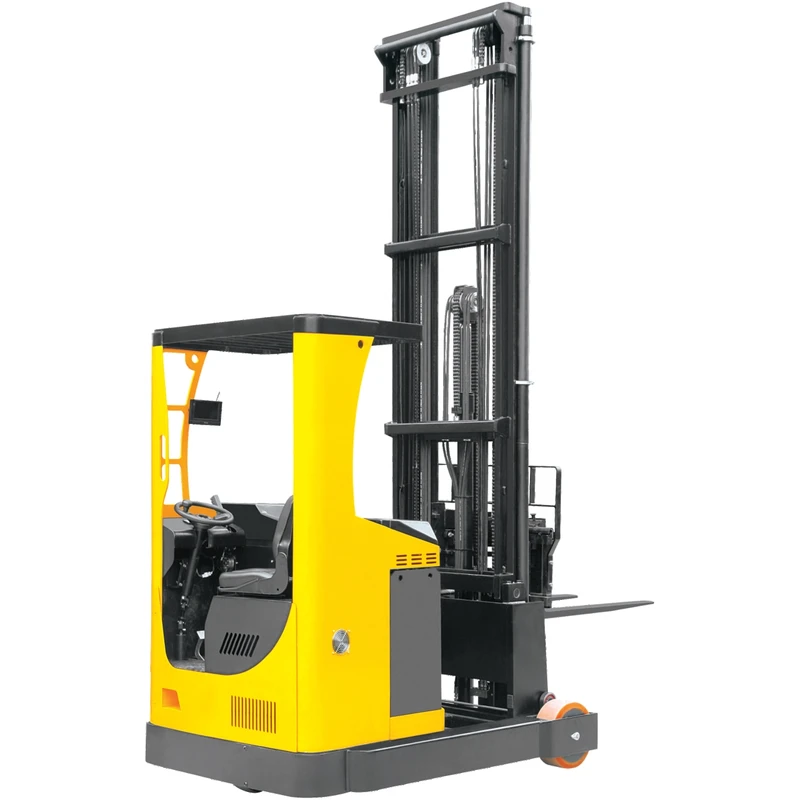
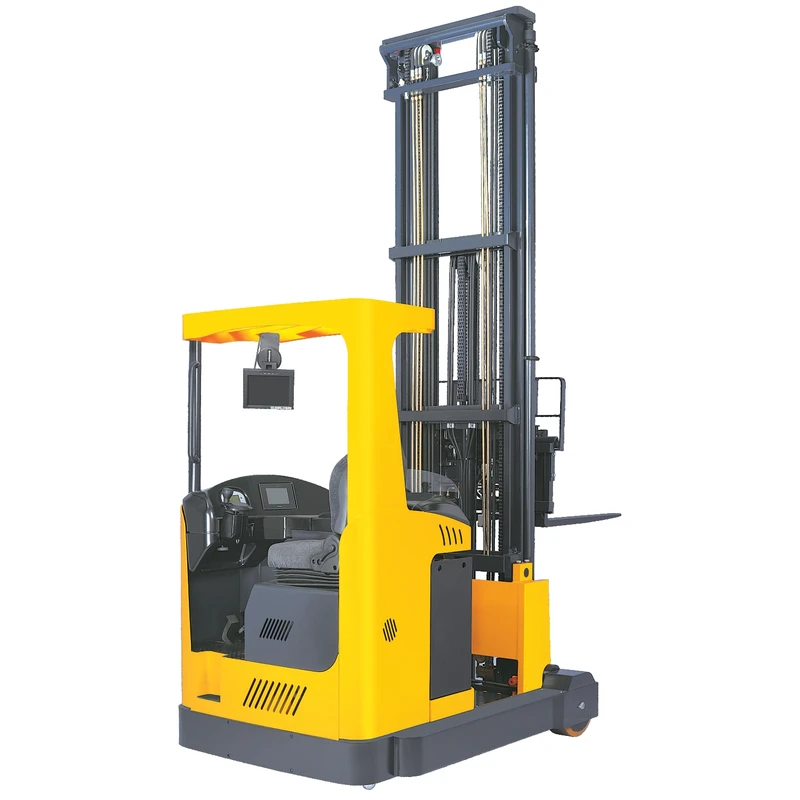
- Counterbalanced (EVVP15H, 1,500 kg, 2,500–5,600 mm, from €11,420): no legs in front at all — the weight sits in the chassis, with tilting forks and a German special-steel mast. Loads anything a small forklift loads, indoors.
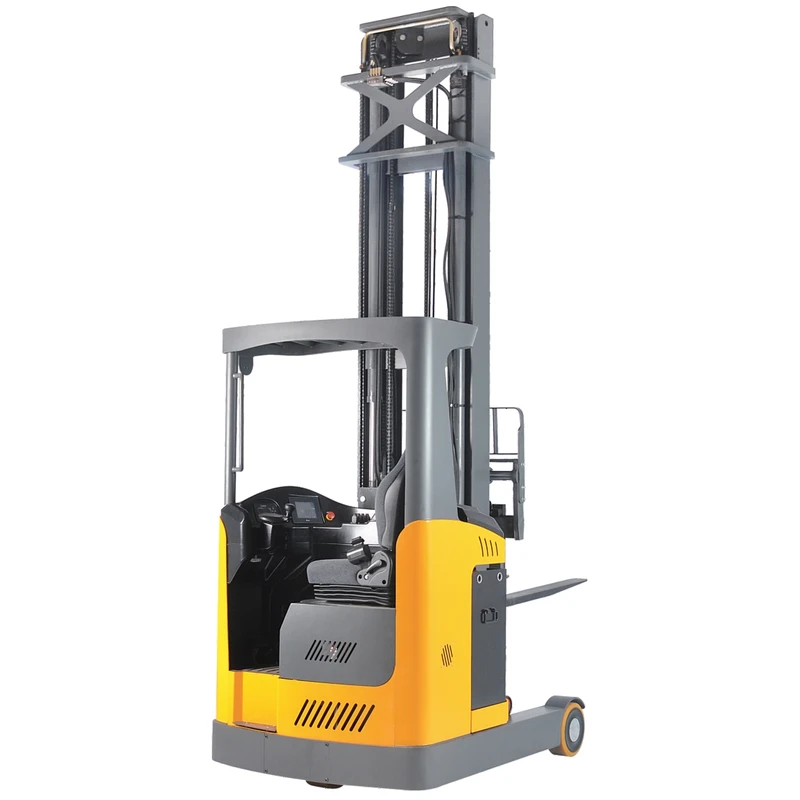
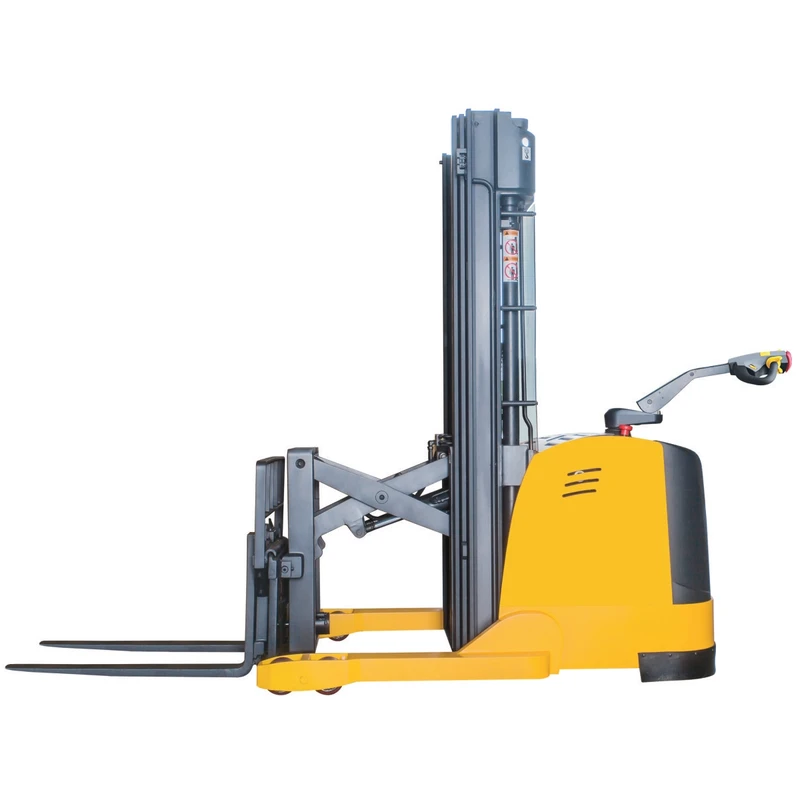
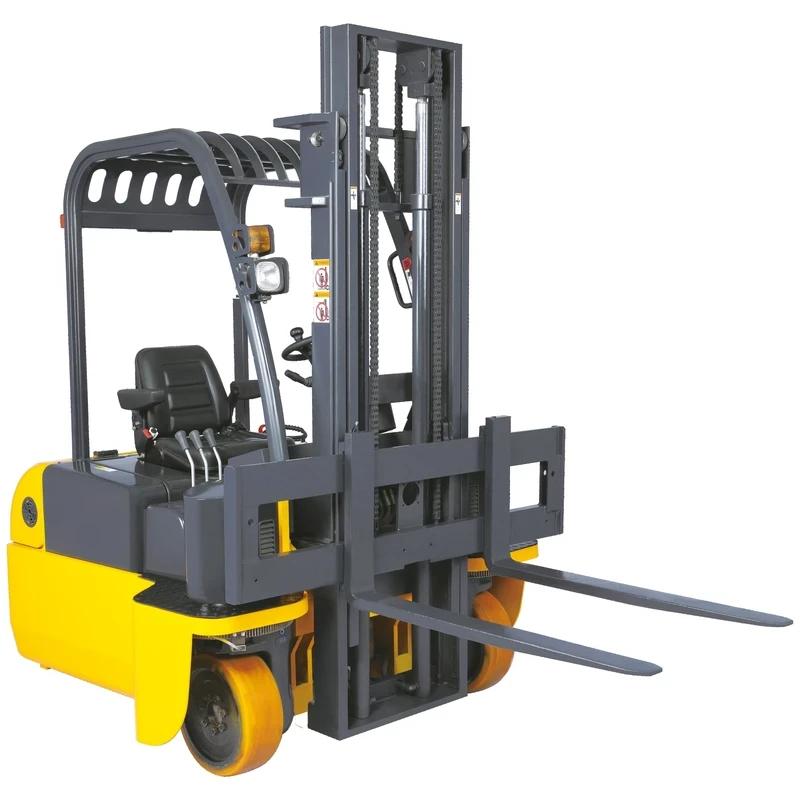
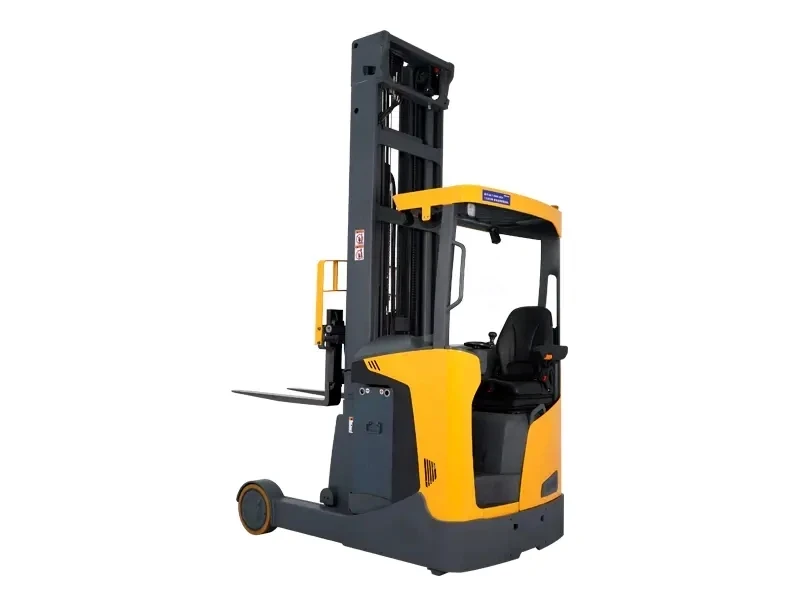
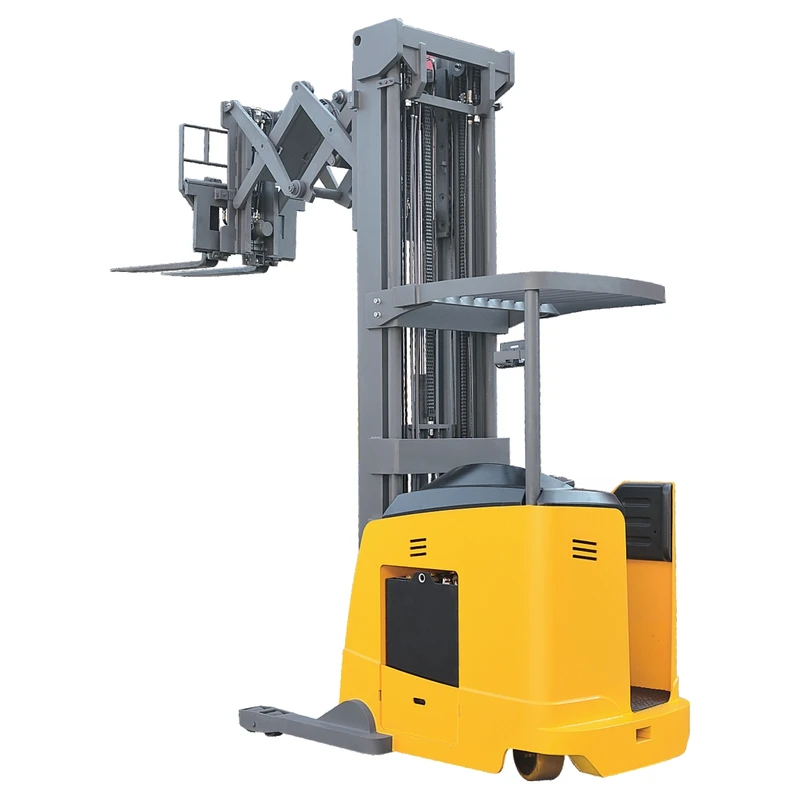
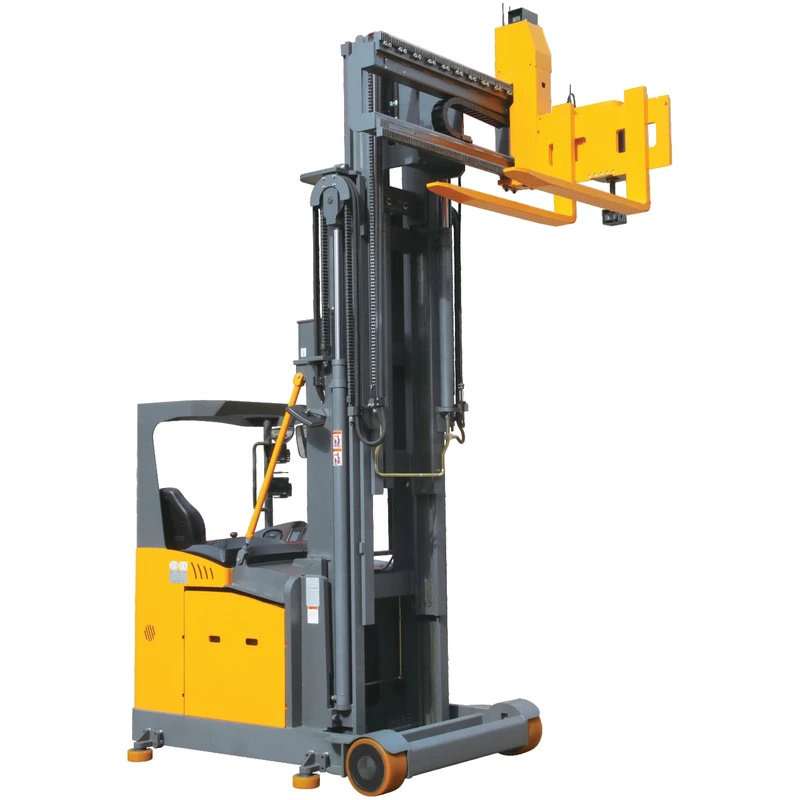
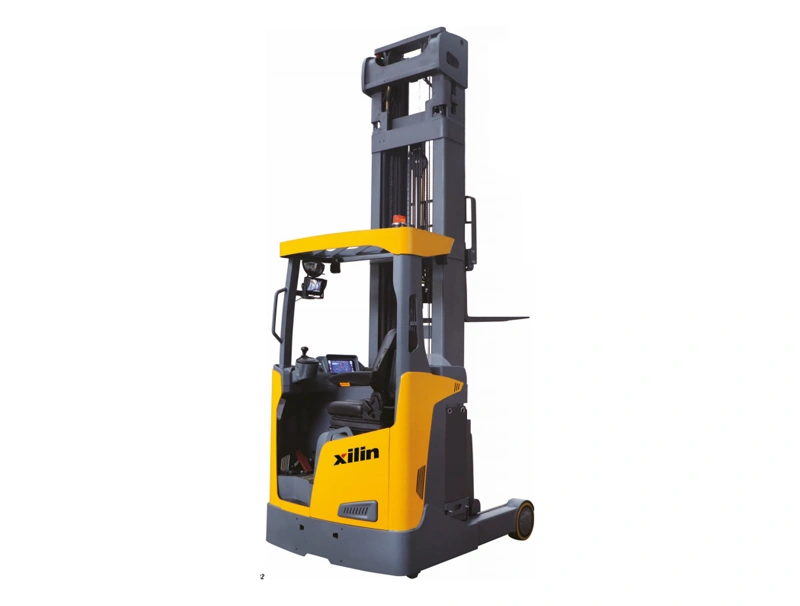
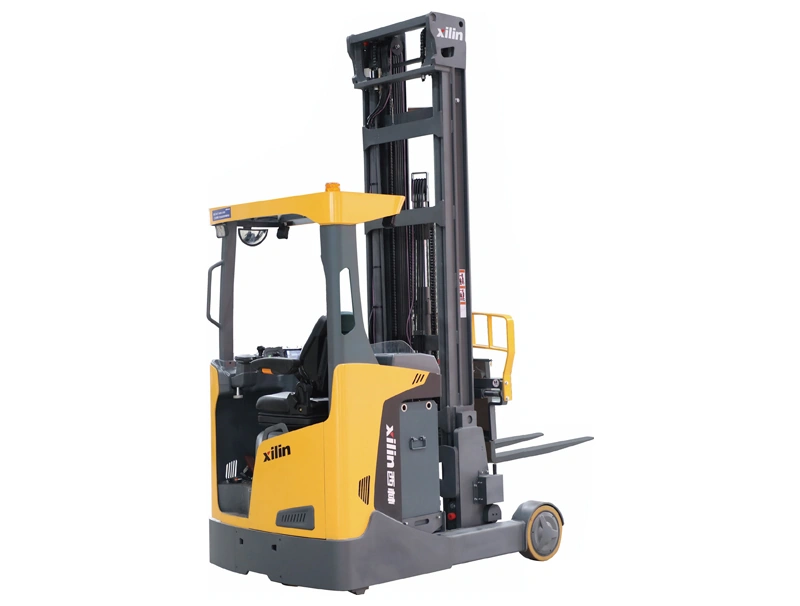
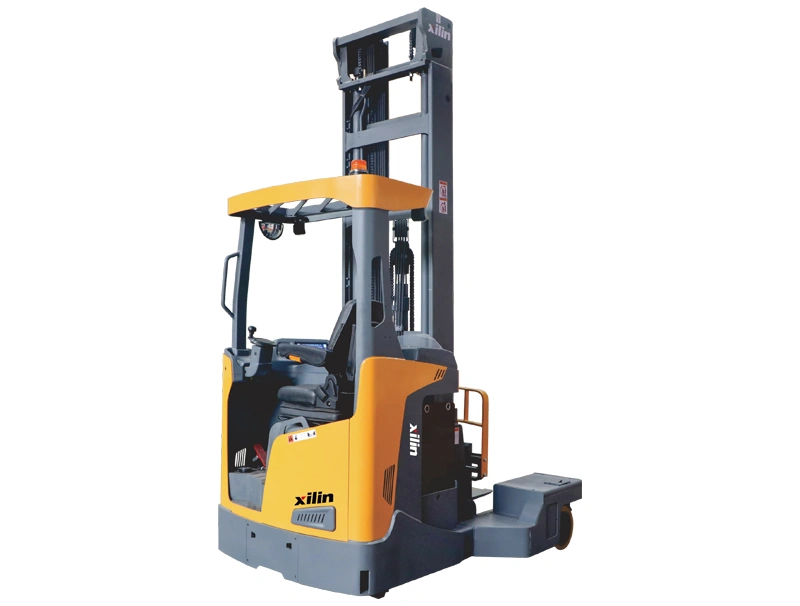
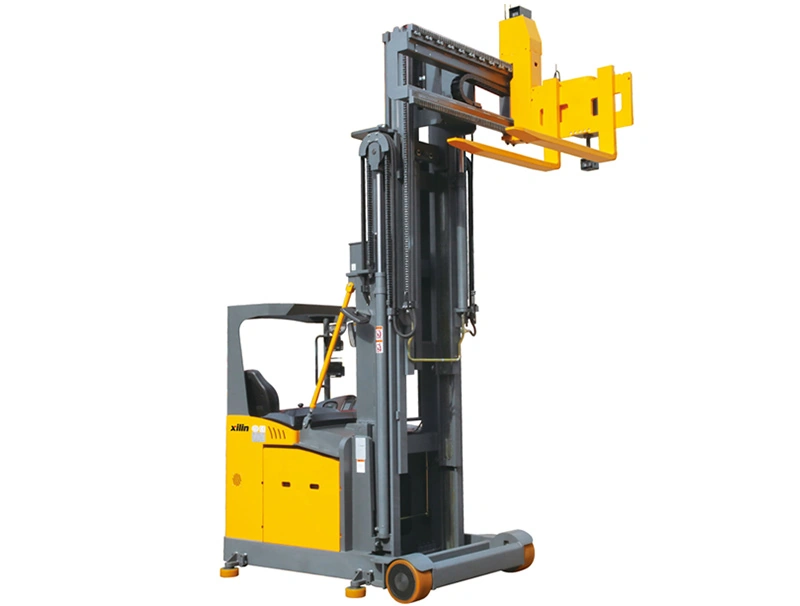
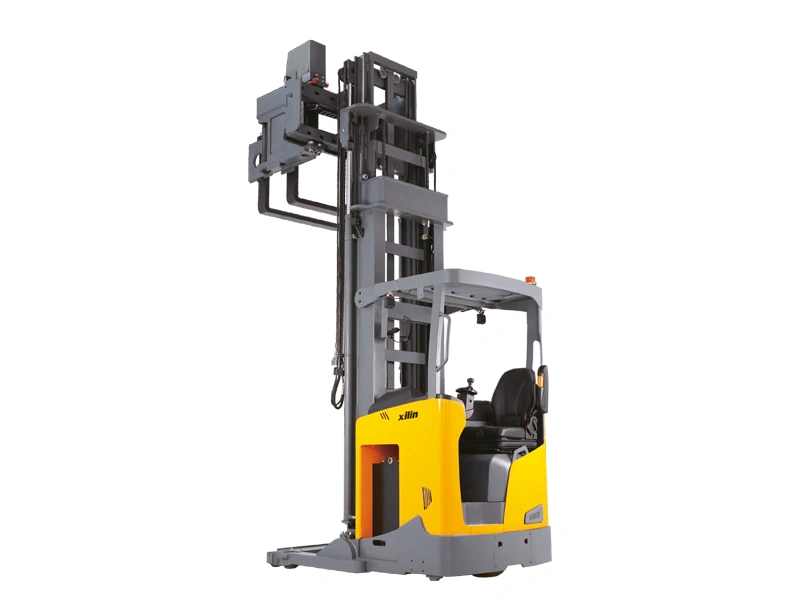
- Reach (EVV12DS/EVV15DS, 1,250–1,500 kg): the fork carriage extends 500 mm forward and pulls the load back over the chassis — built for very narrow aisle warehouses; configured to the application, price on request.
6. Choosing capacity and lift height
- Capacity: heaviest pallet plus margin — but check the load chart, not just the headline number: every stacker carries less at full mast height than at floor level.
- Lift height: top racking beam height plus ~150–200 mm of clearance to set the pallet down. Measure the real beam, not the catalogue.
- Lowered mast height: if the stacker passes doors or works under mezzanines, check the collapsed mast height — tall masts that lift to 5+ m are also taller when lowered (duplex vs triplex masts differ here).
- Aisle width: stackers turn much tighter than forklifts, but racking aisles still need to fit the machine's turning radius with a pallet — the product pages list the dimensions.
7. Safety, standards and training
Pedestrian-propelled stackers are built to EN ISO 3691-5 and power-driven models to the European industrial-truck standards; every machine ships CE-marked with the EC declaration of conformity and manual. Practical rules that prevent the classic accidents: travel with the load lowered, never walk or reach under a raised load, and respect the load chart at height. Pedestrian-controlled stackers generally do not require a forklift licence, but employers must train operators on the specific machine — national rules vary, especially for rider models. Plan the statutory yearly inspection like for all lifting equipment.