




















What a jib crane does for a workstation
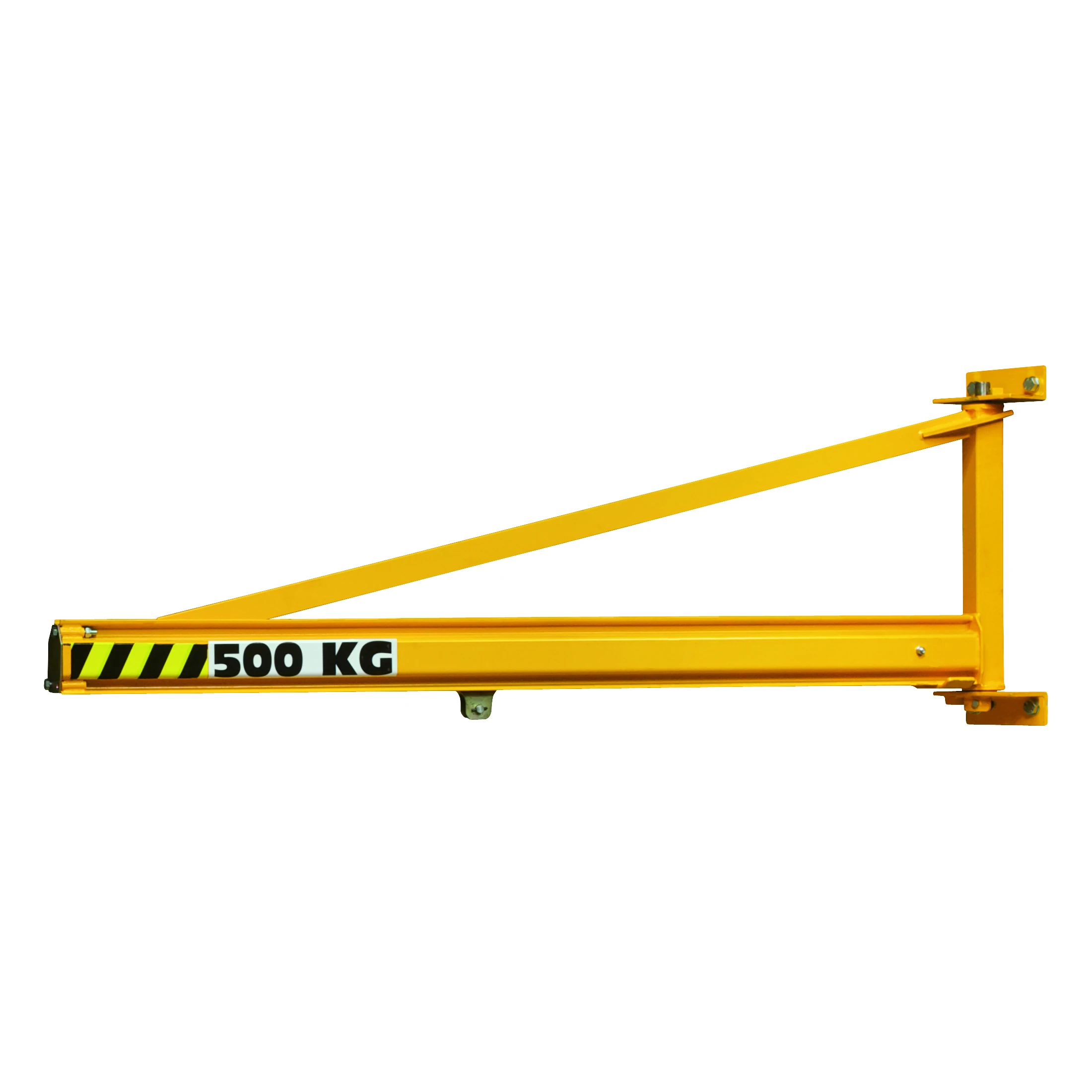
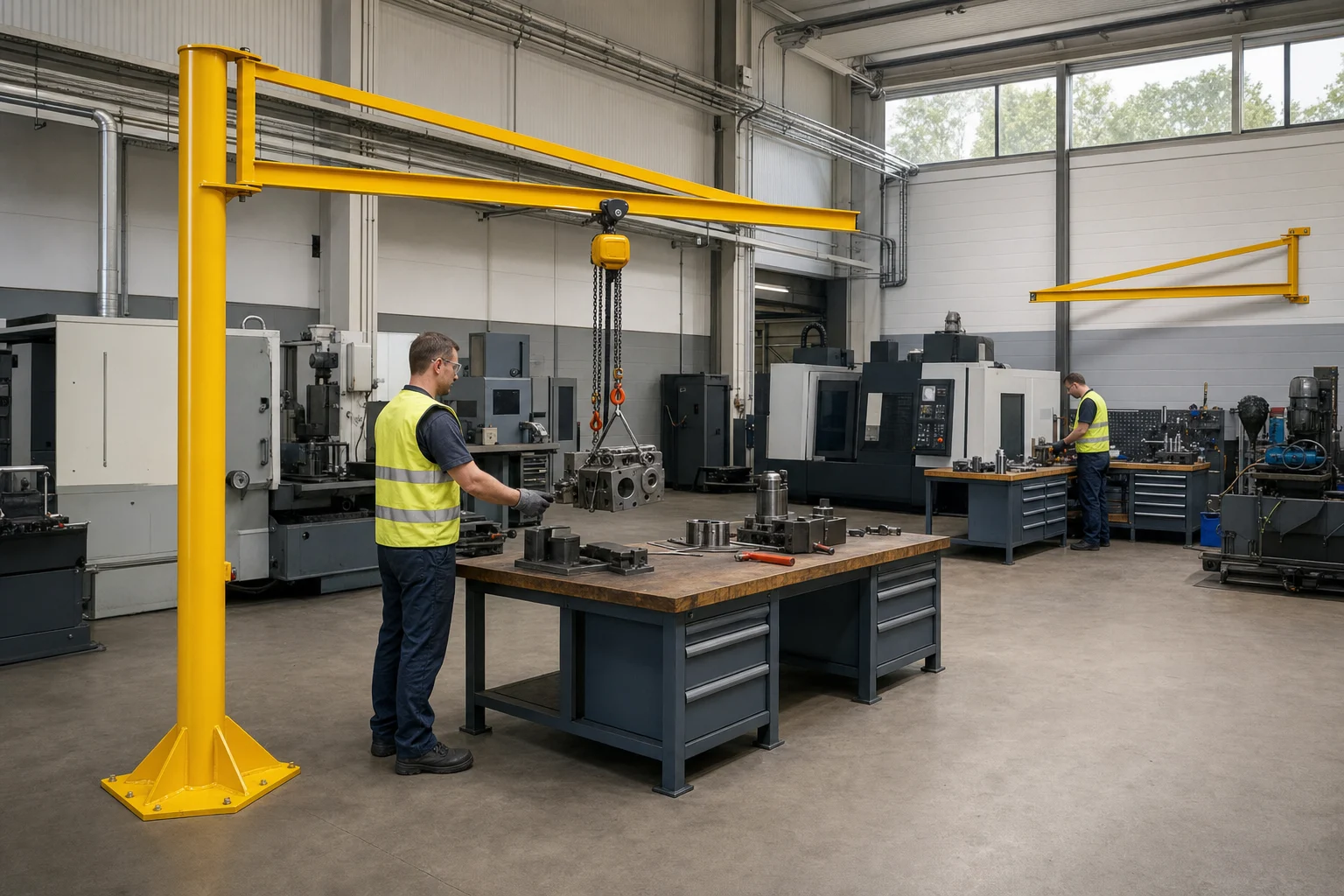
A jib crane is a fixed crane with a horizontal boom (the jib) that swings around a pillar or a wall bracket, carrying a hoist along its length. Within its circle it replaces awkward two-person lifting entirely: one operator positions loads from 50 kg up to 10 tonnes precisely over a machine, assembly bench or truck bed. Unlike an overhead crane it needs no building-wide runway — it serves exactly one workstation, which is why it is the most cost-effective lifting upgrade a workshop can make.
This overview helps you pick the right type; the dedicated guides for pillar jib cranes and wall-mounted jib cranes then walk through the models, capacities and options in depth. All our jib cranes are made to order in the EU and delivered with CE documentation.
The three types at a glance
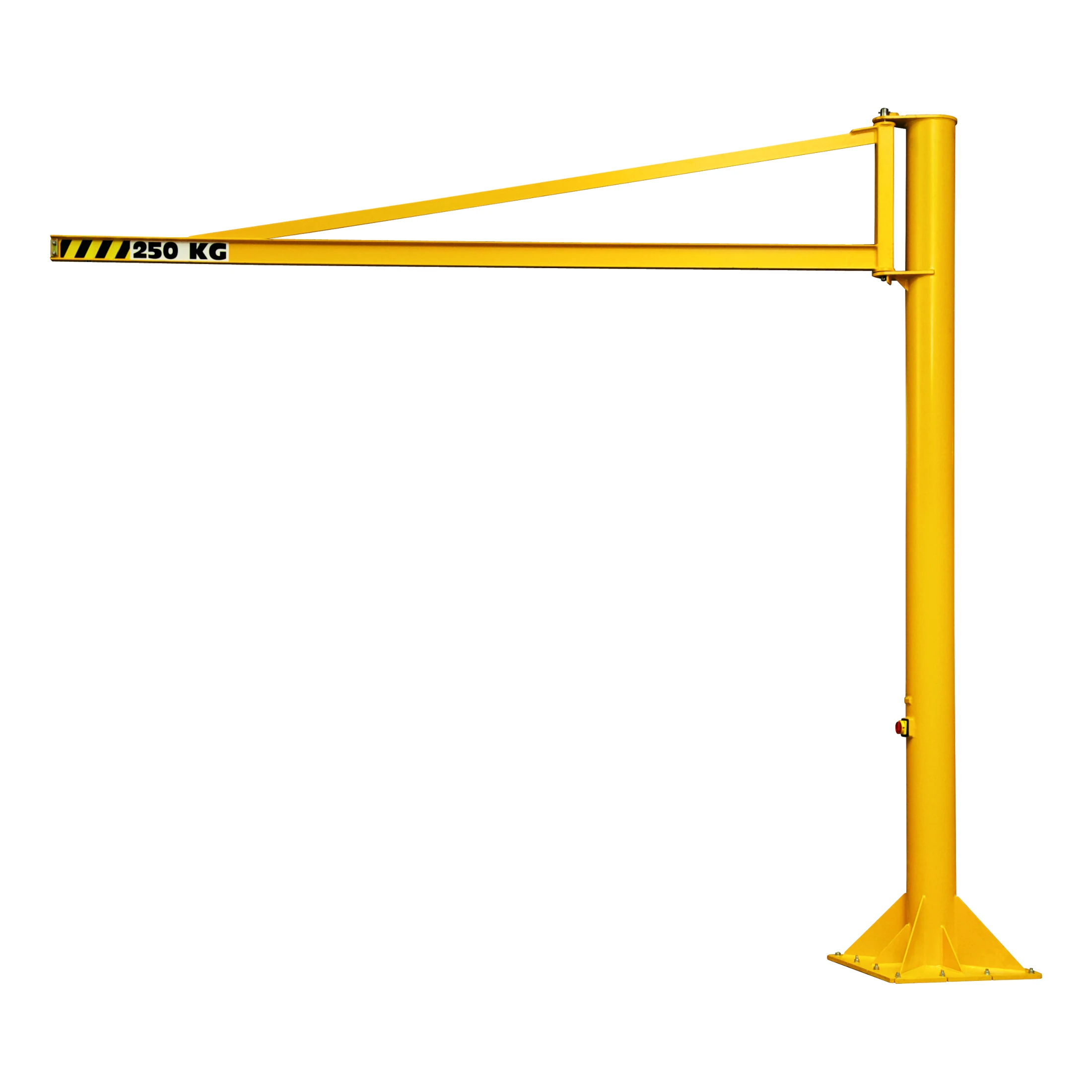

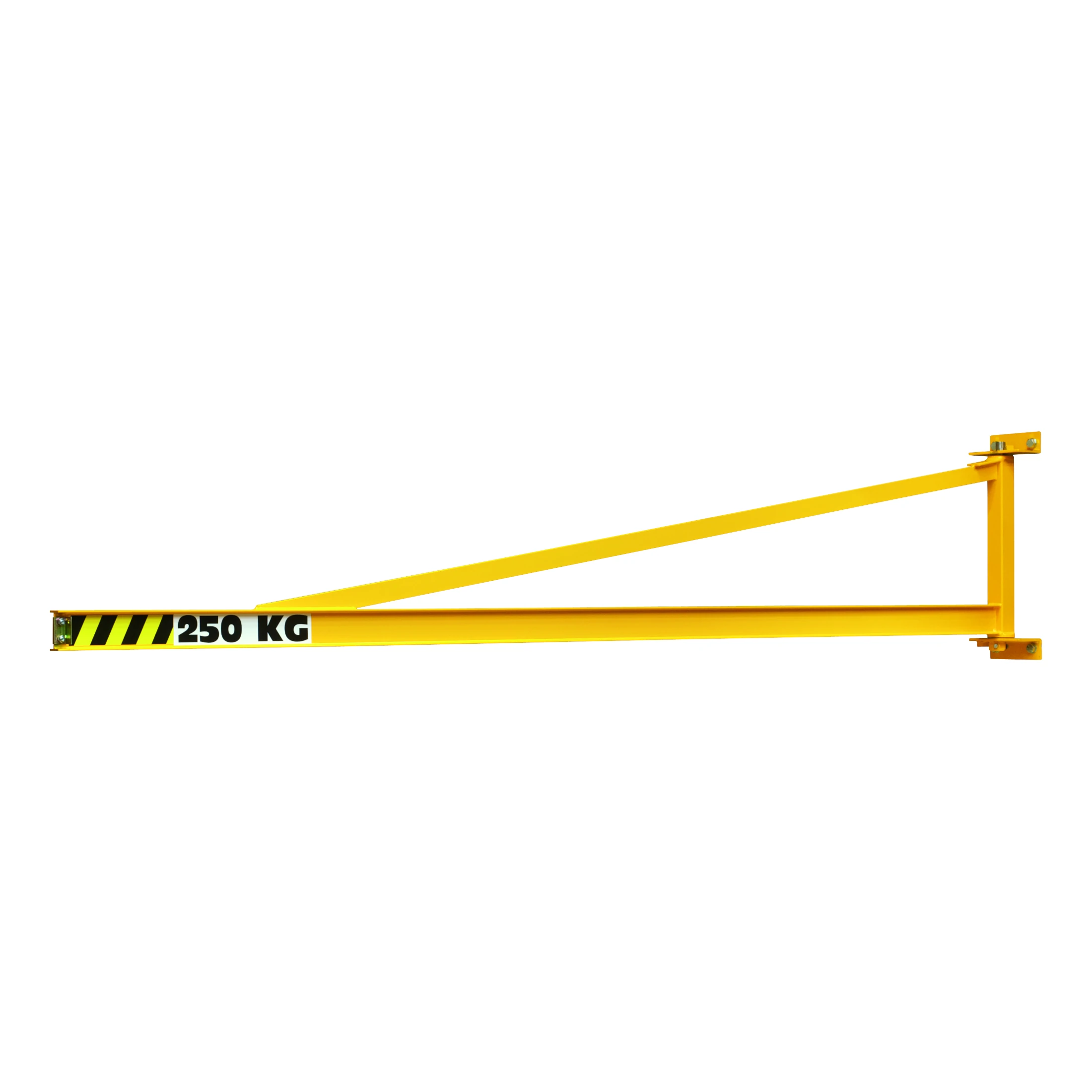
| Pillar jib crane | Wall-mounted jib crane | |
|---|---|---|
| Slewing arc | 270° standard; full-rotation (360°) models for free-standing workstations | Semicircular area in front of the wall (typically around 180°) |
| Placement | Anywhere on the floor with a suitable foundation — including the middle of a hall or outdoors | On a load-bearing wall or building column — zero floor space used |
| Requirements | Concrete foundation and anchor bolts sized to the crane's tipping moment | A structure that can take the bracket forces — we verify this against your building data during configuration |
| Range | 50–2,000 kg standard; 360° models to 10,000 kg, booms to 12 m | 50–2,000 kg, booms 2–8 m (low-profile versions up to 4,000 kg) |
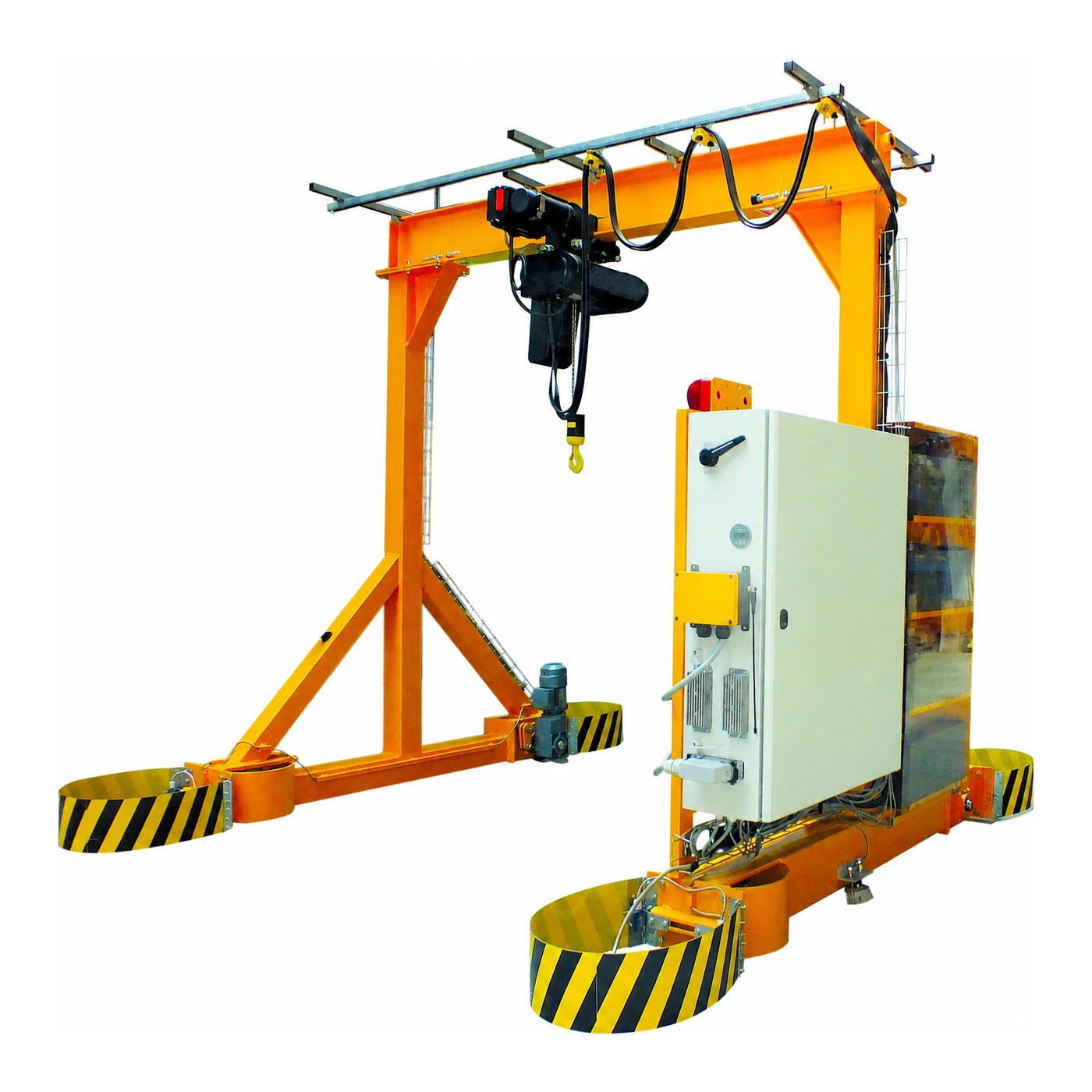
Rule of thumb: if a suitable wall or column already stands next to the workstation, the wall crane is cheaper — you are not paying for the pillar or the foundation. If the workstation is in open floor space, or you need to cover more than a semicircle, choose the pillar crane. And if the lifting point must move around the site rather than stay fixed, a mobile gantry crane is the third option — no foundation, no wall, wheels instead.
Which guide should you read next?
- Workstation in open floor space, or coverage on all sides needed — read the pillar jib crane guide: 270° vs full 360° rotation, foundations, motorized slewing, capacities to 10 t.
- Strong wall or building column right next to the workstation — read the wall-mounted jib crane guide: verifying the structure, low-profile models to 4 t, self-supporting versions for weak walls.
- Lifting point must move between jobs — read the gantry crane guide: folding aluminium and steel gantries on wheels.
- Obstacles between crane and load (machine frames, door openings, press interiors) — you need an articulated boom; both the pillar (ZSD) and wall (ZZD) guides cover the articulated versions.
Sizing basics that apply to every jib crane
Size the crane to the heaviest load plus the weight of the hoist and trolley, not to a hypothetical future. Capacity and boom length work against each other structurally: a 2,000 kg crane with an 8 m boom needs a dramatically heavier pillar and foundation than a 500 kg crane with a 4 m boom — and costs accordingly. Measure the actual sweep you need: the boom must reach the pick-up point and the set-down point, nothing more.
The hoist is half the decision
The crane provides the reach; the hoist does the lifting. Manual chain hoists suit occasional use; for anything repetitive pair the crane with an electric chain hoist — our electric chain hoist buying guide walks through capacities, speeds and duty classes. Order the crane and hoist together: we match the trolley to the boom profile and deliver the combination ready to install.
Installation, safety and standards
Jib cranes are made to order and engineered to EN 13001/FEM design rules, delivered CE-marked with the EC declaration of conformity, anchor plans and the user manual. For pillar cranes you (or your contractor) prepare the concrete foundation to the supplied drawing; wall cranes need a structural check of the supporting wall — send us photos and dimensions and our engineering partner verifies the bracket forces before we confirm the order. Plan a yearly inspection like for any lifting equipment; slewing bearings and trolleys are the usual wear points and are all serviceable.