




















What a gantry crane gives you that a fixed crane cannot
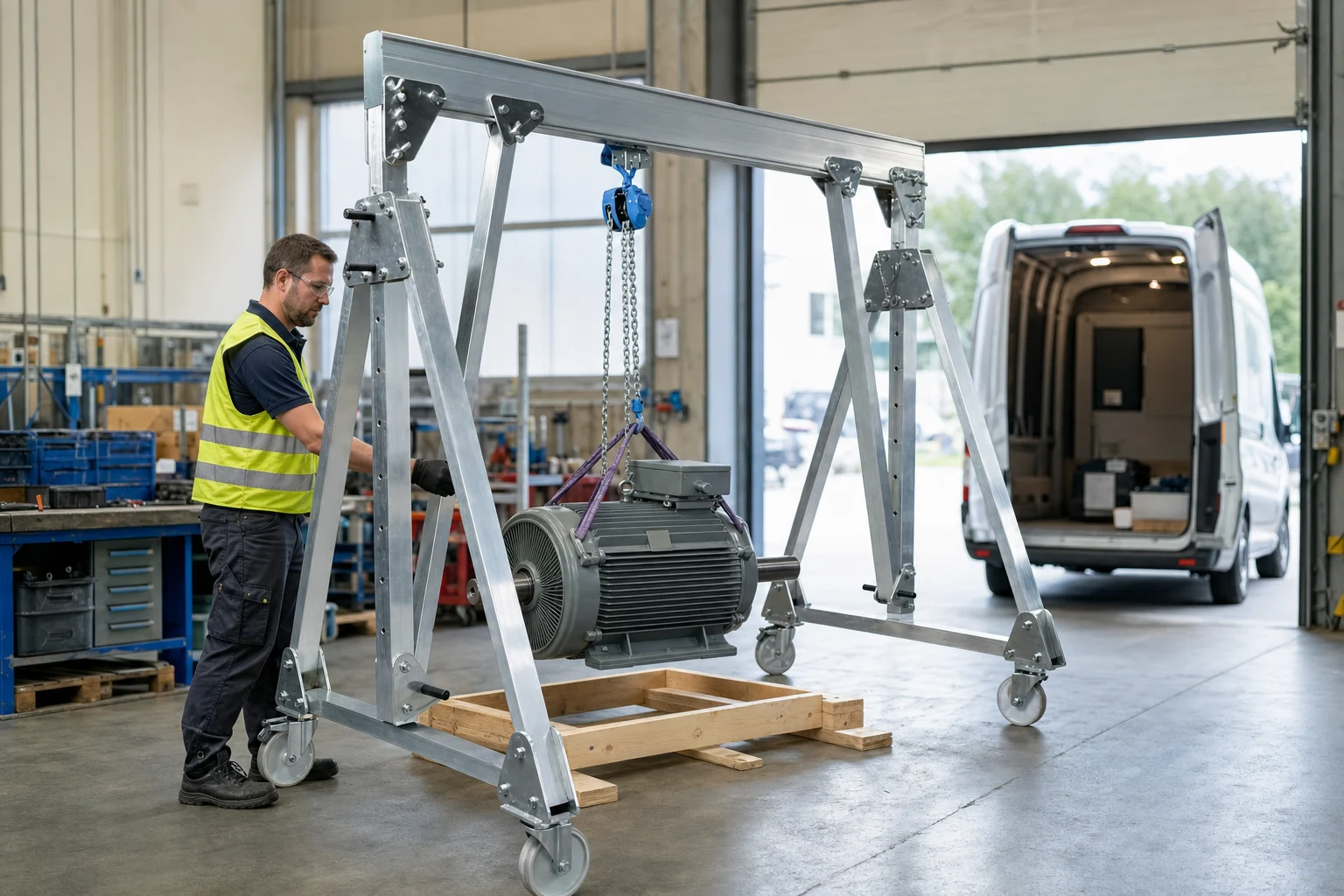
A gantry crane (portal crane) is a beam on two legs with wheels: the lifting point comes to the load, not the other way round. Nothing is bolted to the floor or the building — roll it over an engine, a mould or a machine bed, lift, move, set down, roll it away. For workshops that cannot anchor a pillar or load a wall, and for anyone who lifts in different places on different days, the portable gantry crane is the most flexible lifting frame money can buy.
Our gantry cranes are made to order in the EU and CE-marked. This guide covers the four builds we configure — folding aluminium, steel workshop, motorized, and the lifting tripod — and how to size the span, height and hoist.
1. The four builds at a glance


| Model | Capacity | Span | Height under beam | Best for |
|---|---|---|---|---|
| Folding aluminium gantry crane | 250–2,000 kg | 2–6 m | 1.55–4.0 m (three classes) | One person moves, folds and transports it; service work across sites |
| Mobile workshop gantry crane | 500–5,000 kg | 2.5–8 m | 3–6 m | The steel workhorse for one hall; best price per tonne |
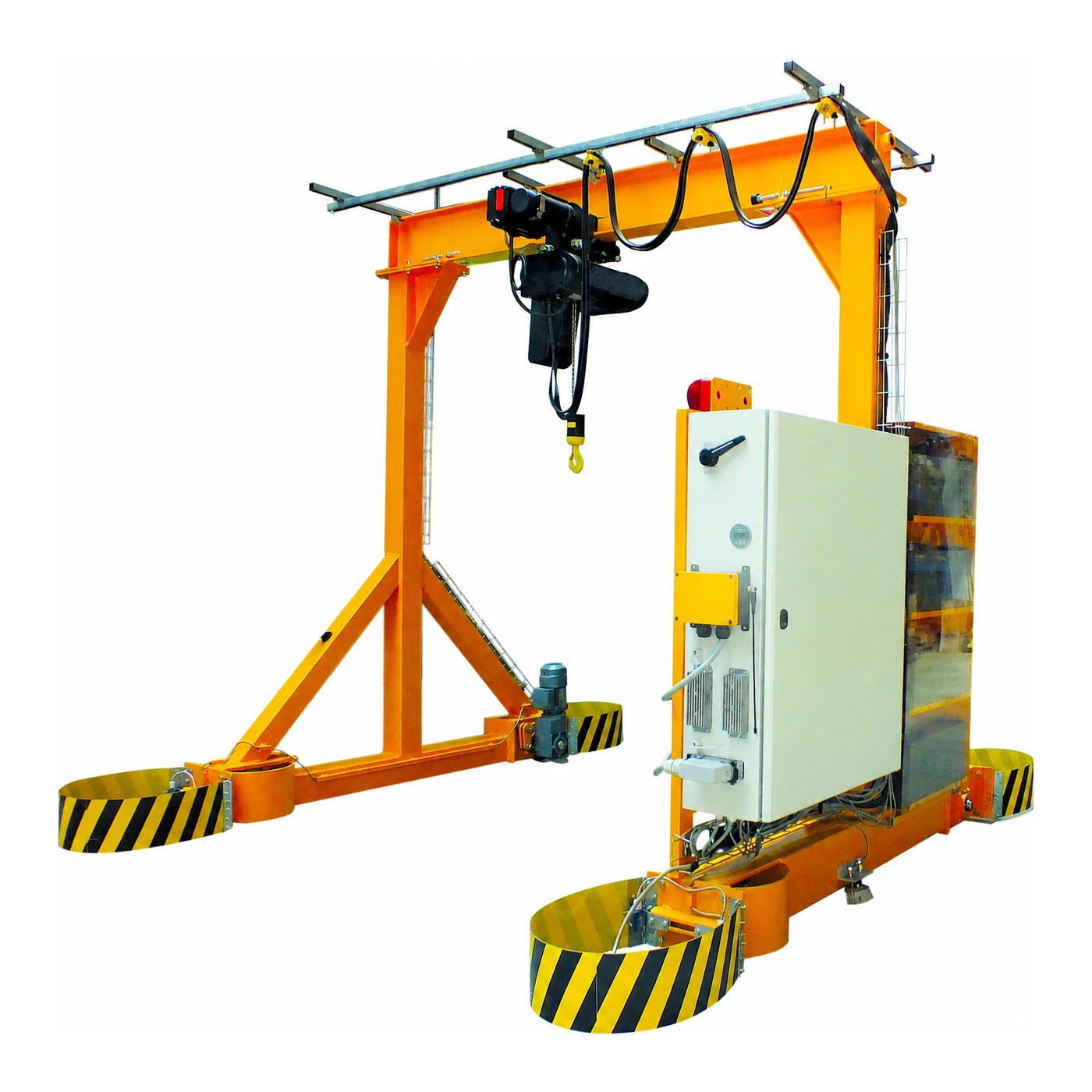
| Motorized workshop gantry crane | 1,000–10,000 kg | 3–12 m | 3–6 m | Self-propelled with pendant control and two travel speeds; heavy loads, long bays |
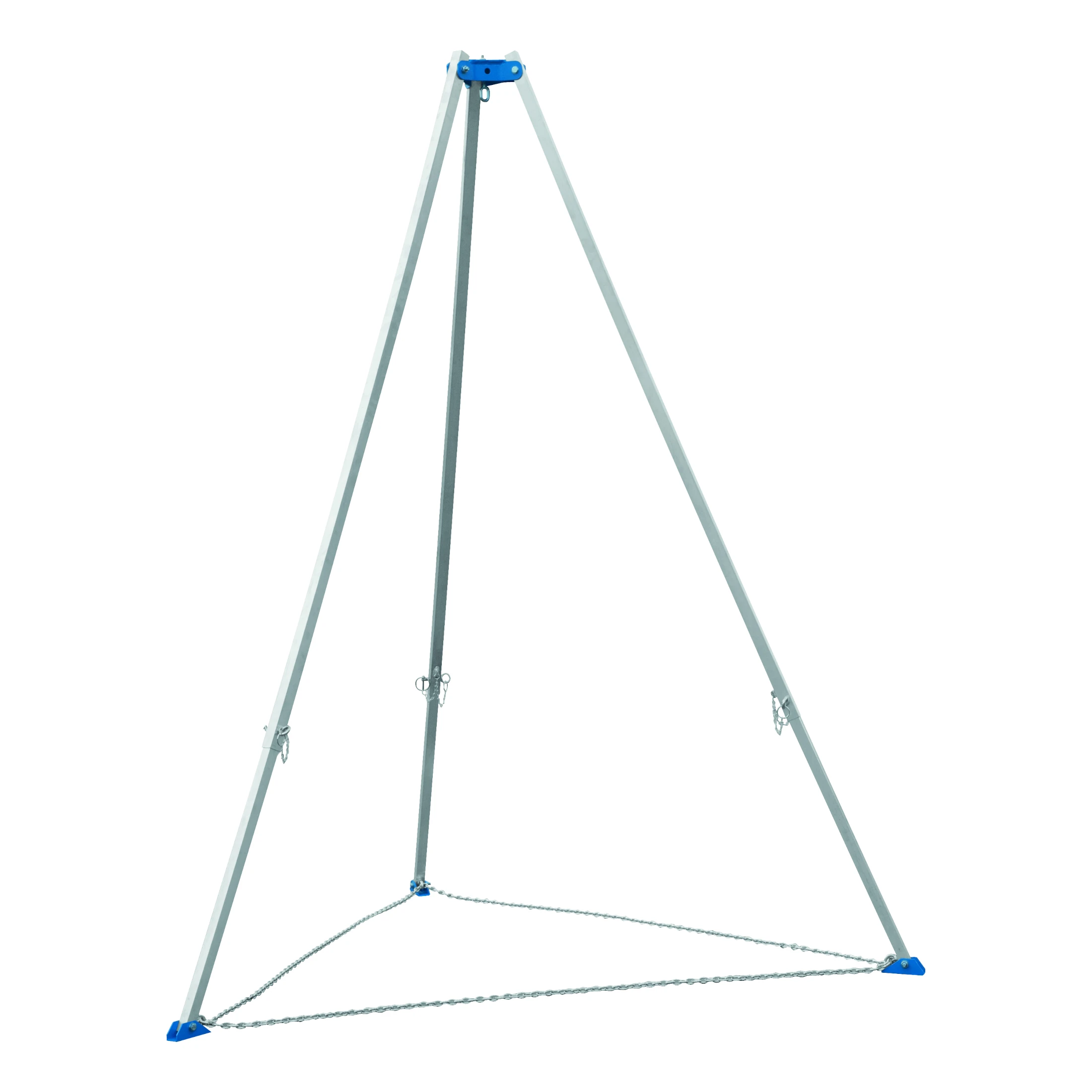
| Folding aluminium lifting tripod | 250–3,000 kg | — (fixed point) | hook at 1.43–3.94 m | Temporary lifting over one spot — shafts, pits, field service |
2. Aluminium or steel?
The choice is about who moves the crane and how often:
- Aluminium — the folding aluminium gantry dismantles into three parts with foldable feet, goes into a van, and one technician sets it up alone. It can be pushed on its swivelling castors with the load hanging, and the hoist trolley is integrated in the beam. You pay a premium for the low weight.
- Steel — the mobile workshop gantry covers the same job for less money and more capacity (to 5 t), also movable under load on swivelling wheels, also dismountable in three parts — but heavy enough that it usually stays in one hall.
3. Manual or motorized travel?
Pushing a loaded gantry is realistic up to a few tonnes on a good floor. Above that — or when the crane travels the length of a bay many times a day — choose the motorized gantry crane: two powered drive wheels, two castors, a mobile low-voltage pendant and two travel speeds, with capacities to 10 t and spans to 12 m. It behaves like an overhead crane that never needed a runway.
4. Sizing: span, height, capacity
- Span is the clear width between the legs — it must clear the widest thing you straddle (machine, trailer, workbench), plus working room. Longer spans reduce the capacity a given beam can carry, so do not buy metres you will not use.
- Height under beam must cover: pick-up height + load height + hoist headroom. The hoist takes 300–600 mm depending on model — the classic mistake is forgetting it and coming up short over a machine.
- Capacity: heaviest load plus hoist and trolley weight, next standard step up. Remember doorways and ceiling height when choosing tall variants.
5. Fixed point instead of an area? Take the tripod
When the job is lifting over one spot — a pump out of a shaft, a motor out of a pit, field service on soft ground — a gantry is more crane than you need. The folding aluminium tripod carries 250–3,000 kg from a central hooking ring, its telescopic legs adjust in 150 mm steps to set hook heights from 1.43 to 3.94 m, and the articulated feet stand firm on hard or soft ground. It folds flat and travels in any van.
6. The hoist completes the crane
A gantry crane is delivered as a frame with a trolley — the lifting comes from the hoist you hang on it. For occasional use a manual chain hoist is enough; for anything regular pair it with a GIS GP electric chain hoist (100–6,300 kg, Swiss-made, 3-year warranty) and a power-matched cable reel — both configurable together with the crane so everything arrives ready to work. Our electric chain hoist buying guide covers capacities, speeds and duty classes.
7. Safety and standards
Gantry cranes are engineered to the European crane design standards and delivered CE-marked with the EC declaration of conformity and user manual. Moving under load is permitted by design on our castor-mounted models — but only on a sound, level floor, at walking pace, with the load just clear of the ground. Lock the castor brakes before lifting, plan the yearly inspection, and check wheels and trolley as the primary wear points.