

















When a wall-mounted jib crane is the right choice
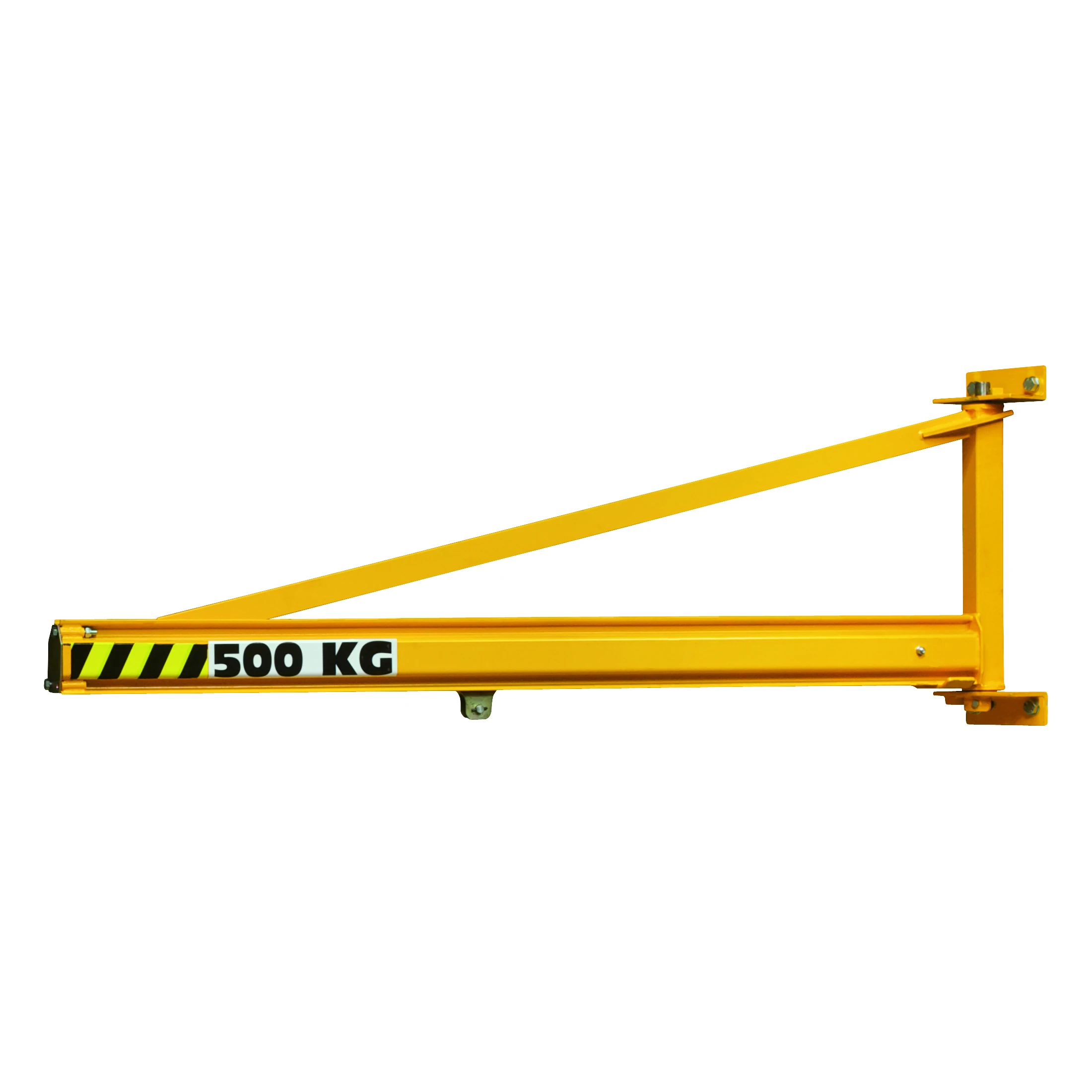
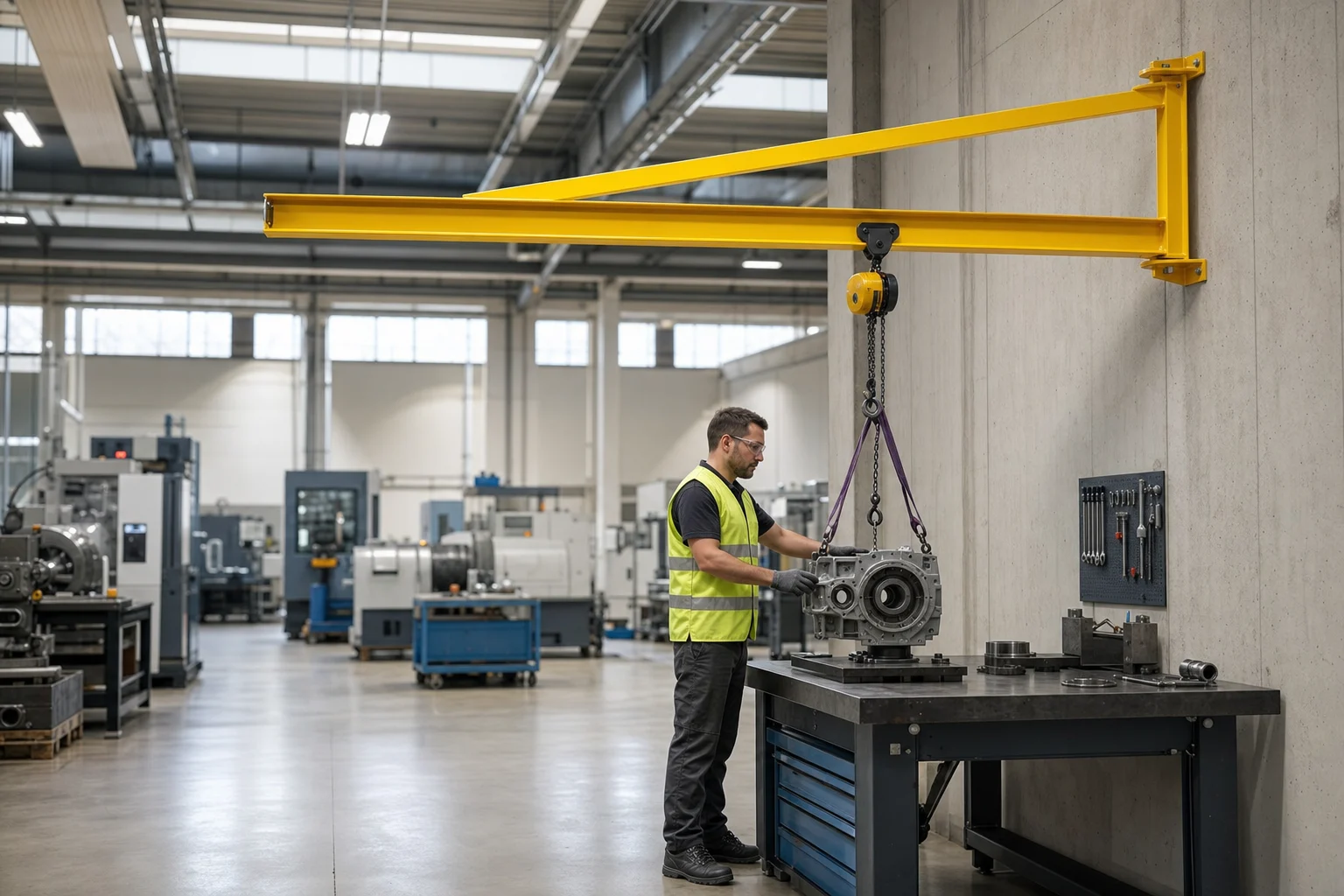
A wall-mounted jib crane bolts to a load-bearing wall or building column and swings its boom over the workstation below — using zero floor space and needing no foundation. Because you are not paying for a pillar or concrete work, it is consistently the cheapest way to put a crane over a workstation: entry configurations start under €700. The trade-offs: the working arc is the semicircle in front of the wall (around 180°), and the wall itself must take the bracket forces.
If the workstation sits in open floor space, or you need more than a semicircle, read the pillar jib crane guide instead. This guide covers the wall-specific decisions: verifying the structure, capacity and boom length, boom construction, articulated versions, and what to do when the wall is not strong enough.
1. First verify the wall — everything else follows
The crane multiplies its load through the bracket: a 1,000 kg load on a 5 m boom puts serious pull-out and shear forces into the upper fixing. Suitable structures are reinforced concrete walls and columns, steel building columns and properly dimensioned masonry. Send us photos and dimensions of the intended mounting point during configuration and our engineering partner verifies the bracket forces against your building data before we confirm the order — that check is part of the process, not an extra.
2. Capacity and boom length
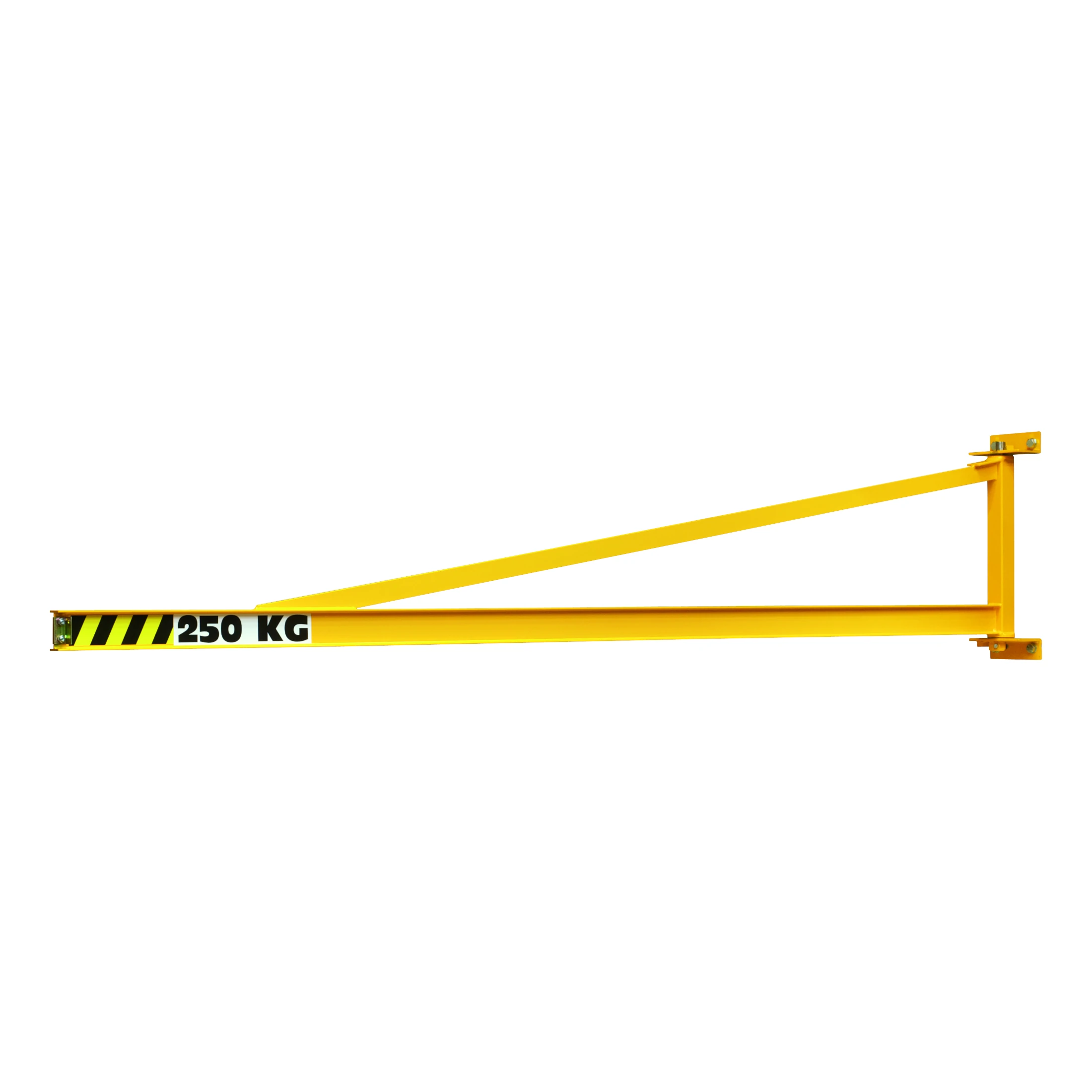
Size to the heaviest load plus hoist and trolley weight, and measure the boom to the furthest real pick-up point — every extra half metre raises the bracket forces and the price. The ZDS overbraced wall crane covers 125–2,000 kg with booms of 2–8 m and is the standard choice. Where serious capacity is needed on a strong structure, the NZD low-profile wall crane goes to 4,000 kg — more than the standard pillar models — while its underbraced, flat-top geometry steals minimal headroom under low ceilings.
3. Boom construction
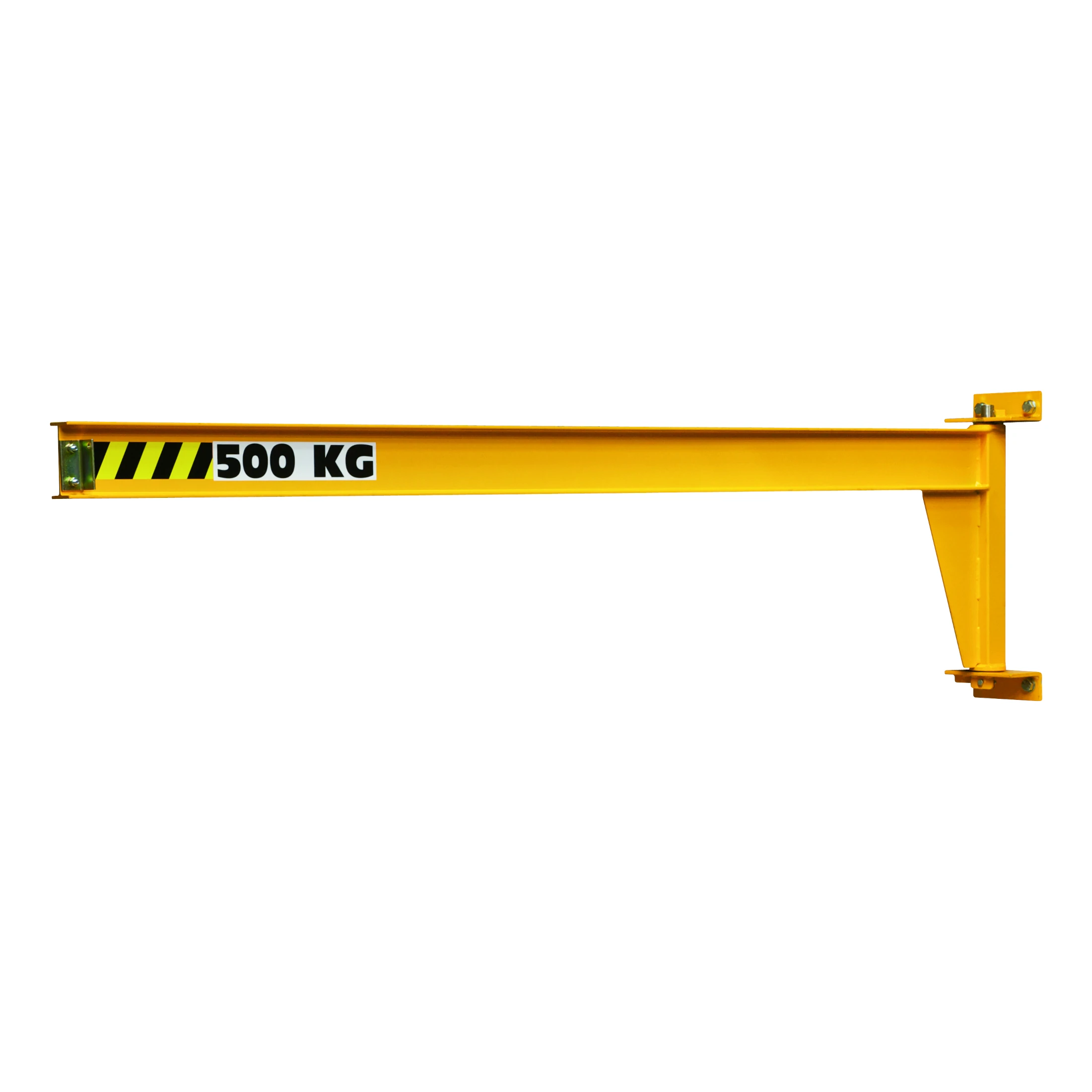

- Overbraced steel (ZDS, from €682) — brace above the I-beam; the stiff, economical default.
- Underbraced / low-profile (NZD) — flat top for tight headroom, trolley runs the full boom, largest capacities.
- Hollow-section boom with integrated trolley (ZDSK, 50–1,000 kg) — trolley inside a closed profile: smooth travel, no dirt on the running surface; indoor use.
- Aluminum rail (AZDS, 63–2,000 kg) — hand-moving the hoist takes a fraction of the effort of steel. For light 50–100 kg stations the LZDS light wall jib crane is the ergonomic entry point, from under €900.
4. Articulated wall cranes: obstacles and weak walls

The ZZD articulated wall crane (125–500 kg) replaces the straight boom with two hinged arms, reaching around machine frames and through openings a straight boom cannot pass. And when the wall itself is the problem — too weak for bracket forces — the SZZD self-supporting version (50–1,000 kg) carries the loads on its own support frame, keeping the space-saving wall geometry without stressing the structure.
5. Special versions: reel and cable holders
Wall jibs also work as tool carriers: the ZDAP-F fixed and ZDAP-P adjustable reel holders (50 kg, booms 3–6 m) suspend hose reels, balancers and cable feeds over a workstation — keeping the floor free of trip hazards without a hoist at all.
6. Hoist and installation
Pair the crane with a manual chain hoist for occasional lifts or a GIS electric chain hoist for repetitive work — the hoist buying guide covers the choice. Ordered together, the trolley is matched to the boom profile. Wall cranes are delivered CE-marked with the EC declaration, bracket drawings and manual; installation is a bolting job for any competent fitter once the structure is confirmed. Plan the statutory yearly inspection as with all lifting equipment.